
What to Do if You Find an Adult Opossum
Finding an adult opossum—sometimes called a possum—that appears injured, sick, or is behaving unusually can be concerning. Some behaviors that may look alarming—such as remaining still or “playing dead”—are normal defensive behaviors, while serious injuries, severe weakness, or abnormal behavior may mean the opossum needs help.
Does This Adult Opossum Need Help?
The Opossum May Need Help If...
It has a significant visible injury or uncontrolled bleeding.
It cannot stand or walk normally.
It is dragging a leg or appears unable to use one or more limbs.
It remains down for an extended period and appears weak, injured, or unable to move normally.
It is extremely thin, weak, or weakened by illness or injury.
It is stumbling, circling, having seizures, unable to move part of its body, or showing other unusual problems with movement or awareness.
It has open wounds, severe swelling, or signs of infection.
It is covered with flies, fly eggs, or maggots.
It was struck by a vehicle or seriously injured by a dog or another animal.
If the opossum appears injured or sick, keep your distance and contact a licensed wildlife rehabilitator for guidance before attempting to capture or transport it.
The Opossum May Not Need Rescue If...
It is alert and moving normally.
It is walking or foraging normally.
It moves away when given sufficient space.
It is seen outside during the day but otherwise appears healthy.
It freezes, opens its mouth, shows its teeth, hisses, or drools when frightened but otherwise appears healthy.
It temporarily becomes motionless or appears dead after being frightened but has no obvious injury.
What NOT to Do if You Find an Adult Opossum
Do not approach or touch the opossum.
Do not assume an opossum that appears dead is actually dead.
Do not attempt to capture or restrain it unless instructed by a licensed wildlife rehabilitator.
Do not give the opossum food or water.
Do not attempt to medicate or treat injuries yourself.
Do not chase or corner the animal.
Do not allow children or pets to approach.
Do not attempt to keep or rehabilitate the opossum yourself.
An injured or frightened opossum may bite or scratch if it feels threatened. Keep a safe distance and allow the animal space whenever possible.
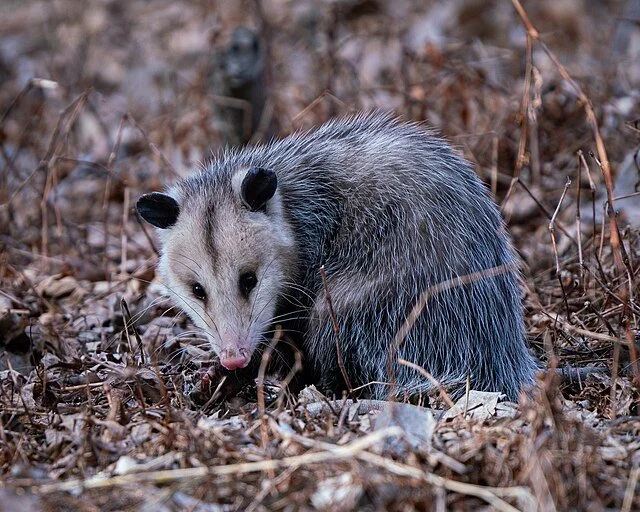
Steps to Take
If the Opossum Appears Injured
Keep people and pets away and observe from a safe distance.
Note the opossum's location, visible injuries, ability to stand and walk, and general behavior. If it was struck by a vehicle or attacked by another animal, include that information when you call.
Do not chase the opossum to determine how badly it is injured.
Contact a licensed wildlife rehabilitator and describe what you are seeing. Follow their instructions before attempting to capture, move, or transport the animal.
If the Opossum Is Lying Still or Appears Dead
Do not immediately assume that the opossum is dead. Opossums can become temporarily immobile when severely frightened or threatened—a defensive response commonly called “playing possum.”
Keep people and pets away and observe from a safe distance.
If the opossum has obvious traumatic injuries, is in a dangerous location, remains unresponsive, or you are uncertain whether it is injured or dead, contact a licensed wildlife rehabilitator or animal control for guidance.
If the Opossum Appears Sick or Is Behaving Abnormally
Keep your distance and prevent children and pets from approaching.
Concerning signs may include severe weakness, loss of coordination, paralysis, seizures, or other significant neurological abnormalities. These signs can have multiple causes.
What to Do While You Wait for Help
Once you have contacted a licensed wildlife rehabilitator or other appropriate authority:
Keep people and pets away from the opossum.
Observe from a safe distance.
Do not give the opossum food or water unless specifically instructed by a licensed wildlife rehabilitator.
Do not attempt to capture, restrain, or move the opossum unless you have been given instructions for doing so safely.
Reduce noise and activity around the area.
Note any changes in the opossum’s condition, movement, or behavior.
Follow the instructions provided by the licensed wildlife rehabilitator or animal control.
If the opossum moves away on its own, do not chase or follow it in an attempt to capture it. Update the licensed wildlife rehabilitator if needed.
Do Not Keep or Attempt to Rehabilitate an Adult Opossum
Adult opossums have specialized medical, nutritional, housing, behavioral, and rehabilitation needs. Do not keep an injured or sick opossum, attempt to treat it yourself, or try to tame it.
Improper care can worsen injuries or illness, cause unnecessary stress, and delay appropriate treatment. An opossum that appears calm, weak, or easy to approach is still a wild animal and may bite or scratch when frightened or handled.
Wildlife rehabilitation should be performed by a licensed wildlife rehabilitator who can evaluate the animal, provide appropriate treatment, and determine whether rehabilitation and release are possible. Virginia public-health guidance likewise recommends contacting a licensed wildlife rehabilitator when sick or injured wildlife needs assistance.
If you have already been caring for or handling the opossum, contact a licensed wildlife rehabilitator as soon as possible. Tell them:
How long the opossum has been in your care.
Whether you have given it any food, water, medication, or other treatment.
What injuries or symptoms you have observed.
Whether any person or pet has been bitten, scratched, or had other direct contact with the opossum.
About Adult Opossums
Virginia opossums are adaptable wild animals found throughout Virginia in forests, fields, suburban neighborhoods, and other developed areas. They are primarily active at night and may shelter in tree hollows, brush piles, abandoned burrows, or protected spaces around buildings.
Some normal opossum behaviors can look unusual or even alarming. Understanding these behaviors can help you determine when an opossum simply needs space and when its condition may warrant help.
Is It Normal to See an Opossum During the Day?
Yes. Although opossums are primarily nocturnal, seeing an opossum during the day does not necessarily mean that it is sick or injured. Healthy opossums may sometimes be active during daylight hours.
Instead of relying on the time of day, look at the animal’s overall condition and behavior.
An opossum that is alert, coordinated, moving normally, and appropriately responsive generally does not need intervention simply because it is outside during the day.
An opossum that appears severely weak, cannot stand or walk normally, remains exposed for an extended period, is circling, has obvious injuries, or shows other significant abnormalities may need help.
Why Do Opossums Play Dead?
When severely frightened or threatened, an opossum may automatically become still and appear dead. This response is commonly called “playing possum.” The animal may become motionless and appear dead. This isn't necessarily a sign that the opossum is sick or dying.
Adults may also hiss, bare their teeth, open their mouths, or attempt to flee when threatened. These defensive behaviors can look aggressive but do not necessarily indicate illness.
If an opossum appears to be playing dead, do not touch or attempt to move it simply to see whether it responds. Keep people and pets away and give it time and space to recover.
If you see obvious injuries, the opossum was struck by a vehicle or attacked by another animal, or you are uncertain whether it is injured, contact a licensed wildlife rehabilitator for guidance.
Why Is an Opossum in My Yard?
Opossums commonly live around suburban and urban areas where food, water, shelter, and suitable habitat are available. They may pass through a yard while searching for natural foods or may be attracted by pet food, garbage, compost, or other accessible food sources.
If a healthy opossum is simply passing through your property:
Give it space and allow it to move on.
Bring pet food indoors.
Secure garbage and compost.
Keep pets away from the opossum.
Do not intentionally feed it.
Do not chase or corner it.
A healthy opossum in a yard does not need to be rescued simply because it is near a home.
What Do Adult Opossums Eat?
Opossums eat both plants and animals, taking advantage of available food. Their natural diet can include insects, fruits, berries, plants, grains, nuts, small animals, and dead animals. They may also take advantage of human food sources such as unsecured garbage, compost, and pet food.
Do not intentionally feed wild opossums. Removing accessible food sources helps discourage repeated visits and allows opossums to maintain natural foraging behavior.
If an opossum appears injured or sick, do not give it food or water unless specifically instructed by a licensed wildlife rehabilitator.
Why Giving Adult Opossums Space Matters
Opossums are generally shy, solitary animals that prefer to avoid confrontation. When frightened or cornered, however, they may hiss, bare their teeth, attempt to flee, or use other defensive behaviors.
Approaching, chasing, cornering, or attempting to capture an opossum can increase its stress and may cause it to defend itself.
If the opossum is alert, moving normally, and has no obvious signs of injury or illness, give it space and allow it to remain wild.
Frequently Asked Questions About Adult Opossums
-
Keep people and pets away and observe the opossum from a safe distance. Do not attempt to capture, restrain, feed, or treat it yourself. Note its location, visible injuries, and ability to stand and walk, then contact a licensed wildlife rehabilitator for guidance.
-
Yes. Opossums are primarily nocturnal, but seeing one during the day does not automatically mean it is sick or injured. Look at the animal's overall condition and behavior instead. An alert, coordinated opossum that is walking and behaving normally generally does not need help simply because it is outside during daylight.
-
Concerning signs can include severe weakness, inability to stand or walk normally, loss of coordination, circling, paralysis, seizures, significant unexplained behavioral changes, or obvious signs of serious illness or injury.
These signs can have multiple causes, so do not attempt to diagnose or handle the opossum yourself. Contact a licensed wildlife rehabilitator for guidance.
-
An opossum may become temporarily motionless when extremely frightened or threatened, a defensive response commonly known as “playing possum.” This can make a healthy opossum appear dead or seriously ill.
Keep people and pets away and give the animal space. Do not touch it to see whether it responds. If there are obvious injuries, it was struck by a vehicle or attacked by another animal, or you are uncertain about its condition, contact a licensed wildlife rehabilitator.
-
It may be difficult to tell from a distance. An opossum that becomes motionless after being frightened may simply be displaying its normal defensive response.
However, visible wounds, bleeding, an abnormal limb position, inability to move normally after it becomes responsive, fly eggs or maggots, or known trauma such as being hit by a vehicle or attacked by another animal are reasons to contact a licensed wildlife rehabilitator.
-
Separate your pet from the opossum without putting yourself at risk. Do not handle the opossum with bare hands.
Contact your veterinarian promptly, particularly if your pet was bitten, scratched, or had direct contact with the opossum.
If the opossum is injured but still alive, contact a licensed wildlife rehabilitator for guidance.
-
No. Do not give an injured or sick opossum food or water unless specifically instructed by a licensed wildlife rehabilitator.
An injured animal's condition may affect what care is appropriate, and attempting to feed or give water can cause additional problems or delay proper treatment.
-
No. Do not trap and relocate an opossum to another area. In Virginia, trapping and relocating wildlife to another area is illegal.
If a healthy opossum is creating an ongoing problem around your property, remove food and shelter that attract opossums and use safe, humane ways to keep them out without trapping them inside.
-
Adult opossums can be rehabilitated by appropriately permitted wildlife rehabilitators in Virginia.
Contact Roanoke Wildlife Rescue before attempting to capture or transport an adult opossum. Describe the animal's condition and location and follow the instructions you receive.
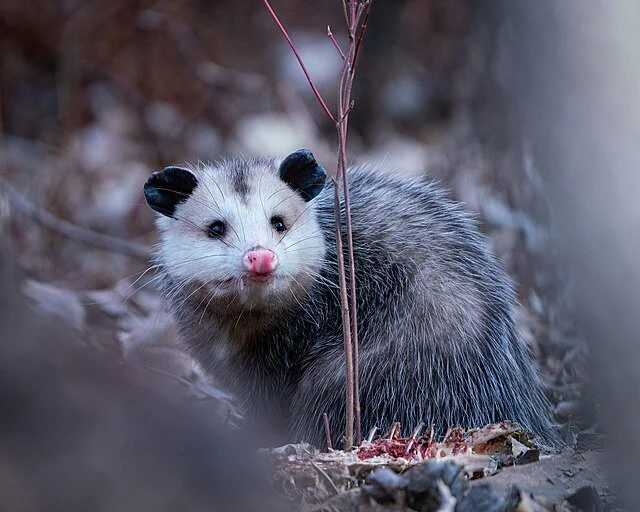
Get Help for an Adult Opossum
If you find an adult opossum that appears injured, sick, severely weak, or unable to stand or move normally, keep a safe distance and contact Roanoke Wildlife Rescue for guidance.
Do not attempt to capture, restrain, feed, treat, or transport the opossum unless you have been instructed to do so by a licensed wildlife rehabilitator. Keep children and pets away while you wait for instructions.