
What to Do if You Find an Adult Skunk
Skunks are gentle, adaptable animals that generally prefer to avoid people and other potential threats. Seeing an adult skunk in your yard or neighborhood does not necessarily mean that something is wrong.
If a skunk appears injured, severely weak, or is behaving unusually, however, it may need help. Knowing what is normal, when to give the animal space, and when to contact a licensed wildlife rehabilitator can help you respond safely while protecting the skunk.
Does This Adult Skunk Need Help?
Most adult skunks you encounter are healthy wild animals simply looking for food, shelter, or a safe place to travel. Skunks are primarily nocturnal and are most active around dawn and dusk, so seeing one out and about is often normal.
The Skunk May Need Help If...
It has a visible serious injury, uncontrolled bleeding, or an open wound.
It cannot stand or walk normally.
It is lying on its side and is weak or unresponsive.
It is repeatedly circling, stumbling, having seizures, or showing significant loss of coordination.
It has significant discharge or crusting around the eyes or nose along with other signs of illness.
It is covered in flies, fly eggs, or maggots.
It has been struck by a vehicle or seriously injured by another animal.
It is unusually inactive or showing other serious changes in behavior.
These signs can have many possible causes, including injury or illness. They do not, by themselves, tell you what is wrong with the skunk.
The Skunk May Not Need Rescue If...
It is alert and moving normally.
It is walking through a yard or neighborhood.
It is digging in the ground while looking for food.
It moves away when given space.
It raises its tail, stomps, hisses, or displays other defensive behavior when it feels threatened.
It is active outside its usual nighttime hours but otherwise appears healthy.
A skunk displaying defensive behavior is communicating that it wants more space. Spraying is a defense used to help the animal escape a perceived threat—not a sign that the skunk is aggressive or needs to be removed.
What NOT to Do if You Find an Adult Skunk
If a skunk appears injured, sick, or distressed, your first instinct may be to get closer or try to help. Giving the skunk space is usually the safest and most helpful first step.
Do not approach, touch, or attempt to pick up the skunk.
Do not chase, corner, or restrain it.
Do not attempt to trap or relocate the skunk yourself.
Do not offer food or water.
Do not attempt to treat an injury yourself.
Keep children and pets away.
Do not assume unusual behavior automatically means rabies.
If the skunk raises its tail, stomps, hisses, or gives other warning signals, stop approaching and slowly give it more space. Skunks generally use these behaviors to warn a perceived threat before resorting to spraying.
Steps to Take
What you should do depends on the skunk’s condition and whether a person or pet has had direct contact with it.
If the Skunk Appears Injured or Sick
Observe the skunk from a safe distance.
Keep children and pets away from the area.
Take a photo or video from a distance if you can do so safely. This may help a licensed wildlife rehabilitator assess its condition.
Contact a licensed wildlife rehabilitator for guidance before attempting to capture or move the skunk.
Do not offer food or water.
Do not attempt to handle or contain the skunk unless specifically instructed to do so.
If the Skunk Is Behaving Abnormally
Stumbling, circling, shaking, severe weakness, disorientation, or other unusual behavior can have many possible causes and does not automatically mean the skunk has rabies.
Give the skunk plenty of space.
Keep people and pets away.
Do not chase, corner, capture, or handle it.
Observe its behavior from a safe distance if possible.
Contact a licensed wildlife rehabilitator for guidance.
If the skunk poses an immediate threat to people or pets, contact local animal control.
If a Person or Pet Had Contact With the Skunk
Because skunks are among the species with the highest risk of carrying and transmitting rabies in Virginia, direct contact requires additional caution.
If a person was bitten or scratched, or skunk saliva may have contacted an open wound, the eyes, nose, or mouth, do not release or handle the skunk further.
Wash bites or scratches thoroughly with soap and water and contact a healthcare provider and your local health department promptly for guidance.
If a pet had direct contact with the skunk, separate the animals and contact your veterinarian promptly. Also contact your local health department or animal control for guidance about the wildlife exposure.
Do not attempt to determine whether the skunk has rabies based on its appearance or behavior. Rabies requires laboratory testing; if public-health officials determine testing is necessary, the animal must be euthanized because testing cannot be performed on a live animal.
What to Do While You Wait for Help
If a licensed wildlife rehabilitator has advised you to leave the skunk where it is while help is arranged:
Keep people and pets away from the area.
Observe the skunk from a safe distance.
Keep the area quiet and give the skunk plenty of space.
Do not offer food or water.
Do not attempt to touch, restrain, or move the skunk.
Avoid cornering the skunk or blocking its path of escape.
Follow any additional instructions provided by the licensed wildlife rehabilitator.
If the skunk moves away on its own, do not follow or attempt to capture it unless you have been specifically instructed to do so.
If a possible human or pet rabies exposure has occurred, do not release, move, or handle the skunk unless instructed by the appropriate authorities.
Do Not Keep or Attempt to Rehabilitate an Adult Skunk
Skunks are intelligent, capable wild animals with specialized medical, nutritional, and behavioral needs. An injured or sick skunk needs evaluation and care from an appropriately permitted wildlife rehabilitator.
Attempting to care for an adult skunk yourself can:
Cause additional stress or injury to the skunk.
Put you, your family, and your pets at risk of bites, scratches, or disease exposure.
Delay appropriate evaluation and treatment.
Interfere with decisions that may be necessary if a person or pet has had potential rabies exposure.
Reduce the skunk’s chances of successful rehabilitation and return to the wild.
Do not take an adult skunk home or attempt to rehabilitate it yourself.
Helping a skunk does not always mean handling or rescuing it. Often, the most compassionate thing you can do is give the animal space, protect it from disturbance, and contact a licensed wildlife rehabilitator when intervention is truly needed.
About Adult Skunks
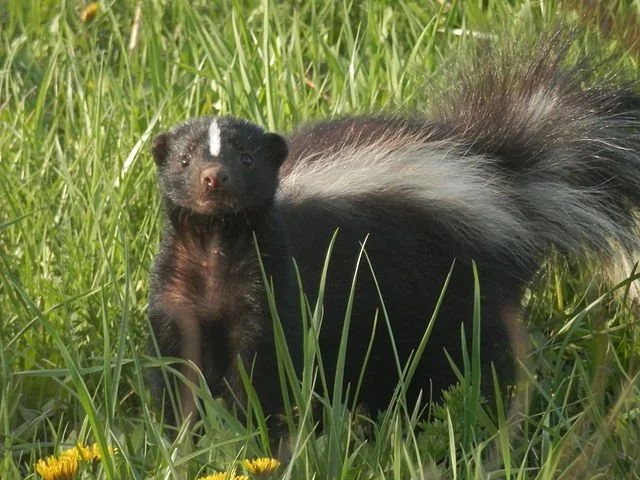
Skunks are often misunderstood because of the strong-smelling spray they use for defense, but there is much more to these remarkable native mammals. They are generally solitary and secretive, and their natural behavior is to avoid conflict whenever possible. Striped skunks are primarily nocturnal and most active around dawn and dusk.
Skunks Are More Than Their Spray
A skunk's spray is a defense mechanism, not a sign of aggression. When a skunk feels threatened, its goal is generally to convince the threat to leave so the skunk can escape.
Skunks often communicate before spraying. Depending on the species and situation, warning behaviors can include raising the tail, stomping, hissing, or other defensive displays.
Giving a skunk space and allowing it an escape route is one of the simplest ways to respect what the animal is communicating.
Why Is a Skunk in My Yard?
A skunk visiting your yard is usually looking for food or shelter—not looking for trouble.
Skunks naturally forage for insects and other small prey. They eat insects such as grasshoppers and crickets as well as mice, and they may dig in lawns while searching for grubs or insect nests.
Pet food, unsecured garbage, and accessible shelter around homes can also attract skunks. Removing these attractants can often reduce unwanted visits without harming the animal.
Why Skunks Matter
Skunks are part of Virginia's native wildlife community and occupy their own place in the food web. Their varied diet includes insects and small animals, so those nighttime visits to a lawn may actually be a skunk doing what comes naturally—searching for food.
Rather than viewing a skunk simply as a nuisance because it can spray, understanding its behavior makes it easier to appreciate the animal for what it is: an adaptable wild neighbor trying to find food, shelter, and safety.
Living Peacefully With Skunks
Most encounters do not require removing the skunk. Give it space, supervise pets outdoors, secure garbage, bring pet food inside, and avoid creating easily accessible shelter around buildings.
If a healthy skunk is simply passing through, allowing it to continue on its way is often all that is needed. Removing food sources and other attractants and preventing access to denning areas can help people and skunks coexist peacefully. In Virginia, trapping and relocating wildlife to another area is illegal.
Respecting a skunk means giving it the space to remain wild.
Frequently Asked Questions About Adult Skunks
-
Yes. Although skunks are primarily nocturnal, a healthy skunk may occasionally be active during the day. Daytime activity alone does not mean a skunk is sick or has rabies.
Pay attention to the animal’s overall condition and behavior rather than the time of day.
-
A skunk may need help if it is severely weak, unable to move normally, repeatedly stumbling or circling, having seizures, significantly disoriented, or showing other serious signs of illness or injury.
Many conditions can cause unusual behavior, so these signs cannot tell you exactly what is wrong with the skunk.
-
No. Unusual behavior does not automatically mean rabies. Injury, illness, neurological conditions, poisoning, and other problems can cause similar signs.
Give the skunk plenty of space, keep people and pets away, and contact a licensed wildlife rehabilitator for guidance.
-
Skunks commonly dig small holes while searching for insects, grubs, and other food beneath the soil. This is normal foraging behavior and does not mean the skunk is aggressive or trying to establish a territory around your home.
Removing food and other things that attract skunks can help discourage repeated visits.
-
Not necessarily. Spraying is a defensive behavior, and skunks generally prefer to avoid confrontation. If a skunk raises its tail, stomps, hisses, or displays other warning behavior, slowly give it more space and make sure it has a clear way to leave.
Never chase or corner a skunk.
-
Bring your pet away from the skunk without approaching the wild animal yourself. If your pet was bitten, scratched, or had other direct contact with the skunk, contact your veterinarian promptly and seek guidance about the wildlife exposure.
If your pet was only sprayed and there was no physical contact, the odor itself is not a rabies exposure.
-
Wash the area thoroughly with soap and water and contact a healthcare provider and your local health department promptly for guidance about possible rabies exposure.
Do not release or dispose of the skunk until you have received guidance from the appropriate authorities.
-
Do not trap and relocate a skunk to another area. In Virginia, relocating trapped wildlife to another location is illegal. Instead, removing attractants and preventing access to unwanted places where skunks make their dens can help resolve many conflicts while allowing skunks to remain part of the surrounding ecosystem.
Get Help for an Adult Skunk
If you find an adult skunk that appears injured, sick, severely weak, or unable to move normally, give the animal plenty of space and contact Roanoke Wildlife Rescue for guidance.
Do not attempt to capture or handle an adult skunk unless you have been specifically instructed to do so.
Whenever possible, observe from a safe distance and take a photo or video to help us better understand what you are seeing.