
What to Do if You Find Baby Mice
Finding a nest of baby mice, called pups, can be surprising, especially when it turns up in a shed, grill, garden, or woodpile. Whether the babies need help depends on what kind of mouse they are, how old they are, and whether their mother is still caring for them. Knowing what to look for can help you decide when baby mice need professional care and when they should be left alone.
Field Mouse vs. House Mouse: How to Tell the Difference
Roanoke Wildlife Rescue can accept native field mice, including the white-footed mouse and the deer mouse. Virginia wildlife rehabilitators are not permitted to accept or rehabilitate house mice.
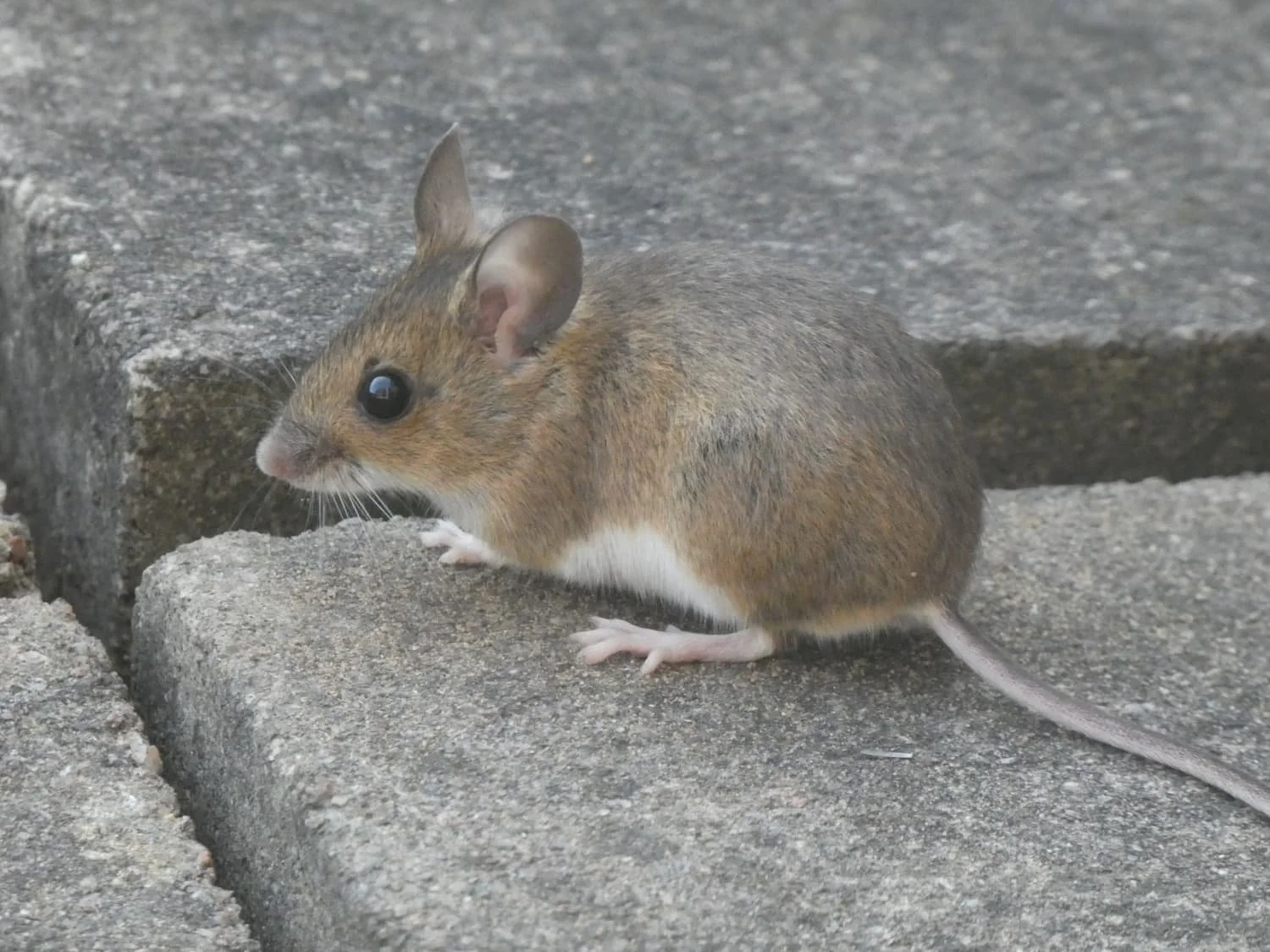
Field mice and house mice can look alike at first glance, but once a mouse has fur, several features help tell them apart.
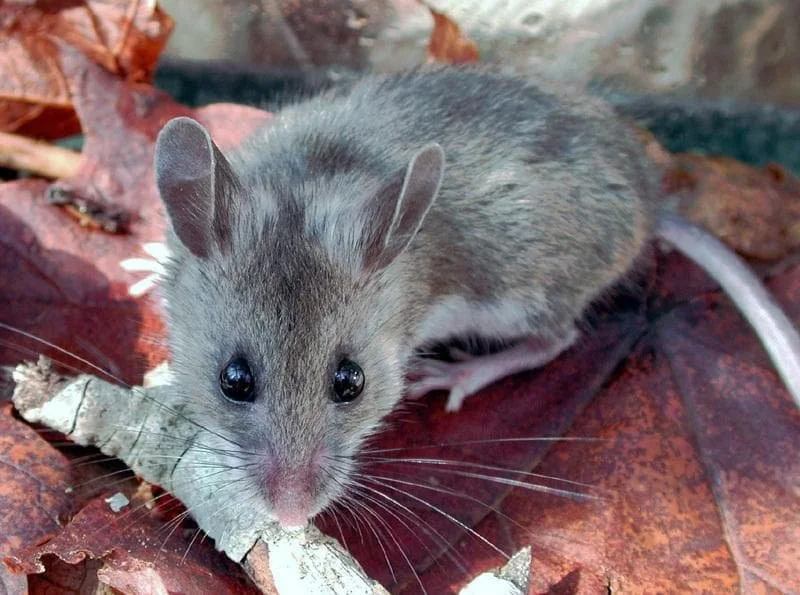
Field Mice (White-Footed and Deer Mice)
Bright white belly and feet, sharply separated from the gray, brown, or reddish-brown back
Tail that is dark on top and pale underneath
Large, dark, bulging eyes
Large, thin ears
House Mice
Gray-brown or dusty brown fur over most of the body
Grayish or buff belly that blends into the color of the back
Long, nearly hairless, scaly tail that is about the same color all the way around
Smaller eyes and ears
Color alone is not a reliable clue, because both kinds of mice can look gray or brown, and young field mice are often grayer than adults. Look for the sharp line between the darker back and the bright white belly and feet.
Newborn mice are pink and hairless, and it is very hard to tell the two kinds apart. Where you found them does not settle the question, either: field mice often nest in sheds, garages, grills, vehicles, and even houses.
If you are not sure what kind of mouse you have, text a clear photo to Roanoke Wildlife Rescue at 540-330-6119 before doing anything else. If you can, include a photo that shows the belly and tail. We will let you know whether we can help.
Do These Baby Mice Need Help?
Field mice are born pink, hairless, and with their eyes and ears closed. Their ears open at about 10 days old, their eyes open at about 12 days old, and they are weaned at about 3 weeks old. Because baby mice grow so quickly, the best way to find out whether a young mouse is old enough to be on its own is to text us a photo.
The Baby Mice Are Probably Okay If...
An uncovered nest is not necessarily abandoned. Mother mice leave the nest to feed and come back to nurse, and they are most active at night. The babies are probably okay if they:
Are together in the nest in a warm, rounded pile
Feel warm and look plump and quiet
Appear healthy and uninjured
Are fully furred, have their eyes open, and are running and climbing normally
If these signs are present, leave the nest alone, keep children and pets away, and give the mother a chance to return.
The Baby Mice Need Help If...
Contact a licensed wildlife rehabilitator for guidance if a baby mouse:
Is cold, weak, or unresponsive
Is injured, bleeding, or unable to move normally
Has been caught or carried by a cat or dog
Is covered with flies, fly eggs, or maggots
Is found alone, outside the nest, with its eyes still closed
Has a mother that is known to be dead
Is crying, scattered, or still alone after the mother has had several hours to return
What NOT to Do if You Find Baby Mice
To protect the baby mice and yourself, never:
Touch baby mice, nests, or droppings with bare hands.
Feed baby mice or give them water, milk, formula, or other liquids.
Attempt to raise baby mice yourself.
Handle the babies more than necessary.
Place babies directly on a heating pad or other hot surface.
Allow children or pets to interact with the mice.
Deer mice and white-footed mice can carry hantavirus, which spreads to people mainly through contact with rodent urine, droppings, saliva, and nesting material. Wear rubber or plastic gloves, avoid stirring up dust from the nest, and wash your hands with soap and water afterward.
Steps to Take
If You Think They Are House Mice
Roanoke Wildlife Rescue and other Virginia wildlife rehabilitators cannot accept house mice. If you are not sure, text us a photo at 540-330-6119 and we will help you identify them.
If the Nest Is Intact and the Babies Look Healthy
Leave the nest where it is and keep people and pets away. Because mother mice are most active at night, she may not return until after dark. Check from a distance the next morning.
If the Nest Was Disturbed
If the nest was uncovered or moved, for example while cleaning a shed, grill, or garage, put on gloves and gently put the nest material and babies back where you found them, or as close as possible.
If the nest cannot stay where it is, place it in a small cardboard box with an entrance hole and set the box as close to the original spot as you can. The mother will usually find her babies and either keep them there or move them somewhere new. Text us if the babies are still alone the next morning.
If the Babies Are Injured, Weak, or Cold
If the babies are injured, bleeding, cold, weak, unable to move normally, or covered with flies, fly eggs, or maggots, contact a licensed wildlife rehabilitator as soon as possible.
Do not offer food or water. Follow the rehabilitator's instructions about safely containing and transporting the babies.
If a Cat or Dog Had the Baby
Contact a licensed wildlife rehabilitator even if you cannot see an injury. Bites and puncture wounds can be difficult to see, and bacteria from a cat's mouth can cause a life-threatening infection in a small animal.
If the Mother Is Dead
If you know the mother has died, for example in a trap or after being caught by a pet, the babies cannot survive on their own unless they are already weaned. Text us a photo of the babies so we can tell you what to do next.
What to Do While You Wait for Help
If a licensed wildlife rehabilitator advises you to contain the baby mice, keep them warm, dark, quiet, and secure while you wait for further instructions.
Wear gloves when handling the babies or their nest.
Place the babies, along with their nest material if possible, in a small box or container with a secure lid and small air holes. Mice can squeeze through very small gaps.
Line the bottom with a soft, clean cloth or paper towel.
Keep the container in a quiet location away from children, pets, and household activity.
Provide gentle extra warmth only if instructed, making sure the babies can move away from the heat.
Do not offer food, milk, formula, or water.
Follow the rehabilitator's instructions for transportation and care.
Do not attempt to care for the babies yourself. Baby mice have specialized nutritional, temperature, and developmental needs and should be evaluated by a licensed wildlife rehabilitator.
Do Not Keep or Attempt to Raise Baby Mice
If baby field mice need help, contact a licensed wildlife rehabilitator and surrender them as soon as possible. Do not keep them as pets or attempt to raise them yourself.
Very young mice must be fed a specialized formula every 2 to 3 hours and need help to urinate and defecate after every feeding. Babies this small can easily inhale formula, which can cause pneumonia and death.
Licensed wildlife rehabilitators provide age-appropriate nutrition, warmth, and housing, and help young mice keep the natural fear of people they need to survive in the wild.
If you have already been caring for baby mice, contact Roanoke Wildlife Rescue as soon as possible and tell us how long you have had them and everything they have been fed or given to drink.
About Baby Field Mice
Which Mice Are Field Mice?
In the Roanoke Valley, the mice most often called field mice are the white-footed mouse and the deer mouse. Both are native to Virginia. They live in woods, fields, and brushy areas, and often move into sheds, garages, and other buildings.
How Mother Mice Care for Their Young
Female field mice give birth to litters of about 2 to 9 babies after a pregnancy of about 3 to 4 weeks. The mother builds a soft, rounded nest from grass, leaves, fur, feathers, and other materials and nurses her babies there. Field mice breed mostly from March through October, and a female can raise 2 to 4 litters a year.
How Fast Do Baby Mice Grow?
Baby field mice are born pink and hairless. Fur starts to appear at about 1 week, the ears open at about 10 days, and the eyes open at about 12 days. Most are weaned at about 3 weeks old and begin exploring and finding food on their own soon after.
Why Field Mice Are Important
Field mice eat seeds, nuts, fruit, and insects, and they bury seeds that can sprout into new plants. They are also an important food source for owls, hawks, foxes, snakes, and many other animals.
Frequently Asked Questions About Baby Mice
-
Field mice can be gray or brown, but they have a bright white belly and white feet, a tail that is dark on top and pale underneath, and large eyes and ears. House mice are mostly gray-brown with a grayish belly and a nearly hairless, scaly tail. If you are not sure, text us a photo at 540-330-6119.
-
Often, yes, even if the nest was disturbed. Put the nest and babies back where you found them, or in a small box as close by as possible, and keep people and pets away. Mother mice are most active at night, so give her until the next morning unless the babies are cold, weak, or injured.
-
Not long. Very young mice cannot keep themselves warm and need to nurse often, so babies that are cold, weak, or scattered need help the same day. Text us a photo at 540-330-6119.
-
Newborns are pink and hairless. Fur starts to appear at about 1 week, and the eyes open at about 12 days. A furred mouse with open eyes that runs and climbs well is likely close to weaning age, about 3 weeks. Text us a photo and we can help.
-
No. Feeding the wrong food, or feeding the wrong way, can cause the babies to inhale fluid and develop pneumonia. Keep them warm and quiet and contact a licensed wildlife rehabilitator.
-
Wear rubber or plastic gloves. Deer mice and white-footed mice can carry hantavirus, which spreads mainly through urine, droppings, saliva, and nesting material. Wash your hands with soap and water afterward.
-
Contact a licensed wildlife rehabilitator right away, even if you cannot see an injury. Small wounds are easy to miss and can become life-threatening.
-
No. Virginia wildlife rehabilitators are not permitted to accept or rehabilitate house mice. Text us a photo if you are not sure which kind you have.
Get Help for Baby Field Mice
If you find baby field mice that are injured, cold, weak, caught by a cat or dog, or whose mother is known to be dead, contact Roanoke Wildlife Rescue for guidance. Text us a photo and we can help you identify the species, tell whether the babies are old enough to be on their own, and decide what to do next.
Do not feed the babies, give them water, or attempt to raise them yourself. Follow the instructions provided by a wildlife rehabilitator.
Call or text us at 540-330-6119. We're available daily from 10 AM to 7 PM.