
What to Do if You Find a Baby Snake
Most baby snakes in Virginia are harmless, but young copperheads are venomous from birth. Never handle a snake unless you’re sure what species it is — use the guidance below to identify one from a distance and decide whether it needs help.
Some snakes, like rat snakes and racers, lay eggs that hatch from mid-summer to early fall; others, like copperheads, garter snakes, and water snakes, give birth to live young in late summer and fall (copperheads from mid-August to early October). That’s why late summer and fall are when people find the most baby snakes, out looking for food and a safe place to spend the winter.
Why a Baby Snake Alone Is Normal
Baby snakes are on their own from the moment they hatch or are born — snakes don’t care for their young, so a small snake by itself is completely normal. In most cases, the best thing to do is leave the snake alone to move on naturally.
Identifying a Baby Copperhead
Virginia has about 30 kinds of snakes, and only three are venomous: the copperhead, the timber rattlesnake, and the cottonmouth (which lives only in far southeastern Virginia). In our area, the copperhead is the venomous snake people find most often.
A baby copperhead:
Is about 8 inches long and about as thick as a pencil
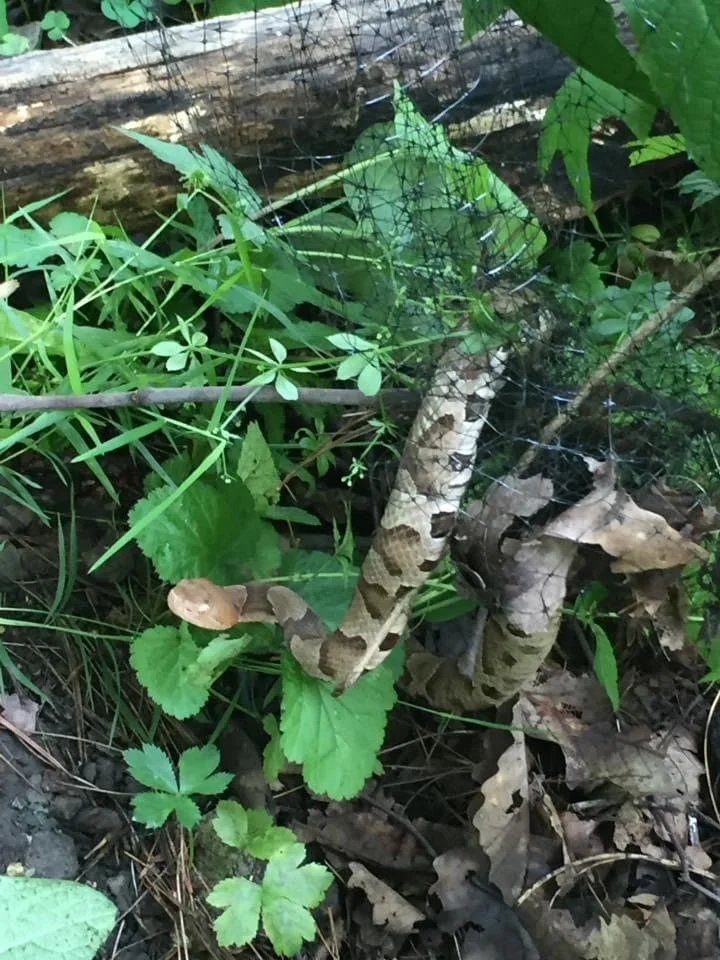
Is tan, pinkish, or light brown with darker hourglass-shaped bands, wide on the sides and narrow across the back
Has a bright yellow or greenish-yellow tail tip, which fades with age
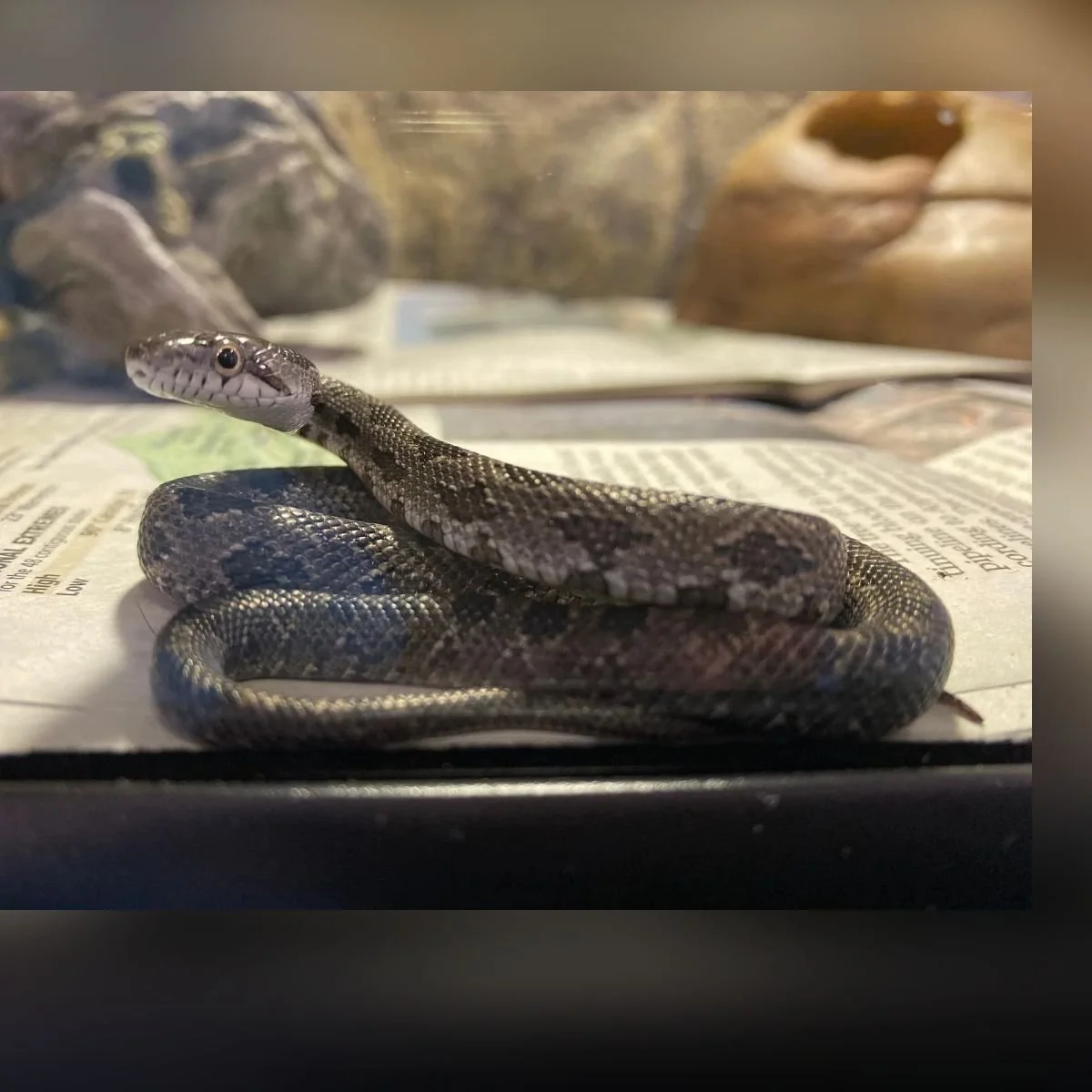
Several harmless snakes are often mistaken for baby copperheads, including young eastern rat snakes, northern black racers, northern water snakes, and eastern milk snakes. Young rat snakes and racers have gray or brown blotches that fade as they mature, and a water snake’s bands run the opposite way — wide across the back and narrow on the sides.
If you’re not sure, treat the snake as venomous: keep your distance and send us a photo taken from at least several feet away.
Does the Snake Need Help?
The snake is probably okay if it’s:
Moving normally, with normal tongue-flicking
Free of visible wounds or bleeding
Quick to move away or hide when approached
Free of any contact with a cat or dog
Cloudy, bluish eyes and dull skin are normal right before a snake sheds, and a young hognose snake may hiss, flatten the neck, or even roll over and play dead — that’s normal defensive behavior too.
The snake needs help if it’s:
Stuck on a glue trap
Tangled in garden netting, bird netting, or fishing line
Caught, carried, or bitten by a cat or dog, even without a visible wound
Hit by a mower or string trimmer
Wounded, bleeding, kinked, or unable to move normally
Covered with flies, fly eggs, or maggots
If the snake is injured or stuck, contact Roanoke Wildlife Rescue — we help all native Virginia snakes, including venomous species. Don’t try to free or handle the snake yourself.
What NOT to Do
To keep yourself and the snake safe, never:
Pick up or handle a snake — even harmless snakes may bite when frightened
Kill the snake — in Virginia, it’s illegal to kill a snake unless it poses an immediate threat to someone’s safety
Pull a snake off a glue trap or out of netting
Touch a copperhead that looks dead — it can still bite
Let children or pets near the snake
Keep a wild snake as a pet
Rely on mothballs or snake repellents — they haven’t been shown to work
Always wash your hands with soap and water after touching a snake or anything it was in.
Steps to Take
If a healthy baby snake is in your yard: leave the snake alone and give it space — baby snakes are small and secretive, and most are gone within a few hours. Keep children and pets away.
If the snake is stuck on a glue trap: don’t try to pull it off; the skin and scales tear easily. If you’re sure it isn’t venomous, wear gloves and lightly sprinkle cornmeal or flour over the exposed glue so it doesn’t get more stuck, then place the snake and trap together in a box with air holes and a secure lid, and call us right away. If it might be a copperhead or you’re not sure, don’t touch the snake or the trap — a trapped venomous snake can still bite. Keep people and pets away and call us.
If the snake is caught in garden netting: don’t try to free the snake yourself, and never handle it unless you’re sure it isn’t venomous. Use scissors to cut the netting several inches away from the snake, leaving it inside the section you cut, then place it in a box with air holes and a secure lid and call us right away. If it might be a copperhead or you’re not sure, don’t cut the netting — keep people and pets away and call us.
If a cat or dog caught the snake: contact us right away even without a visible wound — small puncture wounds can be hard to see and can become infected. Keep the pet away from the snake.
If a snake is inside your home or garage: keep pets and children out of the room and close interior doors. If it’s near an exterior door, open the door and allow time for the snake to leave on its own. If you’re sure it isn’t venomous, you can gently guide it into a bucket or box laid on its side using a broom. If it might be venomous, keep watch from a safe distance and call us.
If someone is bitten by a copperhead or an unknown snake: call 911 or go to the nearest emergency room right away. Keep the person calm and still — don’t cut the wound, try to suck out venom, or use ice or a tourniquet. You can also call Poison Control at 1-800-222-1222.
Living With Snakes
Snakes are shy, natural pest control — larger snakes eat mice and rats, smaller snakes eat slugs and insects, and snakes themselves are food for hawks, owls, foxes, and other wildlife. Most bites happen when someone tries to catch, move, or kill a snake, so the best thing you can do is leave one alone to move on naturally.
To make your yard less inviting:
Remove brush piles, wood piles, and clutter near your house
Keep grass short near the house, patios, and play areas
Clean up spilled birdseed and don’t leave pet food outside — both attract the rodents snakes eat
Seal gaps of ¼ inch or larger around your foundation, doors, vents, and utility lines
Use fine insect mesh or rigid fencing instead of plastic garden netting, and store unused netting in a sealed bag or box
Skip glue traps, especially outdoors — they catch snakes, birds, and other wildlife. Mothballs, sulfur, and commercial snake repellents haven’t been shown to keep snakes away.
While You Wait for Help
If a rehabilitator asks you to contain a non-venomous baby snake while you arrange care:
Place the snake in a cloth pillowcase, tie it in a knot, then put the pillowcase in a box with air holes and a secure lid — snakes can squeeze through very small gaps
For a snake on a glue trap or in netting, place the snake and the trap or netting in the box together
Keep the box at room temperature in a quiet, dark place, out of direct sun and never in a hot car
Keep children and pets away
Skip food and water
Write down exactly where you found the snake
Wash your hands with soap and water afterward
Never try to contain a venomous snake — keep people and pets away, watch from a safe distance if you can, and call us.
Don’t Keep or Attempt to Raise a Baby Snake
Baby snakes are fully independent from the moment they hatch or are born — they don’t need people to feed or raise them, and they do best left in the wild. Wild snakes have specific needs for food, temperature, and hibernation, and can become stressed and stop eating in captivity. If a baby snake is injured or stuck, contact a licensed wildlife rehabilitator; otherwise, simply let the snake go.
About Baby Snakes
Depending on the species, snakes either lay eggs or give birth to live young. Egg-layers like rat snakes, milk snakes, and green snakes lay in late spring or early summer in warm, damp places like mulch, rotting logs, or leaf piles; all three of Virginia’s venomous snakes, along with water snakes and garter snakes, give birth to live young instead.
Most baby snakes look like small versions of the adults, though some differ — young black racers and rat snakes are gray or tan with dark blotches that fade as the snake darkens with age, while baby copperheads look like adults except for the bright yellow tail tip. Young snakes shed their skin every couple of months as they grow, with cloudy blue eyes and dull coloring just beforehand, and eat small prey like insects, worms, slugs, small frogs, and young mice depending on the species.
Snakes help control rodents and garden pests and play an important role in the food web — since many baby snakes don’t survive their first year, the ones that do are especially important for keeping populations healthy.
Found a grown snake that’s hurt or stuck? See what to do if you find an injured snake.
Frequently Asked Questions About Baby Snakes
-
A baby copperhead is about 8 inches long, tan to pinkish with darker hourglass-shaped bands that are wide on the sides and narrow across the back. It has a bright yellow or greenish-yellow tail tip. Baby copperheads are venomous from birth, so keep your distance and send us a photo if you’re not sure.
-
Most look like small versions of the adults. Some don’t: young black racers and rat snakes are gray or tan with dark blotches, which fade as the snake darkens with age. Before shedding, a baby snake’s eyes may look cloudy blue. If you’d like help identifying a snake, send us a photo taken from a safe distance.
-
Yes. Baby copperheads are venomous from birth and should be treated with the same caution as adults. Copperhead bites are rarely fatal but are very painful and need medical care. If someone is bitten, call 911 or go to the emergency room.
-
Yes. The best thing to do is leave it alone, and it will move on. Keep children and pets away and give it space. Baby snakes are on their own from birth and are usually just passing through.
-
Don’t pull it off. If you’re sure it isn’t venomous, wear gloves, sprinkle cornmeal or flour over any exposed glue, and put the snake and trap together in a box with air holes and a lid. If it might be venomous, don’t touch it. Either way, call us right away.
-
Don’t try to untangle it or pull it free. If you’re sure it isn’t venomous, cut the netting several inches away from the snake, keeping the snake inside the section you cut, and put it in a box with a lid. If it might be venomous, don’t cut the netting. Either way, call us right away.
-
Contact a licensed wildlife rehabilitator right away, even if the snake looks fine. Puncture wounds can be hard to see and can become infected. Keep the pet away from the snake and don’t handle it unless you’re sure it isn’t venomous.
-
In Virginia, it’s illegal to kill a snake unless it poses an immediate threat to someone’s health or safety. Most snakes, even venomous ones, will move on if left alone. If a snake is in a spot where it can’t stay, contact us for advice.
Get Help for a Baby Snake
If you find a baby snake that’s stuck on a glue trap, caught in netting, injured, or was caught by a cat or dog, contact Roanoke Wildlife Rescue for guidance — we help all native Virginia snakes, including venomous species.
If the snake is healthy, the best thing to do is leave it alone to move on naturally. Never handle a snake unless you’re sure it isn’t venomous.
Call or text us at 540-330-6119. We’re available daily from 10 AM to 7 PM.