
What to Do if You Find an Injured or Sick Groundhog
Seeing a sick groundhog — also called a woodchuck — or one that is injured or acting strangely can be concerning. Some groundhogs simply need space to return to their burrow, while an animal that is seriously injured, weak, unable to move normally, or behaving abnormally may need help.
Does This Injured or Sick Groundhog Need Help?
The Groundhog May Need Help If...
It has a significant visible injury or uncontrolled bleeding.
It cannot stand or walk normally.
It is dragging a leg or appears unable to use one or more limbs.
It remains lying in the open and appears unable to retreat.
It is extremely weak, thin, unusually inactive, or weakened by illness or injury.
It is stumbling, circling, having seizures, unable to move part of its body, or showing other unusual problems with movement or awareness.
It has a serious wound, severe skin condition, or signs of infection.
It was struck by a vehicle or seriously injured by a dog or another animal.
It has had direct contact with a person or pet.
If the groundhog appears injured or sick, keep your distance and contact a licensed wildlife rehabilitator for guidance before attempting to take any action.
The Groundhog May Not Need Rescue If...
It is alert and responsive to its surroundings.
It can stand and walk normally.
It retreats toward its burrow or another protected area when given space.
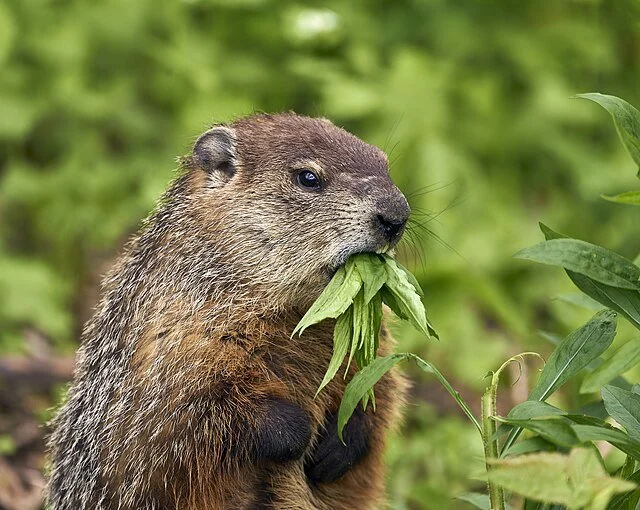
It is eating or foraging normally.
It is resting near its burrow but later resumes normal activity.
It is simply traveling through a yard or other developed area.
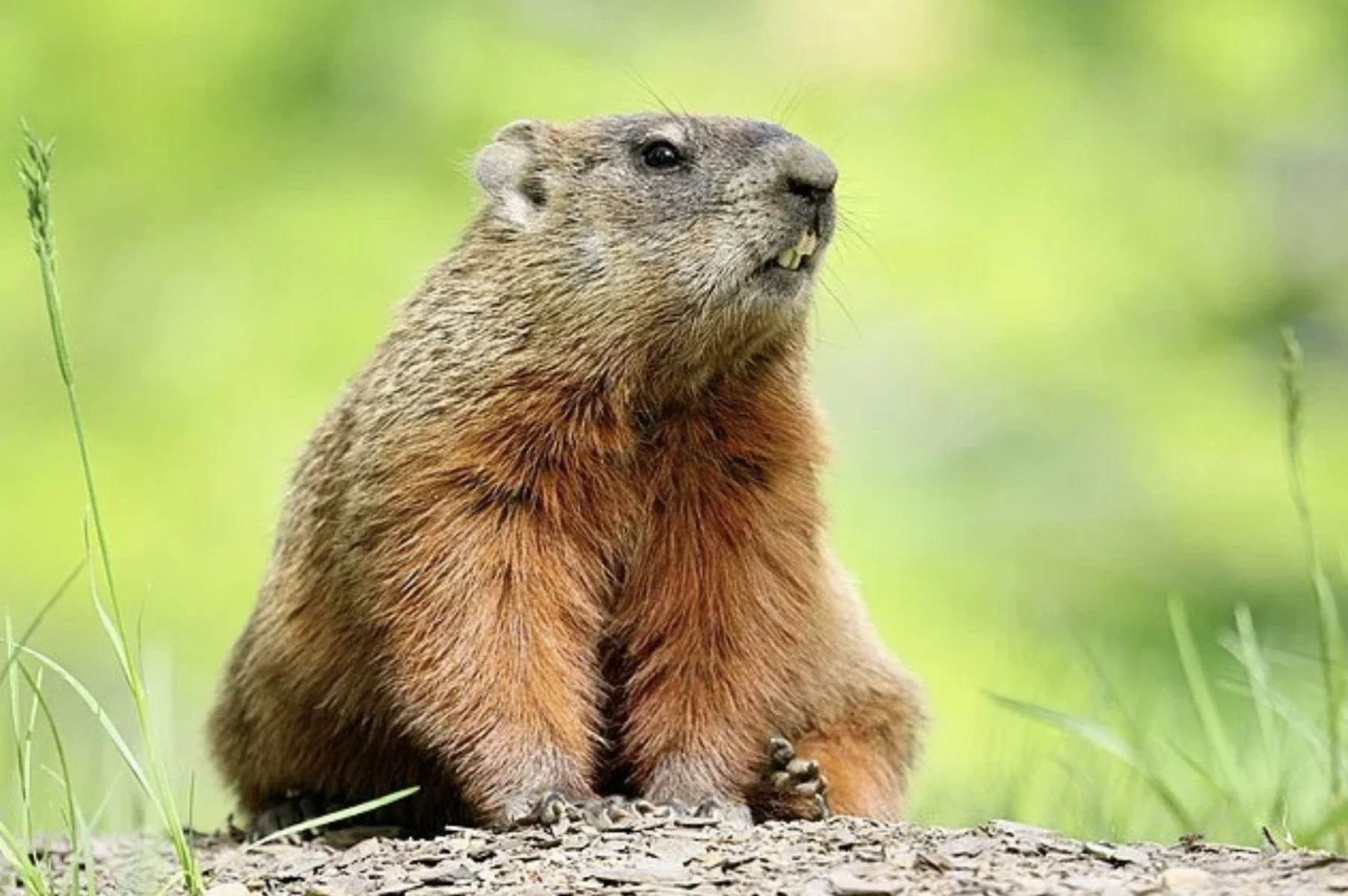
It stands upright to look around or watch its surroundings.
A healthy groundhog does not need to be rescued simply because it is above ground, resting, or present in a yard. Observe its overall condition and behavior and give it a clear path to move away.
What NOT to Do if You Find an Injured or Sick Groundhog
Do not approach or touch the groundhog.
Do not feed or give water to the groundhog.
Do not attempt to medicate or treat an injury yourself.
Do not chase or corner the animal.
Do not attempt to return it to a burrow.
Do not relocate the groundhog to another area.
Do not allow children or pets to approach it.
Do not attempt to keep or rehabilitate the groundhog yourself.
Steps to Take
If the Groundhog Appears Injured
Keep people and pets away and observe the groundhog from a safe distance.
Note its location, visible injuries, ability to stand and walk, and general behavior. Do not chase the groundhog to determine how badly it is injured or prevent it from returning to its burrow.
Contact a licensed wildlife rehabilitator and describe what you are seeing.
If the Groundhog Appears Sick or Is Behaving Abnormally
Keep your distance and prevent people and pets from approaching.
Concerning signs can include:
Severe weakness
Loss of coordination
Staggering or circling
Paralysis
Seizures
Difficulty swallowing
Excessive drooling
Significant unexplained changes in behavior
These signs can have multiple causes, and you cannot determine whether a groundhog has rabies simply by looking at it.
If a person or pet may have had direct contact with the groundhog, don’t approach or attempt to capture it yourself. Contact your local health department or animal control for guidance.
What to Do While You Wait for Help
Once you have contacted Roanoke Wildlife Rescue or another licensed wildlife rehabilitator:
Keep a safe distance from the groundhog.
Keep children and pets indoors or away from the area.
Do not offer food or water.
Do not attempt to capture, restrain, or move the groundhog unless specifically instructed to do so.
Reduce activity around the area to avoid causing additional stress.
Note the groundhog’s location, condition, and any changes in its behavior.
Follow any instructions provided by the licensed wildlife rehabilitator or animal control.
If the groundhog moves away or returns to its burrow, do not chase or follow it in an attempt to capture it. Let the licensed wildlife rehabilitator know what happened and follow their guidance.
Do Not Keep or Attempt to Rehabilitate an Adult Groundhog
Adult groundhogs have specialized medical, nutritional, housing, behavioral, and rehabilitation needs. Do not keep an injured or sick groundhog, attempt to treat it yourself, or try to tame it.
Improper handling or care can cause additional stress and injury, interfere with successful rehabilitation, and create unnecessary contact between the groundhog and people or pets.
Virginia classifies groundhogs as a species with a high risk of carrying and transmitting rabies. Rehabilitating groundhogs requires additional precautions and authorization.
Keeping or attempting to care for a groundhog yourself can therefore create risks for both you and the animal. Unnecessary handling may increase the possibility of human or pet exposure, and delays in contacting the appropriate authorities can complicate the response to a potential rabies exposure.
In some circumstances, public-health officials may determine that rabies testing is necessary. Because rabies testing cannot be performed on a live animal, testing requires euthanasia.
If you have already been caring for or handling the groundhog, contact a licensed wildlife rehabilitator as soon as possible and explain how long you have had the animal, what care you have provided, and whether any person or pet has had direct contact with it.
About Adult Groundhogs
Groundhogs, also called woodchucks, are common throughout Virginia and can live in forests, fields, pastures, roadsides, and suburban neighborhoods. They are burrowing animals and may establish dens beneath sheds, decks, brush piles, or other protected areas.
Seeing a groundhog in a yard or other developed area does not necessarily mean that the animal is lost, sick, or in need of help. Understanding normal groundhog behavior can help you determine when to simply give the animal space and when its condition or behavior may warrant assistance.
Is It Normal to See a Groundhog During the Day?
Yes. Groundhogs are normally active during the daytime, so seeing one outside during daylight hours is not a sign that it is sick or has rabies.
A healthy groundhog may spend time feeding, traveling between areas, gathering vegetation, resting near its burrow, or standing upright to watch its surroundings.
Instead of focusing on the time of day, look at the animal’s overall condition and behavior. A groundhog that is alert, coordinated, mobile, and appropriately responsive generally does not need intervention.
Why Is a Groundhog in My Yard?
Groundhogs may enter yards because the area provides food, shelter, or suitable places for a burrow. Gardens, lawns, landscaping, and vegetation can provide attractive food sources, while spaces beneath decks, sheds, porches, and other structures may provide protected den sites.
If a healthy groundhog is simply passing through or living nearby, do not attempt to capture or relocate it yourself.
To reduce conflicts:
Do not intentionally feed groundhogs.
Remove or secure accessible food sources.
Keep pet food indoors.
Protect gardens when necessary with appropriate wildlife-resistant barriers.
Supervise pets outdoors.
Give the groundhog space and an unobstructed route to retreat.
If a groundhog is causing a persistent problem with a structure or property, don’t try to trap or relocate it. Instead, look for safe, humane ways to keep groundhogs out, and make sure none are trapped inside before closing off an opening.
What Do Adult Groundhogs Eat?
Groundhogs mainly eat plants, including grasses, leaves, clover, flowers, fruits, and vegetables. Their natural diet changes depending on the season and what is available.
Do not intentionally feed wild groundhogs. Feeding can encourage them to remain close to homes and people and may contribute to unwanted wildlife conflicts.
If you find an injured or sick groundhog, do not offer food or water unless specifically instructed by a licensed wildlife rehabilitator.
Why Do Groundhogs Stand on Their Hind Legs?
Standing upright is a normal groundhog behavior. Groundhogs may rise onto their hind legs to get a better view of their surroundings and watch for potential threats.
A groundhog standing upright, looking around, and then returning to normal activity does not need help simply because of this behavior.
Why Giving Adult Groundhogs Space Matters
Groundhogs generally prefer to retreat rather than interact with people. Their burrows provide important shelter and a place to escape when they feel threatened.
Approaching, chasing, cornering, or attempting to capture a groundhog can prevent it from reaching safety and may cause the animal to defend itself.
If the groundhog is alert, moving normally, and able to retreat on its own, give it plenty of space and allow it to remain wild.
Found a young groundhog? See what to do if you find a baby groundhog.
Frequently Asked Questions About Adult Groundhogs
-
Keep a safe distance and keep children and pets away. Do not attempt to capture, restrain, feed, or treat the groundhog yourself. Note its location, condition, and behavior, and contact a licensed wildlife rehabilitator for guidance.
-
If the groundhog appears healthy and is moving normally, give it space. Remove accessible food sources, supervise pets, and allow the groundhog an unobstructed route to its burrow or another safe area. Do not feed, trap, or relocate it.
-
Concerning signs can include severe weakness, inability to stand or walk normally, loss of coordination, circling, paralysis, seizures, excessive drooling, or other significant neurological abnormalities. These signs can have several causes, and rabies cannot be diagnosed simply by looking at a groundhog.
-
Groundhogs can get rabies, but seeing a groundhog does not mean that it has rabies. In Virginia, groundhogs are considered a high-risk rabies vector species. Signs such as loss of coordination, paralysis, seizures, excessive drooling, or significant behavioral changes can be concerning, but rabies cannot be diagnosed by appearance or behavior alone. If a person or pet may have had direct contact with a groundhog, contact your local health department or animal control for guidance.
-
No. Daytime activity is normal for groundhogs and is not a sign of rabies. Concern should be based on the animal’s overall condition, behavior, and any potential human or pet exposure.
-
Separate your pet from the groundhog without putting yourself at risk. Do not attempt to handle or capture the groundhog. Contact your veterinarian promptly and contact local animal control or your local health department for guidance about possible rabies exposure.
-
Wash the affected area thoroughly with soap and water and contact a healthcare provider promptly. Contact your local health department or animal control for guidance about possible rabies exposure. Do not attempt to capture the groundhog yourself.
-
No. It is illegal in Virginia to trap and relocate a groundhog to another area. Do not capture or move the groundhog yourself. If a groundhog is causing a problem on your property, seek guidance about safe, humane ways to keep groundhogs out and address problems on your property or contact a licensed wildlife trapper.
-
Yes. Adult groundhogs require specialized care and additional precautions because they are considered a high-risk rabies vector species under Virginia wildlife rehabilitation guidelines. Contact Roanoke Wildlife Rescue before attempting to capture or transport an injured groundhog so we can provide appropriate guidance.
Get Help for an Injured or Sick Groundhog
If you find an adult groundhog that appears injured, weak, severely debilitated, or unable to stand or move normally, keep a safe distance and contact Roanoke Wildlife Rescue for guidance.
Do not attempt to capture, restrain, feed, treat, or transport the groundhog yourself. Keep children and pets away while you wait for instructions.
Call or text us at 540-330-6119. We’re available daily from 10 AM to 7 PM.