
What to Do if You Find an Injured or Sick Turtle
Found a turtle that’s hurt, was hit by a car, or is stuck in the road? Turtles can survive injuries that look very serious, and a cracked shell can often heal with treatment. Use the guidance below to help the turtle safely and decide whether it needs a licensed wildlife rehabilitator.
Does This Turtle Need Help?
Most turtles you see crossing a yard or road are healthy adults on their way to find food, a mate, water, or a place to lay eggs. Before stepping in, watch the turtle from a safe distance.
The Turtle Needs Help If...
It was hit by a car, lawn mower, or string trimmer.
It has been caught, carried, or chewed by a dog or another animal. This is especially common with box turtles.
Its shell is cracked, broken, crushed, or bleeding, even if the turtle is still moving.
It has a lump or swelling on the side of its head, behind the eye.
It is bleeding from its mouth, nose, or legs.
It can’t walk normally or is dragging its legs.
Its eyes are swollen shut, or it seems weak and doesn’t pull into its shell when touched.
It is covered with flies, fly eggs, or maggots.
It is tangled in fishing line, netting, or another object, or has a fishhook in its mouth.
The Turtle May Not Need Rescue If...
It is alert and walking normally.
Its shell is whole, with no cracks or bleeding.
It pulls into its shell or hisses when approached. That’s normal defensive behavior.
It is crossing a yard or digging in soil. Females often travel to lay eggs in late spring and early summer.
Turtles crossing yards usually move on within a day. Keep pets away and let it go on its way.
Does the Turtle Have a Lump on Its Head? Understanding Ear Abscesses
One of the most common reasons box turtles come into our care is an ear abscess. A turtle’s ear sits on the side of its head, just behind and below the eye, under a smooth patch of skin. When an abscess forms, it looks like a round, firm lump or swelling in that spot. It can appear on one or both sides of the head.
What Causes Ear Abscesses?
Researchers don’t fully understand the cause. In pet turtles, a diet low in vitamin A is the most common cause. In wild turtles, exposure to some pesticides and other chemicals in the environment may interfere with how a turtle uses vitamin A, making abscesses more likely.
Does a Turtle With an Ear Abscess Need Help?
Yes. Contact a licensed wildlife rehabilitator, even if the swelling looks small. Ear abscesses are painful and won’t go away on their own. They can keep a turtle from eating and can lead to serious infection.
Unlike abscesses in mammals, turtle abscesses are filled with solid material, not liquid pus, so they can’t simply be drained. A veterinarian must remove the material surgically. With treatment, many turtles recover and can be released where they were found.
Never squeeze, poke, or try to open the lump yourself. Take a photo if you can and contact us.
How to Help a Turtle Across the Road
Turtles are most often seen on roads from spring through early summer, especially in the early morning and after rain. If you see one, you can help, but only if you can do it safely.
Put safety first. Pull well off the road, turn on your hazard lights, and watch for traffic. Never stop in a travel lane or put yourself or other drivers at risk.
Move it in the direction it was heading. Carry the turtle across to the side of the road it was walking toward. If you take it back where it came from, it will just try to cross again.
Move it only as far as needed. Set it down just off the shoulder, far enough to be out of traffic and no farther. Don’t carry it to a pond, a park, or a “better” spot.
Hold it the right way. Pick up a box turtle or other small turtle by the sides of its shell, near the middle, and keep it low to the ground in case it squirms. Never lift any turtle by its tail.
Be careful with snapping turtles. See below.
Moving a Snapping Turtle
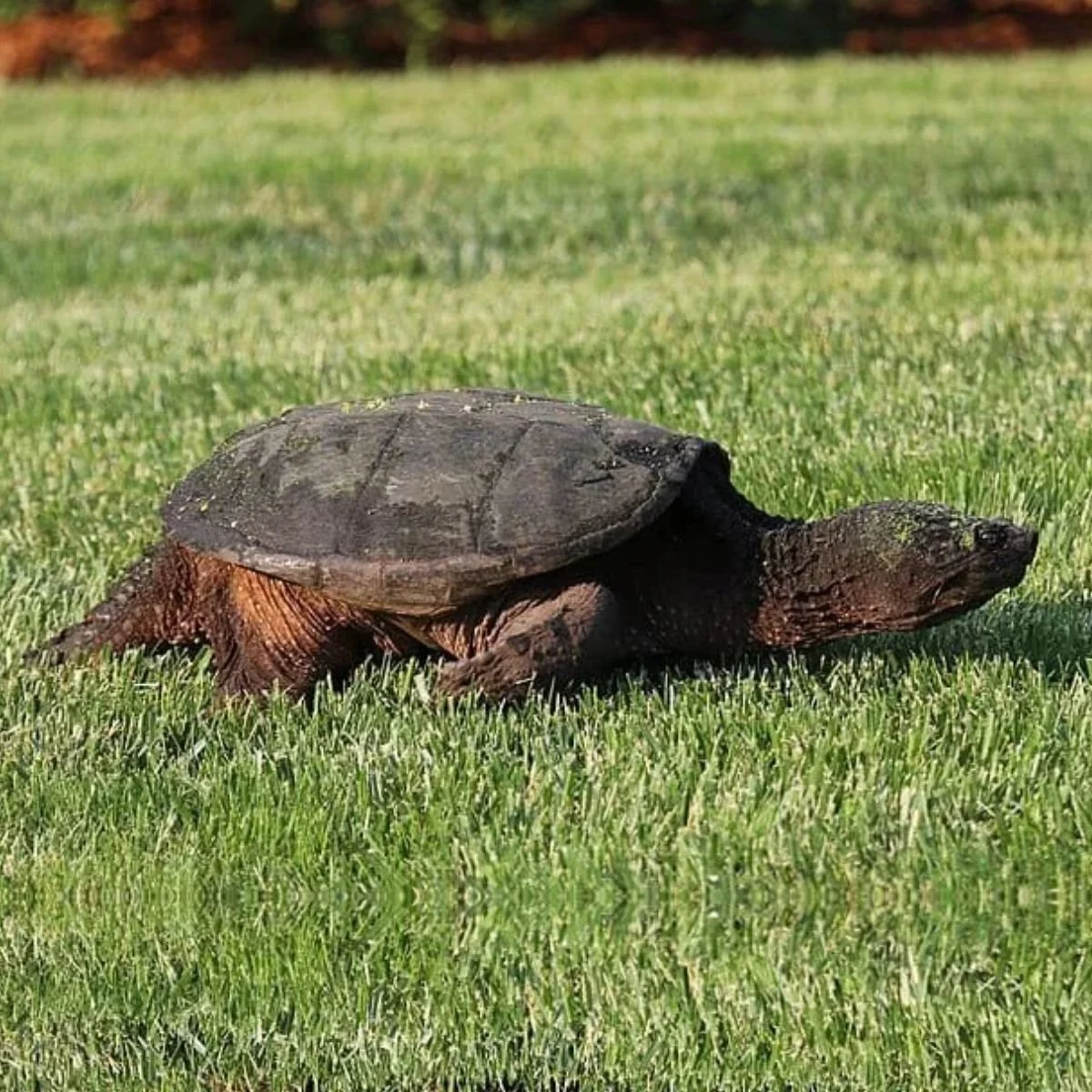
Snapping turtles have long necks and can reach around to bite, so don’t pick one up by the sides of its shell or by the tail.
Stand behind it and gently encourage it to keep walking in the direction it was going.
Slide a car floor mat under the back of the turtle and pull it slowly across the road on the mat.
For a large snapper, scoop it from behind with a wide shovel or slide it into a large tote or trash can and carry it across.
If a turtle on the road is injured, move it off the road in the direction it was heading, write down the exact location, and contact us right away.
What NOT to Do if You Find an Injured or Sick Turtle
To avoid harming a turtle, never:
Pick up any turtle by its tail. This can injure its spine.
Turn a turtle around and send it back the way it came.
Move it to a new area, even one that seems better. Relocating turtles is illegal in Virginia.
Put a box turtle in deep water. Box turtles are land turtles and can drown.
Try to tape, glue, or patch a cracked shell yourself.
Give it food or water unless a rehabilitator tells you to.
Keep it as a pet.
Grab a snapping turtle with your hands.
Turtles can carry Salmonella bacteria. Wash your hands well with soap and water after touching a turtle or anything it was in.
Steps to Take
What you should do depends on what happened to the turtle.
If the Turtle Was Hit by a Car
If it’s safe, move the turtle off the road in the direction it was heading. Pick up a small turtle by the sides of its shell, or use a car mat or shovel for a snapping turtle. Contact us right away, even if the shell is badly cracked. Turtles can survive injuries that look very serious, and many shell fractures can be repaired.
Write down exactly where you found the turtle so it can be released in the same spot after treatment.
If a Dog Caught the Turtle
This is a common reason box turtles come into our care. Contact us right away, even if you don’t see a wound. Tooth punctures in the shell or skin can be easy to miss and can become seriously infected. Keep the dog away and place the turtle in a box until you get instructions.
If It Was Hit by a Mower or String Trimmer
Contact us right away. Box turtles often hide in tall grass and don’t move out of the way. To prevent injuries, walk your yard before mowing and raise your mower blade, especially in spring and summer.
If It’s Tangled in Line or Has a Fishhook
Don’t pull on the line or try to remove a swallowed hook. Cut the line a few inches from the turtle if it’s still attached to something, and contact us for help.
If a Healthy Turtle Is in Your Yard
Leave it alone and keep pets away. It will usually move on within a day. Female turtles may wander far from water to lay eggs in late spring and early summer.
How to Safely Pick Up and Contain a Turtle
Only contain an injured turtle if a licensed wildlife rehabilitator has told you to.
Box turtles and other small turtles: Pick them up by the sides of the shell, near the middle. Keep the turtle low in case it squirms.
Snapping turtles: Don’t use your hands. Slide a car mat, board, or wide shovel under it from behind and move it into a large tote or trash can.
Prepare a box or plastic tote with air holes and a secure lid. Line it with a towel or paper towels.
Don’t put the turtle in water, and don’t add a water dish.
Keep the container at room temperature in a quiet, dark place, out of direct sun and never in a hot car.
Wash your hands with soap and water afterward.
Don’t keep opening the container to check on the turtle. Limiting light, noise, and handling helps reduce stress.
What to Do While You Wait for Help
If a licensed wildlife rehabilitator has asked you to keep the turtle until help is arranged:
Keep children and pets away.
Keep the turtle contained in a quiet, dark place at room temperature.
Don’t offer food or water.
Don’t clean, bandage, or tape the shell.
Write down exactly where you found the turtle.
Note any changes in its condition, and take a photo if you can.
Follow the rehabilitator’s instructions.
Knowing exactly where the turtle came from is important. After treatment, it should be released at that same spot.
Why Turtles Can’t Be Relocated or Kept
It can be tempting to take a turtle to a pond, park, or quiet spot that seems safer, or to keep it as a pet. Either one can harm the turtle and the local turtle population.
They know their home. Box turtles may spend their whole lives in an area only about 750 feet across. They know where to find food, water, shelter, and a safe place to spend the winter.
They try to go back. Turtles have a strong homing instinct. A turtle moved somewhere new often tries to walk home and can end up crossing busy roads.
They can spread disease. A moved turtle can carry illnesses to turtles in the new area.
It’s against the law. Relocating turtles is illegal in Virginia.
Every adult matters. Box turtles can live 30 years or more. Taking one adult out of the wild removes years of future eggs.
If you’ve taken a turtle home, contact us before releasing it. We can help you decide whether it can go back to the exact spot where you found it.
About Adult Turtles
Virginia is home to many kinds of turtles. The ones people find most often are eastern box turtles, which live on land, and water turtles like snapping turtles and painted turtles.
Box Turtles
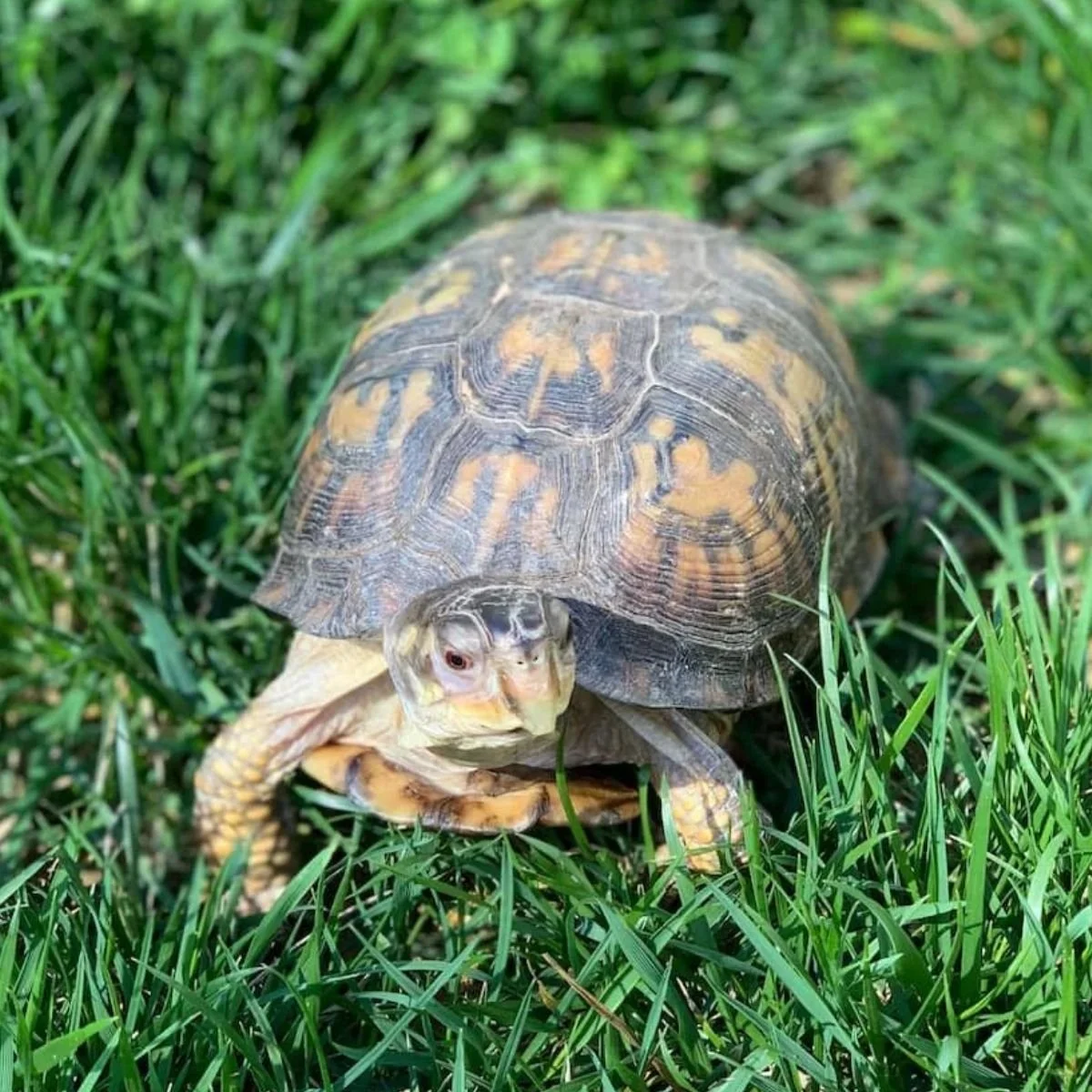
Eastern box turtles live in woods, fields, and yards. They have a high, domed shell and a hinged lower shell that lets them close up completely. In winter, they dig into the ground, sometimes as deep as 2 feet. Many live 30 years or more.
Snapping Turtles
Snapping turtles spend most of their lives in ponds, streams, and wetlands. Females leave the water in late spring and early summer to lay eggs, sometimes traveling far from water. On land, a snapper may hiss and snap to protect itself, but it’s not aggressive if left alone.
Why Are Turtles Crossing the Road?
Adult turtles travel to find mates, food, water, and nesting sites. Females are often on the move in late spring and early summer looking for a place to lay eggs. That’s why helping them across in the direction they’re heading matters so much.
Why Turtles Matter
Box turtles eat berries, mushrooms, insects, slugs, and worms, and help spread seeds. Water turtles help keep ponds and streams clean. Because turtles take years to start breeding and few eggs survive, losing adults to cars, mowers, and pet collecting can cause local populations to decline.
Found a hatchling? See what to do if you find a baby turtle.
Frequently Asked Questions About Adult Turtles
-
Keep people and pets away, and if the turtle is on the road, move it off in the direction it was heading. Contact a licensed wildlife rehabilitator right away. Write down exactly where you found it, and don’t give it food or water or try to fix its shell.
-
Don’t pick it up by the sides of its shell or its tail. It can reach around to bite. Slide a car mat, board, or wide shovel under it from behind and move it into a large tote or trash can. Then contact us for instructions.
-
Often, yes. Turtles can survive injuries that look very serious, and many shell fractures can be repaired and heal with treatment. Contact us even if the shell is badly broken. Don’t try to tape or glue it yourself.
-
Contact a licensed wildlife rehabilitator right away, even if the turtle looks fine. Tooth punctures can be easy to miss and can become seriously infected. Keep the turtle in a box with air holes, away from pets, and don’t give it food or water.
-
Turtles know their home area and have a strong homing instinct. A moved turtle often tries to walk home, which can lead it across busy roads. It can also spread disease to turtles in the new area. Relocating turtles is also illegal in Virginia.
-
No. Turtles have specialized needs and can live for decades, and taking an adult out of the wild removes years of future eggs. If you’ve already taken one home, contact us and we’ll help you decide whether it can be returned to the exact spot where you found it.
-
A round, firm lump just behind the eye is often an ear abscess, one of the most common problems we see in box turtles. Abscesses are painful, won’t heal on their own, and need to be removed surgically by a veterinarian.
Don’t squeeze or open the lump. Contact a licensed wildlife rehabilitator.
Get Help for an Injured or Sick Turtle
If you find a turtle that was hit by a car or mower, was caught by a dog, has a cracked or bleeding shell, or can’t move normally, contact Roanoke Wildlife Rescue for guidance. Write down exactly where you found it so it can be released in the same spot.
Don’t move a turtle to a new area or keep it as a pet. If it’s safe, help a healthy turtle across the road in the direction it was heading.
Call or text us at 540-330-6119. We’re available daily from 10 AM to 7 PM.