
What to Do if You Find a Baby Turtle
Finding a tiny turtle on its own can be surprising, but baby turtles never have a parent looking after them. Mother turtles lay their eggs and leave, so a hatchling is on its own from the moment it climbs out of the nest.
Most baby turtles you find are healthy and just need to be left alone or helped safely on their way. Use the signs below to decide whether a hatchling needs help from a licensed wildlife rehabilitator.
Is It Normal to Find a Baby Turtle Alone?
Yes. Turtle hatchlings are independent from the start. They usually emerge from the nest from late summer to early fall, though some stay in the nest over winter and come out in spring. They often emerge before dawn and head for cover.
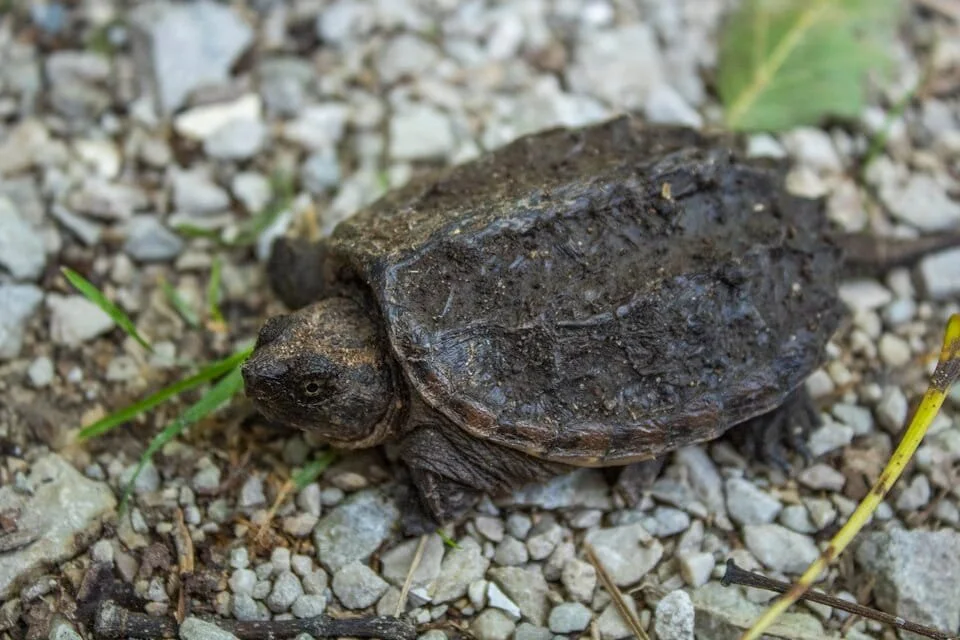
Box turtle hatchlings head for leaf litter and plants. Water turtles, like snapping turtles and painted turtles, head for nearby ponds and streams. A hatchling crossing a yard, driveway, or trail is usually on its way somewhere.
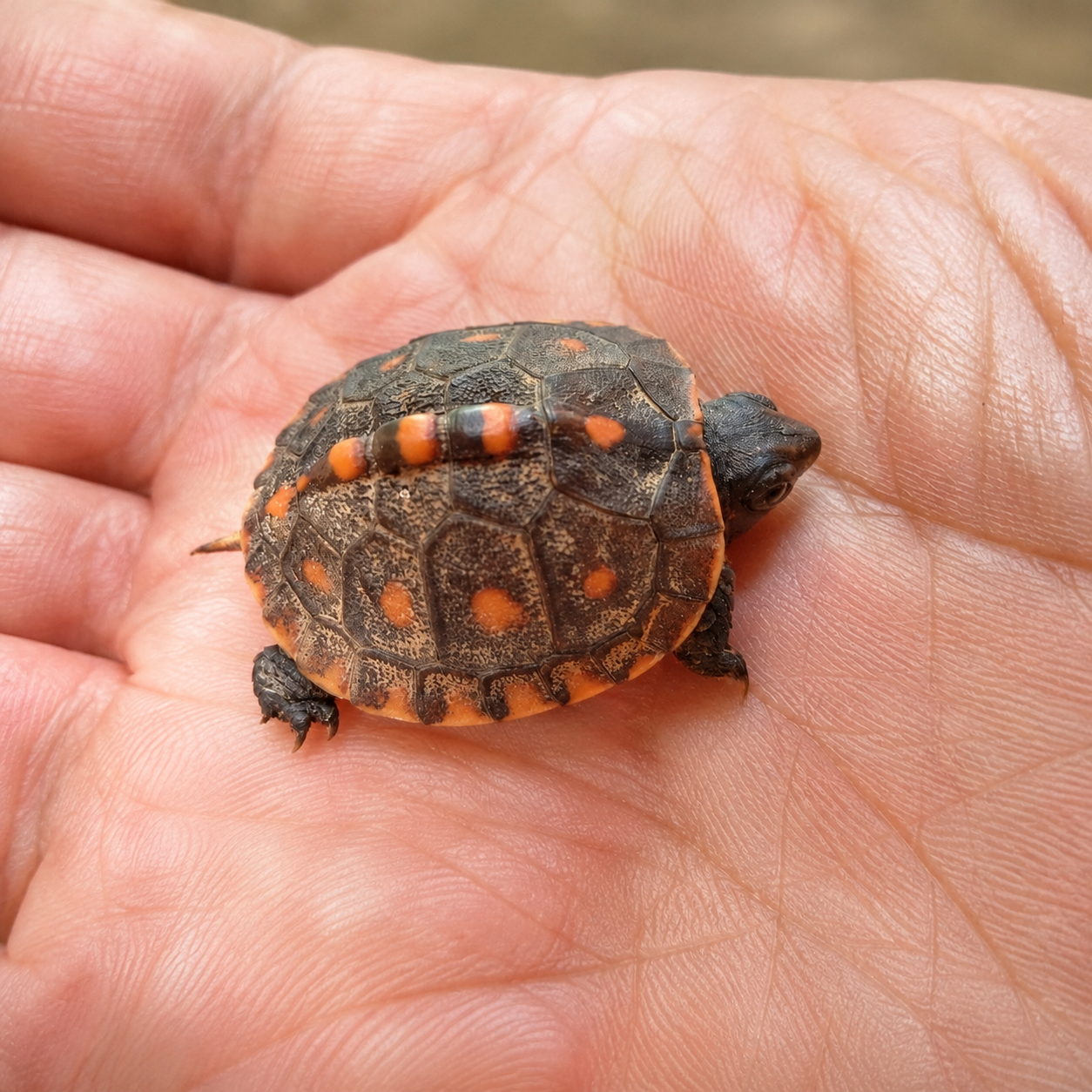
Baby turtles are very small. An eastern box turtle hatchling is only about 1¼ inches long. Its small size alone doesn’t mean it needs help.
Does This Baby Turtle Need Help?
The Baby Is Probably Okay If...
Leave the turtle where it is, or help it a short distance on its way, if:
It is alert and walking normally.
Its eyes are open and clear.
Its shell is whole, with no cracks, chips, or bleeding.
It is heading toward cover or water.
It hasn’t been caught, carried, or chewed by a dog or cat.
A healthy hatchling doesn’t need to be rescued. Keep people and pets away and let it go on its way.
The Baby Needs Help If...
Contact a licensed wildlife rehabilitator if:
It has been caught, carried, or chewed by a dog or cat, even if you can’t see a wound.
Its shell is cracked, broken, crushed, or bleeding.
It was hit by a car, lawn mower, or string trimmer.
It can’t walk normally or is dragging its legs.
Its eyes are swollen shut or it seems weak and unresponsive.
It is covered with flies, fly eggs, or maggots.
It is stuck in netting or trapped in a pool, window well, or drain and seems weak.
If the baby is injured, contact Roanoke Wildlife Rescue or another licensed wildlife rehabilitator as soon as possible. Shell injuries can often heal with proper treatment.
What NOT to Do if You Find a Baby Turtle
To avoid harming a baby turtle, never:
Keep it as a pet or put it in a fish tank.
Move it to a “better” spot far away. In Virginia it is illegal to relocate turtles, and moved turtles often wander into roads trying to get home.
Put a box turtle hatchling in water. Box turtles are land turtles and can drown.
Feed it or give it water unless a rehabilitator tells you to.
Paint, write on, or mark its shell.
Pick up a turtle, even a small snapping turtle, by its tail. This can injure its spine.
Let children or pets play with it.
Turtles can carry Salmonella bacteria. If you touch a turtle, wash your hands well with soap and water.
Steps to Take
If the Hatchling Is Healthy
Leave it alone. If it’s in an unsafe spot, such as a driveway, you can gently pick it up by the sides of its shell and move it in the direction it was heading, only the shortest distance needed to get it out of danger. Set box turtles down in leaf litter or under shrubs. Set water turtles down a short way ahead, toward the pond or stream they were heading for.
If It’s Crossing a Road
Only help if you can do it safely. Pull well off the road, watch for traffic, and carry the turtle to the side of the road it was heading toward. Set it down just off the shoulder, far enough to be out of traffic and no farther. If you turn it around, it will just try to cross again. Never put yourself or other drivers at risk.
If It Was Injured or a Pet Had It
Contact us right away. Even a tiny bite or crack can become infected, and a hatchling’s shell is still soft. Note exactly where you found the turtle so it can be released in the same spot after treatment.
If You Found a Nest or Eggs
Leave the nest alone. If you’re worried about predators, you can cover it with a dome of chicken wire with the edges buried a couple of inches into the ground. The openings let hatchlings out while keeping raccoons, skunks, and dogs from digging up the eggs.
If eggs have been dug up or exposed, contact a wildlife rehabilitator who works with reptiles. Don’t turn the eggs over or try to hatch them yourself.
If It Fell Into a Pool, Window Well, or Drain
If the hatchling is active, lift it out and set it in the nearest safe cover in the direction it was heading. If it seems weak, cold, or unresponsive, contact us for guidance.
Can I Keep a Baby Turtle or Move It Somewhere Better?
No. Even a well-meaning move can hurt a turtle. It’s best to leave it where you found it, or help it a short distance in the direction it was already going.
Why Turtles Can’t Be Relocated
They know their home. Box turtles may spend their whole lives within a few hundred feet of where they hatched. They know where to find food, water, shelter, and a safe place to spend the winter.
They try to go back. Turtles have a strong homing instinct. A turtle moved somewhere new often tries to walk home, which can lead it across busy roads.
They can spread disease. A moved turtle can carry illnesses to turtles in the new area that have never been exposed to them.
It’s against the law. Relocating turtles is illegal in Virginia.
If You Already Took a Hatchling Home
Contact Roanoke Wildlife Rescue. If the turtle is healthy and hasn’t been kept with other reptiles, we can help you return it to the exact spot where you found it. Don’t release it anywhere else.
What to Do While You Wait for Help
If a wildlife rehabilitator asks you to contain the baby turtle while you arrange care, keep handling to a minimum.
Place the turtle in a small box or plastic container with air holes and a secure lid.
Line it with a paper towel. Don’t add a bowl of water.
Keep the container at room temperature in a quiet, dark place, out of direct sun and never in a hot car.
Keep children and pets away.
Don’t give the turtle food or water.
Write down exactly where you found it.
Wash your hands with soap and water after handling the turtle or its container.
Quiet, temporary containment is not the same as keeping the turtle. The goal is to keep it safe until it can get care and be returned to where it was found.
Do Not Keep or Attempt to Raise a Baby Turtle
If a baby turtle needs help, contact a licensed wildlife rehabilitator. Do not keep it as a pet or try to raise it yourself.
Turtles have very specific needs for diet, lighting, temperature, and hibernation. Without them, young turtles can develop soft shells, deformities, and other serious health problems. Box turtles can live 30 years or more, some as long as 50, so a turtle kept as a pet is removed from the wild population for a lifetime.
Turtles grow slowly and take years to start breeding, and most eggs and hatchlings never survive to adulthood. That means every turtle that does make it matters for the population.
About Baby Turtles
Female turtles dig nests and lay their eggs in late spring and early summer, then leave. The eggs are warmed by the sun and soil, and the mother never returns. An eastern box turtle usually lays 3 to 6 eggs. Snapping turtles lay many more.
When Do Baby Turtles Hatch?
Hatchlings usually emerge from late summer to early fall. Some stay in the nest through the winter and come out in spring. Because they often emerge before dawn, you may never see them leave.
Where Do Baby Turtles Go?
Box turtle hatchlings hide in leaf litter and plants and stay out of sight for their first few years, usually close to where they hatched. Water turtle hatchlings head for ponds, streams, and wetlands.
Why Turtles Are Important
Box turtles eat berries, mushrooms, insects, slugs, and worms, and they help spread the seeds of the plants they eat. Water turtles help keep ponds and streams clean by eating plants, insects, and dead animals. Because turtles live a long time and reproduce slowly, losing even a few adults can cause a local population to decline.
Found a grown turtle that’s hurt? See what to do if you find an injured turtle.
Frequently Asked Questions About Baby Turtles
-
If it’s healthy, leave it alone or help it the shortest distance needed to get out of danger. Gently pick it up by the back half of its shell, never by the tail, and set it down a short way ahead in the direction it was heading, toward the nearest pond or stream. Even small snapping turtles can bite, so keep your fingers away from its head.
Contact us if it’s injured or a pet had it.
-
A hatchling that is alert, walking normally, and has a whole, undamaged shell is usually fine on its own.
It needs help if its shell is cracked or bleeding, it was caught by a dog or cat, it was hit by a car or mower, or it seems weak or can’t walk normally. If you’re not sure, call or text us with a photo.
-
Only if you can do it safely. Pull well off the road and watch for traffic. Pick the turtle up by the sides of its shell and move it to the side of the road it was heading toward, just off the shoulder. Move it only the shortest distance needed to get it out of traffic. If you take it back where it came from, it will just try to cross again.
-
Not a box turtle. Box turtles are land turtles and can drown in deep water. Water turtles, like snapping and painted turtles, can be set at the edge of the pond or stream they were heading toward so they can enter on their own.
If you’re not sure what kind of turtle you have, send us a photo.
-
No. Turtles have very specific care needs and can live for decades. In Virginia it’s also illegal to relocate turtles. If you’ve already taken one home, contact us and we’ll help you return it to the exact spot where you found it.
-
In the wild, baby turtles find their own food, such as insects, worms, slugs, and plants, depending on the species. Don’t feed a baby turtle you’ve found. A healthy hatchling should be left to find food on its own, and an injured one needs care from a rehabilitator.
-
Contact a licensed wildlife rehabilitator right away, even if the turtle looks fine. A hatchling’s shell is still soft, and tooth punctures can be easy to miss and can become infected.
Keep the turtle in a small box with air holes, away from pets, and don’t give it food or water.
-
Leave the nest alone. You can protect it from predators with a chicken wire dome, edges buried a couple of inches into the ground. If eggs have been dug up or exposed, contact a wildlife rehabilitator who works with reptiles. Don’t turn the eggs over or try to hatch them yourself.
Get Help for a Baby Turtle
If you find a baby turtle that is injured, was caught by a dog or cat, or was hit by a car or mower, contact Roanoke Wildlife Rescue for guidance. Write down exactly where you found it so it can go back home after treatment.
Don’t keep the turtle, move it somewhere new, or put a box turtle in water. If you’ve already taken a hatchling home, contact us and we’ll help you figure out the next steps.
Call or text us at 540-330-6119. We’re available daily from 10 AM to 7 PM.