
What to Do if You Find a Baby Bat
Finding a bat — especially a baby bat — can raise questions about what to do next. Whether the bat is on the ground, inside your home, or separated from its roost, knowing how to respond safely is important for both human health and the bat’s well-being.
Does This Baby Bat Need Help?
Contact a licensed wildlife rehabilitator for guidance if:
You find it on the ground.
It appears injured, cold, weak, or unresponsive.
The roost has been disturbed or destroyed.
Healthy baby bats typically remain in the roost with their mothers. A baby bat found on the ground may be injured, weak, or separated from its roost and should be assessed by a licensed wildlife rehabilitator.
What NOT to Do if You Find a Baby Bat
To protect yourself and the bat, never:
Touch a bat with bare hands.
Attempt to feed or give water to a bat.
Throw a bat into the air or try to make it fly.
Handle the bat more than necessary.
Release the bat if there is any possibility that it had contact with a person or pet.
If a person or pet may have had contact with the bat, do not release it. Safely contain the bat if possible and contact your local health department for guidance.
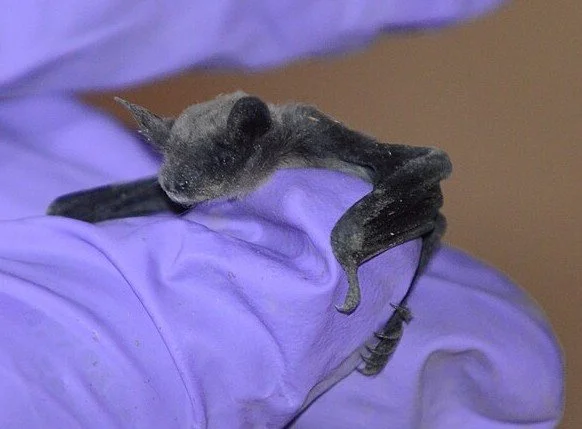
Steps to Take
A baby bat found on the ground may be injured, weak, unable to fly, or separated from its mother or roost. Keep people and pets away and do not touch the bat with bare hands.
If the bat needs to be moved for its safety, follow the containment instructions below and contact a licensed wildlife rehabilitator for guidance.
If You Find a Baby Bat in Your House
A baby bat may enter the living area of a home after becoming separated from a roost in an attic, chimney, wall, or other part of the structure. Before releasing or removing the bat, first determine whether there is any possibility that it had contact with a person or pet.
If You Are Certain There Was No Contact
If everyone was awake and aware of the bat and you are certain there was no direct contact with a person or pet, keep people and pets away from the bat and contact a licensed wildlife rehabilitator for guidance on the safest next step.
If There Is Any Chance of Contact
Do not release the bat if it may have had contact with a person or pet.
Contact your local health department if:
Someone was bitten or scratched.
Someone had direct physical contact with the bat.
A bat was found in a room with a sleeping person.
A bat was found with an unattended young child.
A bat was found with someone who may not be able to reliably determine or communicate whether contact occurred.
A pet may have had contact with the bat.
Bat bites can be very small and may not be obvious. Safely contain the bat if possible and contact your local health department for guidance about rabies testing and medical care.
How to Safely Contain a Baby Bat
If you must intervene, follow these steps carefully:
Put on thick leather or work gloves. Never handle a bat with bare hands.
Wait until the bat is still or has landed.
Place a box or similar container over the bat.
Slide a piece of stiff cardboard underneath the container.
Secure the cardboard and make sure the container has small ventilation holes.
Keep the container secure and away from children and pets.
Contact the appropriate licensed wildlife rehabilitator or local health department for further instructions.
If You Find a Baby Bat on the Ground Outside
A baby bat found on the ground may be injured, weak, unable to fly, or separated from its mother or roost and should be evaluated by a licensed wildlife rehabilitator.
What to do:
• Keep people and pets away from the bat.
• Do not attempt to make the bat fly or return it to a roost yourself.
• If containment is necessary, follow the safe-containment instructions above.
• Contact a licensed wildlife rehabilitator for guidance.
What to Do While You Wait for Help
Once the bat is safely contained, keep the container in a secure, quiet location away from children and pets. Minimize handling and do not offer food or water. Follow the instructions provided by the wildlife rehabilitator or health department.
Do Not Keep or Attempt to Raise a Baby Bat
If a baby bat needs help, contact a licensed wildlife rehabilitator and surrender the animal as soon as possible. Do not keep the bat as a pet or attempt to raise it yourself.
Bats have specialized nutritional, medical, housing, and developmental needs and should only be cared for by appropriately permitted wildlife rehabilitators. Improper feeding, handling, or housing can cause serious harm and interfere with the bat's ability to return successfully to the wild.
Virginia wildlife rehabilitation guidelines classify bats as a species with a high risk of carrying and transmitting rabies. Unnecessary handling can also create a health risk for people and pets.
If you have already been caring for a baby bat, contact Roanoke Wildlife Rescue immediately and tell us how long you have had the bat, what it has been fed or given to drink, and whether any person or pet may have had direct contact with it.
If there is any possibility of human or pet contact, do not release the bat. Contact your local health department for guidance.
About Baby Bats
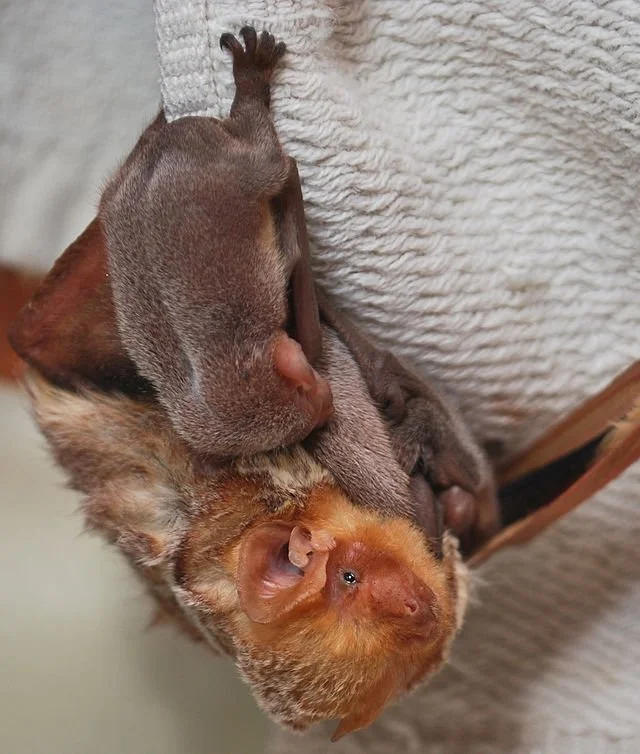
Baby bats, called pups, depend on their mothers for food, warmth, and protection while they grow. Understanding how young bats develop can help explain why a baby found away from its roost may need assistance.
How Mother Bats Care for Their Young
During the warmer months, many female bats gather in groups called maternity colonies to give birth and raise their young. Depending on the species, these colonies may be found in trees, caves, buildings, or other protected roosts. Virginia species such as little brown and big brown bats may use structures and bat houses as maternity sites.
Baby bats nurse from their mothers and remain dependent on them while they develop. Mothers leave the roost to feed but return to care for and nurse their pups. In many species that live in groups, mothers recognize their own pups among the others by their calls, scent, and other cues.
When Do Baby Bats Learn to Fly?
Young bats are born unable to fly and must develop the strength and coordination needed for flight. The timing varies by species, but many bat pups begin learning to fly within approximately three to six weeks after birth. Even after their first flights, young bats may continue depending on their mothers as they develop the skills needed to survive independently.
This learning period is one reason a young bat may occasionally become separated from its roost or end up somewhere unexpected. If you find a baby bat on the ground or in another unusual location, contact a licensed wildlife rehabilitator before attempting to move or release it.
About Virginia Bats
Virginia's bats are an important part of healthy ecosystems. Most Virginia bats feed primarily on insects, including moths, beetles, and other insects active at night. By eating insects, bats help keep the natural balance among plants and animals in their habitats.
Protecting bats—and the places where they raise their young—helps conserve an important part of Virginia's native wildlife.
Frequently Asked Questions About Baby Bats
-
Keep people and pets away and do not touch the bat with bare hands. A baby bat found on the ground may be injured, weak, or separated from its mother or roost. Contact a licensed wildlife rehabilitator for guidance. If you need to move the bat for its immediate safety, use thick gloves and follow the safe containment instructions above.
-
Mother bats provide extensive care for their young, and reunion may be possible in some situations. However, whether a reunion should be attempted depends on the baby's condition, location, and whether the roost can be identified. Contact a wildlife rehabilitator before attempting to return or release a baby bat.
-
No. Never handle a bat with bare hands. If a bat must be contained, wear thick leather or work gloves and use a container rather than picking the bat up directly. Bat bites and scratches can be very small and difficult to detect.
-
No. Do not offer a baby bat food or water unless a licensed wildlife rehabilitator specifically instructs you to do so. Feeding or giving fluids incorrectly can harm the bat. Keep it safely contained and contact a wildlife rehabilitator for guidance.
-
Keep people and pets away and first consider whether anyone could have had contact with the bat. Do not release the bat if contact may have occurred. Safely contain it if possible and contact your local health department for guidance. If you are certain there was no possibility of contact, contact a licensed wildlife rehabilitator for guidance on the safest next step. CDC advises contacting public health or animal control about a bat found in a home and not releasing it when possible contact has occurred until you have spoken with a public-health professional.
-
Do not release the bat. Contact your local health department for guidance. This is particularly important after a bite or scratch, direct contact, or when a bat is found with a sleeping person, unattended young child, someone who may not reliably know whether contact occurred, or a pet. Virginia health officials advise retaining bats involved in possible exposures so they can potentially be tested for rabies.
Get Help for a Baby Bat
If you find a baby bat that is injured, weak, displaced, or otherwise appears to need help, contact Roanoke Wildlife Rescue for guidance. We can help you determine the safest next step for the bat.
If a person or pet may have had contact with the bat, do not release it. Contact your local health department for guidance about possible rabies exposure.