
What to Do if You Find a Baby Opossum
Finding a baby opossum, called a joey, alone can be concerning, but whether it needs help depends largely on its size, condition, and circumstances. Very young opossums depend completely on their mother, while older juveniles eventually begin living independently. Knowing what to look for can help you determine when an opossum needs professional care and when it should be left alone.
Is This Baby Opossum Old Enough to Be on Its Own?
Young opossums stay with their mother while they are small, first developing in her pouch and later riding on her back. As they grow, they eventually become independent and begin traveling on their own.
Size can help determine whether a young opossum is old enough to be independent. Measure the opossum's body from the tip of the nose to the base of the tail — do not include the tail in the measurement.
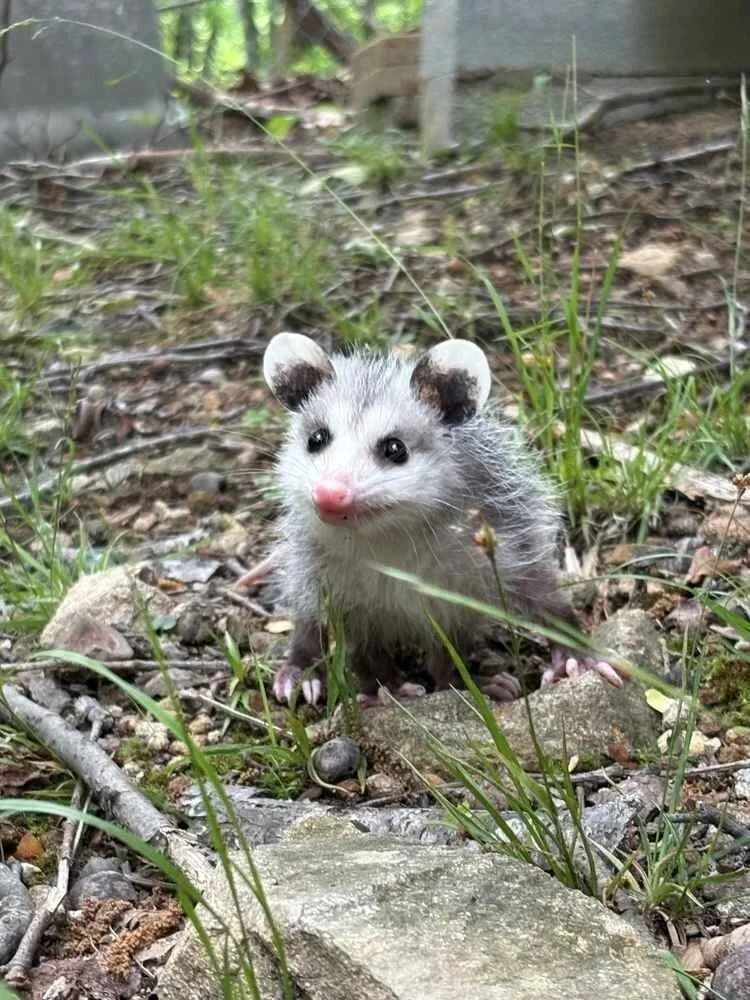
A young opossum that measures about 7 inches or longer from nose to rump, is fully furred, has its eyes open, and appears alert and healthy may be old enough to be on its own. Seeing an opossum this size alone does not necessarily mean it has been orphaned.
A smaller joey found alone is more likely to still be dependent on its mother and should be evaluated by a licensed wildlife rehabilitator.
Regardless of size, an opossum that is injured, cold, weak, lethargic, covered with flies or fly eggs, or has been caught by a cat or dog needs professional help.
Does This Baby Opossum Need Help?
The Young Opossum Is Probably Okay If...
A young opossum found alone may already be independent. It is probably okay to leave the animal alone if it:
Measures about 7 inches or longer from nose to rump, not including the tail
Is fully furred with its eyes open
Is alert and responsive
Is walking and moving normally
Appears healthy and uninjured
If these signs are present, give the opossum space and keep people and pets away. Do not capture it simply because it is alone.
The Baby Opossum Needs Help If...
Contact a licensed wildlife rehabilitator for guidance if the opossum:
Measures less than about 7 inches from nose to rump and is alone without its mother
Is cold, weak, lethargic, or unresponsive
Is injured, bleeding, or unable to move normally
Is covered with flies, fly eggs, or maggots
Has been caught, carried, or injured by a cat or dog
Is repeatedly crying, wandering, or showing other signs of distress
Is found beside a mother that is dead or seriously injured
Is still attached to a dead mother's nipple or inside her pouch
If you find an injured or dead mother opossum, do not assume there are no surviving babies. Young joeys may be inside her pouch or attached to her nipples and may not be immediately visible.
What NOT to Do if You Find a Baby Opossum
To protect the baby opossum and avoid causing additional harm, never:
Feed a baby opossum or give it water, milk, formula, or other liquids.
Attempt to raise a baby opossum yourself.
Assume a small joey found alone is old enough to survive independently.
Leave a dependent joey outside hoping its mother will return.
Pull, twist, or forcibly remove a joey that is attached to its mother's nipple.
Handle the baby more than necessary.
Place a baby directly on a heating pad or other hot surface.
Allow children or pets to interact with the opossum.
If you find joeys attached to an injured or deceased mother, contact Roanoke Wildlife Rescue or another licensed wildlife rehabilitator immediately for instructions. Removing an attached joey incorrectly can cause serious injury.
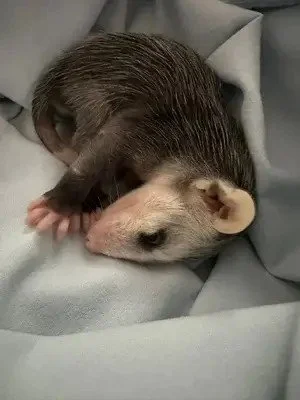
Steps to Take
If the Young Opossum Appears Healthy and Independent
If the young opossum measures about 7 inches or longer from nose to rump (not including the tail), is fully furred, alert, moving normally, and has no visible injuries, it may already be independent.
Leave the opossum alone and give it space. Keep children and pets away and allow it to move on by itself.
If the Baby Is Small and Alone
A joey measuring less than about 7 inches from nose to rump is more likely to still depend on its mother. If you find a small joey alone, contact a licensed wildlife rehabilitator for guidance.
Do not leave a very young joey outside expecting its mother to return for it. Opossum mothers do not typically retrieve young that have become separated from them.
If the Baby Is Injured, Weak, or Cold
If the joey is injured, bleeding, cold, weak, lethargic, unable to move normally, or covered with flies, fly eggs, or maggots, contact a licensed wildlife rehabilitator as soon as possible.
Do not offer food or water. Follow the rehabilitator's instructions about safely containing and transporting the joey.
If a Cat or Dog Had the Baby
Contact a licensed wildlife rehabilitator even if you cannot see an injury. Bites and puncture wounds can be difficult to detect, and an animal caught or carried by a pet may need prompt professional evaluation and treatment.
Keep the pet separated from the opossum and follow the rehabilitator's instructions for containment and transport.
If You Find a Dead or Injured Mother Opossum
If you find an adult female opossum that is dead or seriously injured, there may still be living babies with her. Joeys may be inside the mother's pouch, attached to her nipples, clinging to her body, or nearby.
If it is safe to approach, look carefully for movement or visible babies. Do not reach into the pouch with bare hands or pull an attached joey from a nipple.
If You Find Babies in the Pouch
Contact Roanoke Wildlife Rescue or another licensed wildlife rehabilitator immediately for guidance. Tell them whether the mother is alive or deceased, approximately how many babies you can see, and whether any joeys appear to still be attached.
If a joey is attached to a nipple, do not pull, twist, or force it off. A wildlife rehabilitator can tell you how to proceed based on the situation.
Check Around the Mother, Too
Look carefully around the immediate area for additional joeys. Older babies may have been riding on their mother's back and can become separated during an injury or collision.
Keep people and pets away from any babies you find and contact a wildlife rehabilitator for instructions.
If the Mother Is in or Near the Road
Do not put yourself in danger to check an opossum in a roadway. If the animal can only be reached by entering active traffic or another unsafe area, contact local animal control or another appropriate local authority for assistance.
What to Do While You Wait for Help
If a licensed wildlife rehabilitator advises you to contain the baby opossum, keep it warm, dark, quiet, and secure while you wait for further instructions.
Place the joey in a secure, ventilated box or carrier.
Line the bottom with a soft, clean cloth or towel.
Keep the container in a quiet location away from children, pets, and household activity.
Provide gentle extra warmth only if instructed, making sure the joey can move away from the heat.
Handle the joey as little as possible.
Do not offer food, milk, formula, or water.
Follow the rehabilitator's instructions for transportation and care.
Do not attempt to care for the joey yourself. Baby opossums have specialized nutritional, temperature, and developmental needs and should be evaluated by a licensed wildlife rehabilitator.
Do Not Keep or Attempt to Raise a Baby Opossum
If a baby opossum needs help, contact a licensed wildlife rehabilitator and surrender the animal as soon as possible. Do not keep the opossum as a pet or attempt to raise it yourself.
Baby opossums have highly specialized nutritional requirements. An improper or unbalanced diet can cause serious illness, developmental problems, metabolic bone disease, which weakens bones, or death. Even though opossums eat both plants and animals, foods such as meat, fruit, or pet food alone do not provide a growing opossum with the carefully balanced nutrition it needs.
Licensed wildlife rehabilitators provide age-appropriate nutrition, medical care, housing, and opportunities for young opossums to develop the natural behaviors they need for life in the wild.
If you have already been caring for a baby opossum, contact Roanoke Wildlife Rescue as soon as possible and tell us how long you have had the animal and everything it has been fed or given to drink. Do not wait until the baby begins showing signs of illness—nutritional problems may already be developing before they become obvious.
About Baby Opossums
Baby opossums, called joeys, have an unusual start to life. They are born extremely small and underdeveloped, then continue developing inside their mother's pouch. As they grow, they eventually leave the pouch, ride on their mother's back, and gradually become independent.
How Mother Opossums Care for Their Young
After birth, opossum joeys make their way into their mother's pouch, where they attach to a nipple and continue developing. They remain dependent on their mother for warmth, protection, and nutrition during this early stage.
As the joeys grow larger, they begin spending time outside the pouch and may ride on their mother's back while she travels and searches for food.
Why Baby Opossums Sometimes Become Separated
Older joeys may occasionally fall or become separated from their mother while riding on her back. Unlike some wildlife mothers, an opossum typically does not return to retrieve a joey that has been left behind.
This is why a small joey found alone may need help, even when it appears uninjured. Contact a licensed wildlife rehabilitator rather than leaving a dependent joey where it was found and waiting for its mother to return.
When Do Young Opossums Become Independent?
As young opossums grow, they become increasingly capable of traveling and finding food on their own. Body size and development are more useful than simply seeing an opossum alone when deciding whether a juvenile may still need its mother.
A fully furred, alert, healthy young opossum measuring about 7 inches or longer from nose to rump, not including the tail, may be old enough to live independently. Smaller joeys found alone should be evaluated by a licensed wildlife rehabilitator.
Why Opossums Are Important
Opossums are native wildlife that play a useful role in local ecosystems. As opportunistic omnivores, they eat a wide variety of foods, including insects, other invertebrates, plant material, carrion, and small animals.
By consuming carrion and other organic material, opossums contribute to natural nutrient cycling and help clean up their environment. Like other native wildlife, they are an important part of Virginia's biodiversity.
Frequently Asked Questions About Baby Opossums
-
Size and development can help. A young opossum that measures about 7 inches or longer from nose to rump, not including the tail, is fully furred, alert, moving normally, and appears healthy may be old enough to live independently. A smaller joey found alone is more likely to still need its mother and should be evaluated by a licensed wildlife rehabilitator.
-
Contact a licensed wildlife rehabilitator for guidance. Unlike some wildlife mothers, an opossum typically will not return to retrieve a joey that has become separated from her. Do not leave a small, dependent joey outside waiting for its mother to return.
-
No. Do not give a baby opossum food, milk, formula, or water unless a licensed wildlife rehabilitator specifically instructs you to do so. Baby opossums have specialized nutritional needs, and feeding or giving fluids incorrectly can cause serious harm.
-
There may be surviving joeys inside the mother's pouch, attached to her nipples, clinging to her body, or nearby. Do not pull or twist an attached joey from a nipple. Contact Roanoke Wildlife Rescue or another licensed wildlife rehabilitator immediately for instructions. If the mother is in an active roadway or another unsafe location, do not put yourself in danger to check her.
-
Contact a licensed wildlife rehabilitator even if the joey appears uninjured. Small puncture wounds can be difficult to see, and an opossum that has been caught or carried by a pet may need professional evaluation and treatment.
-
If the opossum is small, injured, weak, or otherwise appears to need help, contact a licensed wildlife rehabilitator for guidance. Keep the joey secure, quiet, and away from children and pets while you wait for instructions. Do not feed it or give it water.
Get Help for a Baby Opossum
If you find a baby opossum that is small and alone, injured, cold, weak, caught by a cat or dog, or with an injured or deceased mother, contact Roanoke Wildlife Rescue for guidance. We can help you determine whether the joey needs professional care and what to do next.
Do not feed the baby, give it water, or attempt to raise it yourself. If the joey is still attached to its mother, do not attempt to pull it free. Follow the instructions provided by a wildlife rehabilitator.