
What to Do if You Find a Baby Rabbit
Finding a baby rabbit, often called a kit, alone can be concerning, but in many cases, the baby has not been abandoned. Mother rabbits intentionally spend very little time at the nest, helping avoid drawing predators to their young.
Knowing what is normal—and what signs indicate a baby rabbit truly needs help—can help you determine when to leave the baby alone and when to contact a wildlife rehabilitator.
Is It Normal to See a Baby Rabbit Alone?
Yes. It is normal for a baby rabbit to spend long periods without its mother nearby. Mother rabbits stay away from the nest for much of the day, which helps avoid attracting predators to their young.
The mother typically returns only briefly to nurse her babies, often during the evening, overnight, or early morning. Because these visits are short and may happen when people are not watching, it can appear that the baby has been abandoned even when the mother is caring for it normally.
If the baby is warm, quiet, appears healthy and well-fed, and is resting in or near an intact nest, the best thing to do is usually to leave it alone and keep people and pets away.
Not seeing the mother is not, by itself, a sign that a baby rabbit has been abandoned.
Does This Baby Rabbit Need Help?
The Baby Is Probably Okay If...
The baby is warm, alert, and responsive.
It appears healthy and well-fed, with a rounded rather than sunken belly.
It is resting quietly in an intact nest.
There are no visible wounds, bleeding, flies, fly eggs, or other signs of injury.
There is no evidence that the mother has died.
The baby has not been caught or injured by a cat or dog.
If the baby appears healthy and is in an intact nest, leave it where it is and keep people and pets away. The mother's absence during the day is normal and does not mean the baby has been abandoned.
The Baby Needs Help If...
It is injured, bleeding, weak, cold, lethargic, or unresponsive.
It has flies, fly eggs, or maggots on its body.
It has been caught, carried, bitten, or injured by a cat or dog.
The mother is confirmed dead.
The nest has been destroyed and cannot be safely restored.
The baby continues to decline or there is strong evidence the mother is no longer caring for it.
If any of these signs are present, contact Roanoke Wildlife Rescue or another licensed wildlife rehabilitator for guidance. Do not feed the baby or give it water while you wait for instructions.
What NOT to Do if You Find a Baby Rabbit
To avoid separating a healthy baby rabbit from its mother or accidentally causing harm, never:
Assume the baby has been abandoned simply because you do not see its mother.
Feed the baby or give it water, milk, formula, or other liquids.
Attempt to raise a baby rabbit yourself.
Remove a healthy baby from an intact nest.
Move the nest to a different location unless instructed by a wildlife rehabilitator.
Pet, cuddle, hold, or repeatedly handle the baby. Wild baby rabbits can experience severe stress from human interaction, even when they appear calm or remain still. Handle a baby only when necessary to return it to its nest, move it out of immediate danger, or follow a wildlife rehabilitator's instructions.
Repeatedly disturb the baby or nest while checking to see whether the mother has returned.
Allow children or pets near the baby or nest.
Place an injured or cold baby directly on a heating pad or other hot surface.
If you accidentally touched or handled the baby, don't assume its mother will reject it. Human scent does not normally cause a mother rabbit to abandon her young. Return a healthy baby to its nest if it is safe to do so, minimize further handling and disturbance, and allow the mother an opportunity to return.
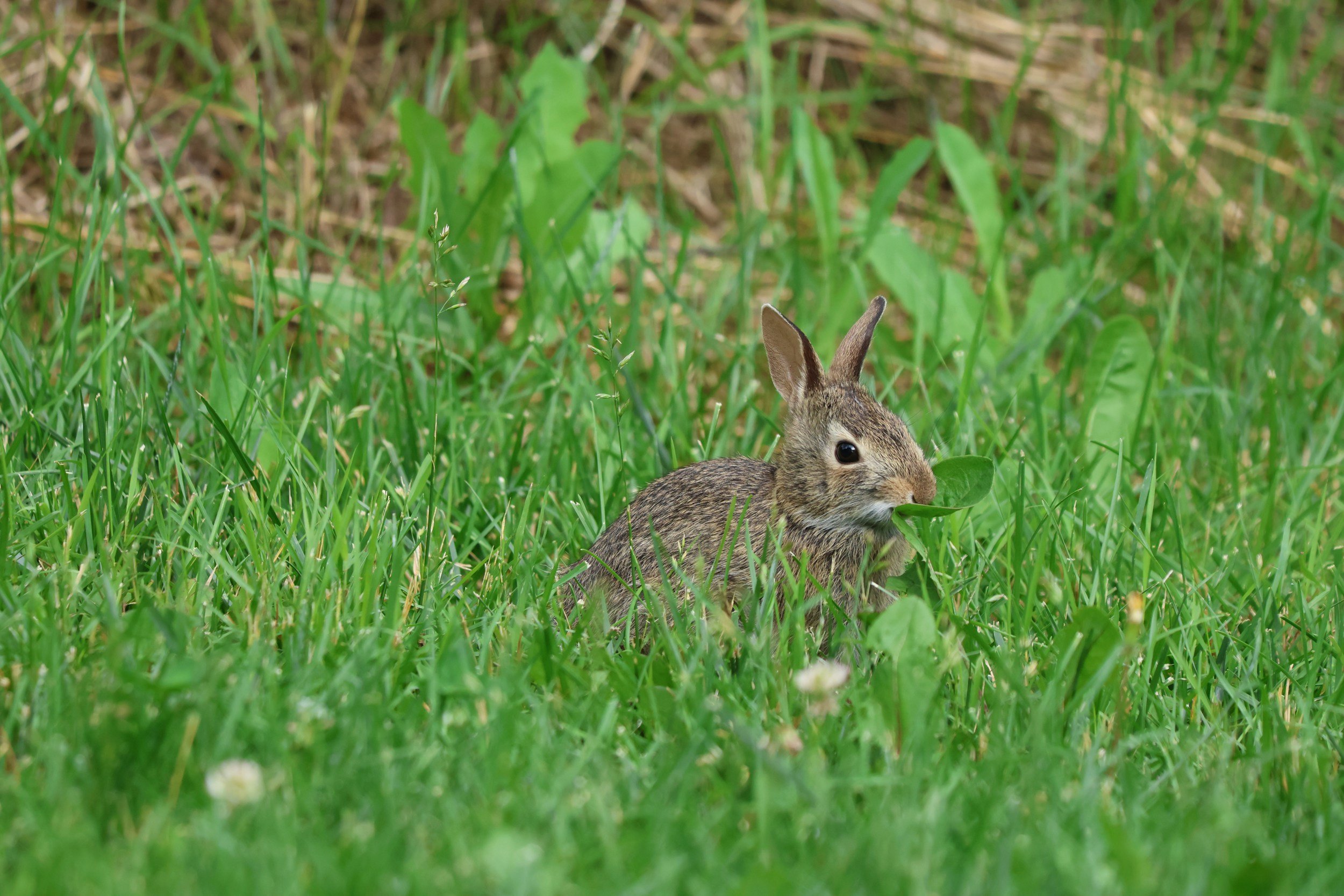
What to Do if You Find a Baby Rabbit
If the Baby Is Healthy and in a Nest
Leave the baby in the nest. Mother rabbits normally spend long periods away and return only briefly to nurse their young.
Keep children and pets away, avoid unnecessary handling, and give the mother an opportunity to continue caring for her baby.
If the Baby Is Outside the Nest
If the baby is very young and you can identify the original nest, gently return it to the nest as long as the baby appears healthy and the nest is safe.
It is okay if you have touched the baby. Human scent does not mean the mother will reject it. After returning the baby, leave the area and minimize further disturbance.
If You Cannot Find the Nest
If a very young baby rabbit is alone and you cannot locate its nest, contact Roanoke Wildlife Rescue or another licensed wildlife rehabilitator for guidance before moving it to another location.
Do not create a new nest in a different area or attempt to raise the baby yourself.
If the Baby Is Injured, Cold, or Weak
A baby rabbit that is injured, bleeding, cold, weak, lethargic, unresponsive, or covered with flies, fly eggs, or maggots needs professional help.
Contact a licensed wildlife rehabilitator as soon as possible. Do not offer food or water. Follow the rehabilitator's instructions about containment and transport.
If a Cat or Dog Had the Baby
Contact a licensed wildlife rehabilitator even if you cannot see an injury. Small puncture wounds and other injuries may be difficult to detect, and a baby that has been caught, carried, or bitten by a pet may need prompt professional evaluation and treatment.
Keep the pet away from the rabbit and follow the rehabilitator's instructions for what to do next.
What to Do if a Rabbit Nest Is Disturbed
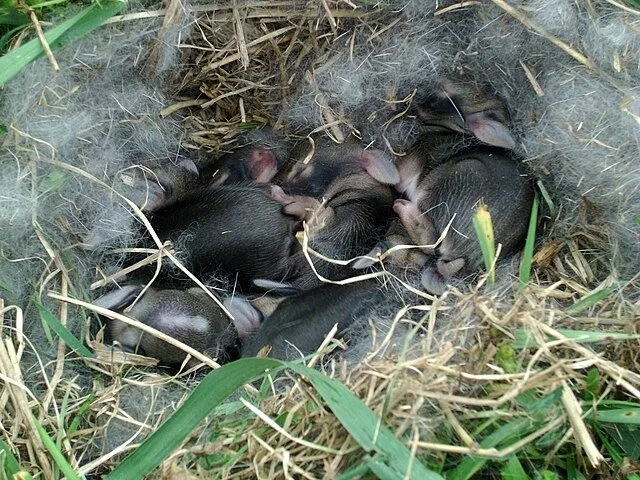
Baby rabbits are often raised in shallow nests hidden in grass or other vegetation, so nests can easily be uncovered during yard work or disturbed by pets. A disturbed nest does not necessarily mean the babies need to be removed. In many cases, the nest can be restored and the mother can continue caring for her young.
If the Nest Was Accidentally Uncovered
If the babies appear healthy and uninjured, gently return any displaced babies to the nest. Restore the nest as closely as possible using the original grass, fur, and other nesting material, then lightly cover the babies as they were before.
Leave the nest in its original location. The mother knows where to find her young and may continue caring for them even after the nest has been disturbed.
If a Pet Disturbed the Nest
Keep dogs and cats away from the area and check the babies for signs of injury. If a pet caught, carried, bit, or injured a baby rabbit, contact a licensed wildlife rehabilitator even if you cannot see an obvious wound.
If the babies were not contacted or injured by the pet, restore the nest and prevent the pet from accessing the area while the babies remain there.
If You Need to Mow or Work Near the Nest
Temporarily avoid mowing, trimming, digging, or other yard work directly around the nest. Clearly mark the general area so other people know to avoid it, while leaving enough space for the mother to reach her young.
Do not place anything directly over the nest that could trap the mother or prevent her from entering and leaving.
If the Nest Cannot Be Safely Restored
If the nest has been completely destroyed, the babies are injured, or the original location is no longer safe, contact Roanoke Wildlife Rescue or another licensed wildlife rehabilitator.
Do not move the nest to another part of the yard on your own. Keeping the babies as close as safely possible to their original nest gives the mother the best opportunity to find and continue caring for them.
How to Tell if the Mother Rabbit Is Returning
Because mother rabbits visit their nests only briefly, you may never actually see the mother with her babies. Watching the nest continuously is not necessary and can discourage her from approaching. Instead, observe from a distance and look at the baby's condition for signs that it is being cared for.
Signs the Baby Is Being Cared For
A baby rabbit that is being regularly nursed will generally appear warm, quiet, and well-fed, with a rounded belly. The baby should not appear persistently weak, cold, dehydrated, or distressed.
Remember that the mother's absence during the day is normal. She may visit the nest when people are not nearby or watching.
You Can Monitor the Nest for a Visit
If you are concerned that the mother is not returning, you can loosely place a few lightweight pieces of grass or string across the top of the nest in a simple pattern. Check later to see whether the material has been moved.
A disturbed pattern can indicate that the mother visited the nest, but an unchanged pattern does not prove that the babies have been abandoned. The mother may enter and leave without noticeably disturbing it.
When to Contact a Wildlife Rehabilitator
If the baby becomes cold, weak, lethargic, visibly thin or dehydrated, injured, or otherwise begins to decline, contact Roanoke Wildlife Rescue or another licensed wildlife rehabilitator for guidance.
If you are uncertain whether the mother is caring for the baby, a wildlife rehabilitator can help you determine whether continued monitoring or intervention is appropriate.
What to Do While You Wait for Help
If a licensed wildlife rehabilitator advises you to contain the baby rabbit, keep it warm, dark, quiet, and secure while you wait for further instructions.
Place the baby in a secure, ventilated box or carrier.
Line the bottom with a soft, clean cloth.
Keep the container in a quiet location away from children, pets, and household activity.
Do not pet, cuddle, hold, or repeatedly check on the baby. Wild rabbits can experience severe stress from human interaction, even when they appear calm.
Do not offer food, milk, formula, or water.
Provide supplemental warmth only if instructed by a wildlife rehabilitator.
Follow the rehabilitator's instructions for transportation and care.
Do not attempt to raise or care for the baby rabbit yourself. Young rabbits have specialized nutritional and developmental needs, and improper feeding or care can cause serious harm.
Do not contain a healthy baby rabbit simply because its mother is not at the nest.
Keep handling and human interaction to an absolute minimum. A baby rabbit may remain still or quiet when frightened, but that does not mean it is comfortable being held or petted. Excessive handling and interaction can cause significant physiological stress and may contribute to shock or other serious complications.
Do Not Keep or Attempt to Raise a Baby Rabbit
If a baby rabbit truly needs help, contact a licensed wildlife rehabilitator as soon as possible. Do not keep the rabbit as a pet or attempt to raise it yourself.
Eastern cottontails are extremely sensitive to stress, and excessive stress can be life-threatening. Chasing, frequent handling, petting, noise, repeated interaction, inappropriate housing, and other stresses of captivity can cause serious physiological effects. Cottontails are particularly susceptible to capture myopathy, a stress-related condition that can damage muscles and internal organs and may be fatal.
This is one reason that caring for a cottontail requires specialized wildlife-rehabilitation training. Experienced rehabilitators know how to provide necessary medical and nutritional care while minimizing handling, noise, visual stimulation, and other sources of stress. Even a baby rabbit that appears quiet while being held may be frightened rather than comfortable.
Baby rabbits also have very specific nutritional, housing, and handling requirements. Improper food or feeding techniques can cause serious illness or death.
If you have already been caring for a baby rabbit, contact Roanoke Wildlife Rescue as soon as possible. Keep the rabbit in a warm, dark, quiet location, avoid unnecessary handling or interaction, and do not offer food or water unless instructed by a licensed wildlife rehabilitator.
About Baby Rabbits
Baby rabbits, called kits, grow and develop quickly. They are born in shallow nests lined with grass and fur and depend completely on their mother during their earliest weeks of life. As they grow, they become fully furred, open their eyes, begin exploring outside the nest, and eventually become independent.
How Mother Rabbits Care for Their Young
Mother rabbits intentionally spend most of their time away from the nest. This behavior helps avoid attracting predators to the location of their babies.
She returns briefly to nurse her young, often when the area is quiet. Because nursing visits are short, people may never see the mother even though she is continuing to care for her babies.
When Do Baby Rabbits Leave the Nest?
Baby cottontails develop rapidly and may begin venturing outside the nest while they are still quite small. As they grow stronger and more mobile, they spend increasing amounts of time exploring and feeding on vegetation.
A small rabbit outside a nest is not automatically orphaned. Its size, development, behavior, physical condition, and proximity to the nest should all be considered before intervening.
When Do Baby Rabbits Become Independent?
Young cottontails become independent at a surprisingly young age. A fully furred juvenile with open eyes and ears upright that is alert, mobile, and able to move away quickly may already be capable of living on its own—even if it still looks very small.
Do not capture a healthy, active juvenile simply because you do not see an adult rabbit nearby.
Why Rabbits Are Important
Rabbits are an important part of Virginia's ecosystems. As herbivores, they consume grasses and other vegetation and help move nutrients through the environment. They are also an important natural food source for many native predators.
Protecting healthy young rabbits and allowing them to remain with their mother whenever possible gives them their best chance to grow into independent wild animals.
Frequently Asked Questions About Baby Rabbits
-
Yes. Mother rabbits intentionally spend most of their time away from the nest and return only briefly to nurse their young. Not seeing the mother does not mean the baby has been abandoned. If the baby is warm, healthy, and resting quietly in or near an intact nest, leave it alone and keep people and pets away.
-
No. A mother rabbit will not normally abandon her baby simply because a person has touched it. If you accidentally handled a healthy baby, return it to the nest if necessary and minimize further disturbance.
However, avoid petting, cuddling, or unnecessarily holding a wild baby rabbit. Human interaction can cause severe stress, even when the rabbit appears calm or remains still.
-
If the baby is very young and you can locate the original nest, gently return it to the nest as long as it appears healthy and uninjured. If you cannot find the nest, the baby appears injured or weak, or you are unsure whether it is old enough to be independent, contact a licensed wildlife rehabilitator for guidance.
-
If the babies are healthy and uninjured, return any displaced babies to the nest and restore it using the original grass, fur, and nesting material. Keep the nest in its original location and keep pets and people away. If the nest cannot be safely restored or a baby is injured, contact a licensed wildlife rehabilitator.
-
No. Do not give a wild baby rabbit food, water, milk, or formula unless specifically instructed by a licensed wildlife rehabilitator. Baby rabbits have specialized nutritional needs, and improper feeding or giving liquids can cause serious harm.
-
Contact a licensed wildlife rehabilitator even if you cannot see an injury. Puncture wounds and other injuries may be difficult to detect, and a baby caught, carried, or bitten by a pet may need prompt professional evaluation and treatment.
Get Help for a Baby Rabbit
If you find a baby rabbit that is injured, cold, weak, separated from a nest while still dependent on its mother, caught by a cat or dog, or otherwise appears to need help, contact Roanoke Wildlife Rescue for guidance. We can help you determine whether the baby needs professional care and what to do next.
Do not feed the baby, give it water, or pet, cuddle, or unnecessarily hold it. Wild rabbits can experience severe stress from human interaction, even when they appear calm. Keep the baby quiet and follow the instructions provided by a wildlife rehabilitator.