
What to Do if You Find a Baby Skunk
Finding a baby skunk, called a kit, alone can be concerning, but being alone does not always mean the baby has been orphaned. Young skunks may become temporarily separated from their mother, and in some situations, a healthy baby can be reunited with her.
Knowing what signs to look for can help you determine when to give the mother an opportunity to return and when the baby needs professional help.
Is It Normal to See a Baby Skunk Alone?
Sometimes. Young skunks normally remain with their mother while they are still dependent on her, but a baby may occasionally become temporarily separated while the family is moving or foraging.
A healthy kit that is alert, active, moving normally, and only briefly alone may still have a mother nearby. Give the family space, keep people and pets away, and observe from a distance rather than immediately picking up the baby.
A baby skunk that is very young, persistently wandering or crying, following people, weak, injured, or remaining alone without its mother returning is more concerning and may need professional help.
Being alone is not the only factor to consider. The baby's age, condition, behavior, location, and circumstances can help determine whether intervention is necessary.
Does This Baby Skunk Need Help?
The Baby Is Probably Okay If...
The baby is alert and responsive.
It appears healthy and is moving normally.
It has no visible wounds, bleeding, or other signs of injury.
It has only recently been seen alone and may still have a mother nearby.
It is near a known den or in an area where other skunks have been seen.
It is not persistently wandering, crying, or attempting to follow people.
It has not been caught, carried, or injured by a cat or dog.
If the baby appears healthy, keep people and pets away and observe from a distance. The mother may be nearby or may return when the area is quiet and she feels safe approaching.
The Baby Needs Help If...
It is injured, bleeding, cold, weak, lethargic, or unresponsive.
It has difficulty standing, walking, or moving normally.
It is covered with flies, fly eggs, or maggots.
It has been caught, carried, bitten, or injured by a cat or dog.
The mother is confirmed dead.
It is very young and has remained alone without its mother returning.
It is persistently wandering, crying, or attempting to follow people.
Its condition is declining while you are monitoring the situation.
A reunion attempt has been unsuccessful and a wildlife rehabilitator recommends intervention.
If the baby is injured, weak, or otherwise appears to be in distress, contact Roanoke Wildlife Rescue or another licensed wildlife rehabilitator as soon as possible. Do not feed the baby or give it water while you wait for instructions.
What NOT to Do if You Find a Baby Skunk
To protect both the baby skunk and yourself, never:
Feed the baby or give it water, milk, formula, or other liquids.
Attempt to raise or keep a baby skunk yourself.
Assume the baby is orphaned simply because you do not see its mother.
Capture or remove a healthy baby before determining whether its mother may still be nearby.
Pet, cuddle, play with, or unnecessarily handle the baby.
Chase, corner, grab, or startle the skunk. A frightened skunk may spray, bite, or scratch in an attempt to defend itself.
Allow children or pets to approach or interact with the baby.
Relocate the baby to another area on your own.
Touch the skunk's mouth, saliva, urine, or feces with bare hands.
If you need to move a baby skunk out of immediate danger, or a wildlife rehabilitator instructs you to contain it, follow their handling instructions carefully and minimize direct contact. Move slowly and quietly to avoid frightening the animal.
If anyone is bitten or scratched, or if skunk saliva may have contacted broken skin, the eyes, nose, or mouth, wash the affected area thoroughly and contact a medical provider or local health department promptly for guidance. Tell the wildlife rehabilitator about the potential exposure as well.
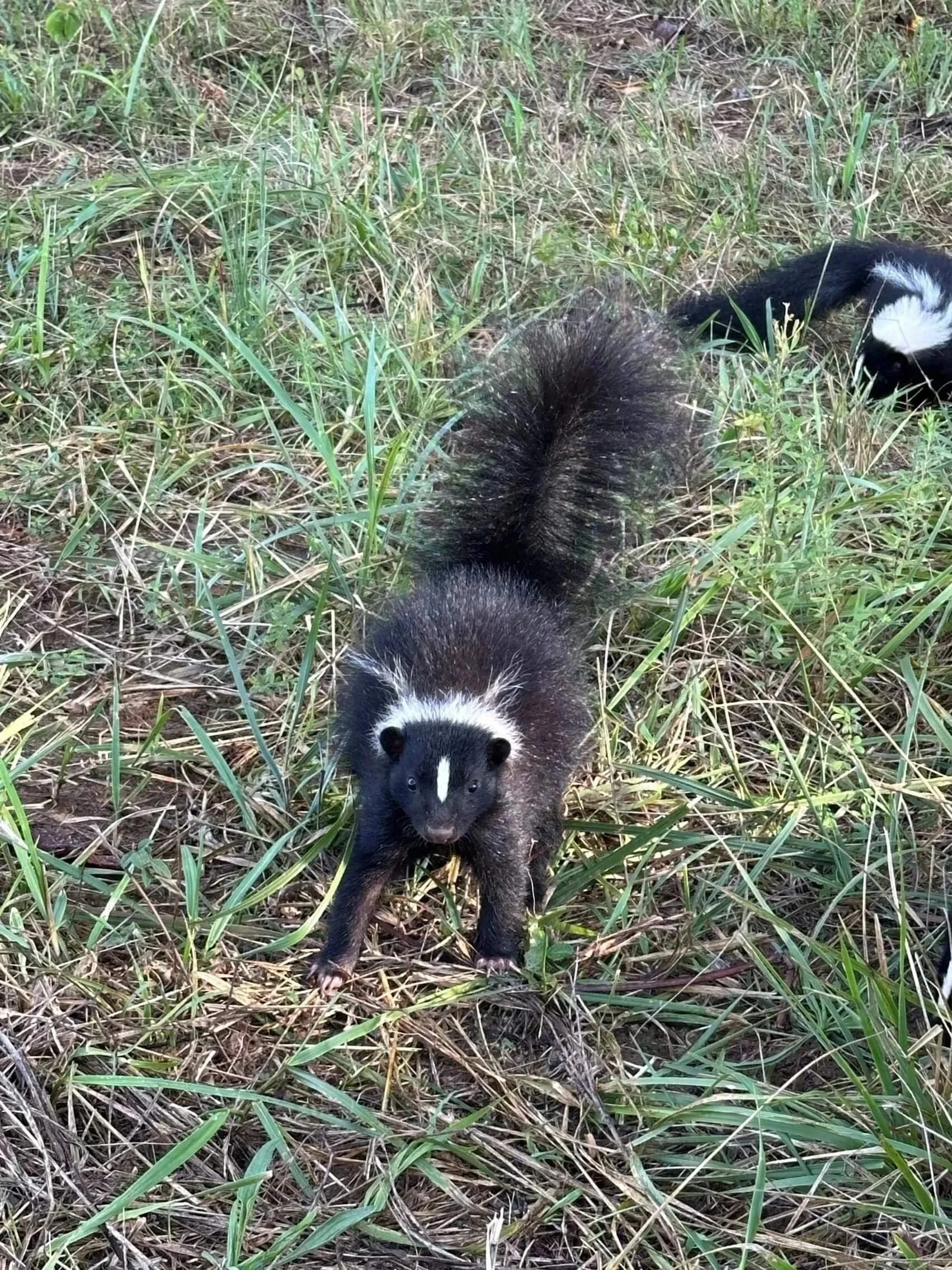
Steps to Take
If the Baby Appears Healthy
If the baby is alert, active, moving normally, and appears uninjured, do not immediately assume it has been orphaned. Keep people and pets away and observe from a distance.
The mother may be nearby, or the baby may have become temporarily separated from its family. Give the area space and contact a wildlife rehabilitator if you are unsure whether intervention is necessary.
If the Baby Is Wandering Alone
A young skunk that is persistently wandering, crying, or attempting to follow people may have become separated from its mother.
Do not chase or attempt to catch the baby immediately. Keep people and pets away and contact Roanoke Wildlife Rescue or another licensed wildlife rehabilitator for guidance. Depending on the baby's condition and circumstances, a reunion with its mother may still be possible.
If the Baby Has Been Displaced
If a den has been disturbed or the baby has been separated from its original location, the mother may still be able to retrieve her young.
Keep the area as quiet as possible and avoid moving the baby farther away. Contact a wildlife rehabilitator for guidance about whether and how to attempt a reunion.
If the Baby Is Injured, Cold, or Weak
If the baby is injured, bleeding, cold, weak, lethargic, unable to move normally, or covered with flies, fly eggs, or maggots, contact Roanoke Wildlife Rescue or another licensed wildlife rehabilitator as soon as possible.
Do not offer food or water. Follow the rehabilitator's instructions about safe containment and transport.
If a Cat or Dog Had the Baby
Contact a licensed wildlife rehabilitator even if you cannot see an injury. Bites, puncture wounds, and other injuries may be difficult to detect and can require prompt treatment.
Separate the pet from the skunk and tell the rehabilitator that direct contact occurred so they can advise you about the appropriate next steps.
If the Mother Is Confirmed Dead
If you know the mother has died, do not leave a dependent baby waiting for her to return. Contact a licensed wildlife rehabilitator promptly.
There may be additional kits nearby, so tell the rehabilitator where the mother and baby were found and whether you have seen or heard other young skunks in the area.
Can a Baby Skunk Be Reunited With Its Mother?
In some situations, a healthy baby skunk that has become separated or displaced can be reunited with its mother. Mother skunks may return for a kit when the area becomes quiet and they feel safe approaching.
Whenever possible, contact a licensed wildlife rehabilitator before attempting a reunion. The baby's age, condition, location, weather, and circumstances can affect whether a reunion attempt is appropriate.
Give the Mother an Opportunity to Return
If the baby is healthy and a wildlife rehabilitator recommends a reunion attempt, keep the baby as close as safely possible to the location where it was found and follow the rehabilitator's instructions for protecting it while allowing the mother access.
Keep people and pets away and observe from a distance. Do not remain close to the baby waiting for the mother, as your presence may prevent her from approaching.
If the Den Has Been Disturbed
If a den was uncovered, damaged, or disturbed, stop activity in the area whenever possible and give the mother an opportunity to return. She may move her young to another den if she no longer considers the original location safe.
Do not relocate the baby to another part of the property or to a location you think would be safer. Keeping the kit near its original location gives the mother the best opportunity to find it.
If There Are Several Babies
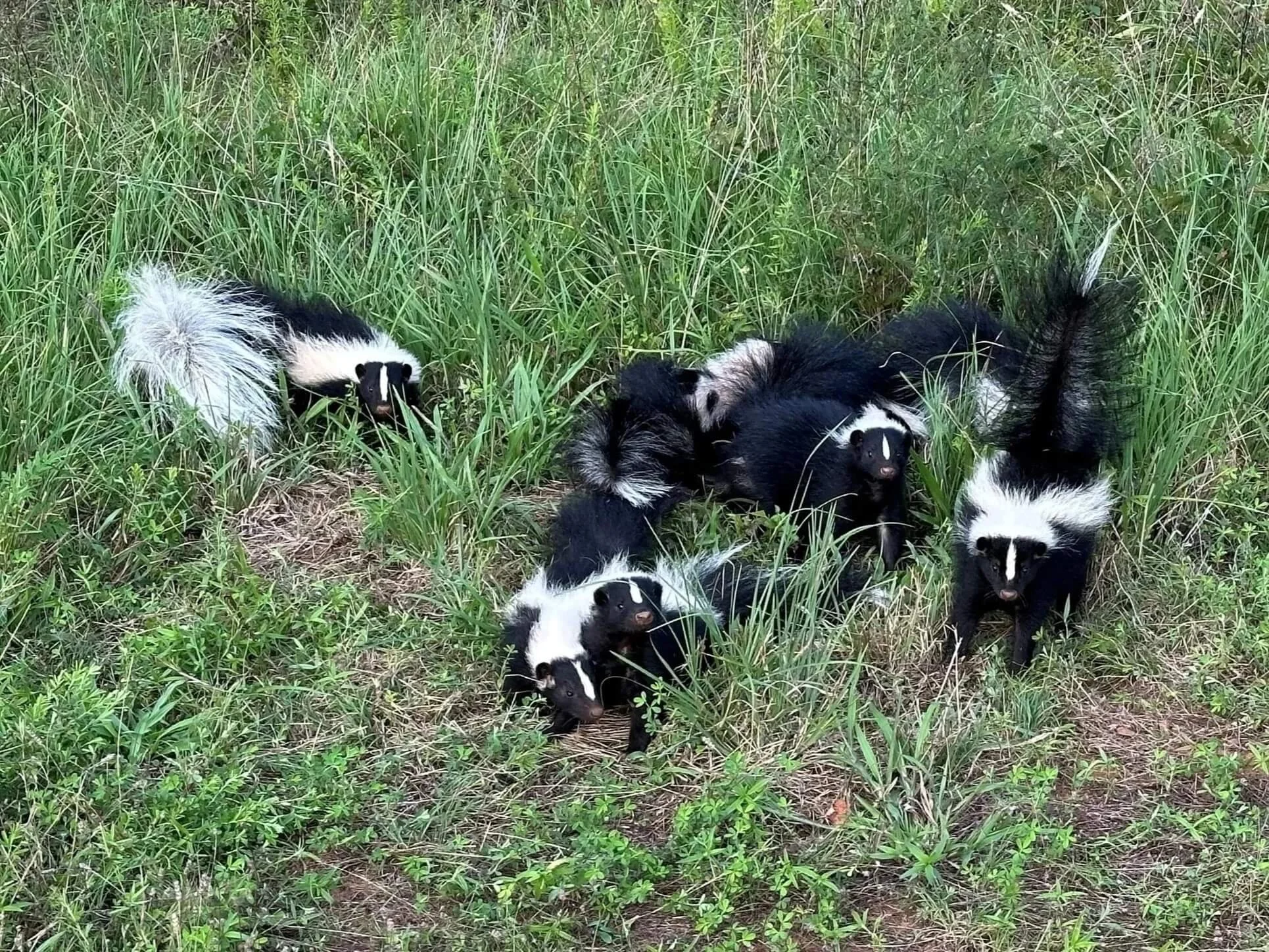
If you find several healthy kits together, keep them together unless a wildlife rehabilitator instructs you otherwise. Their mother may return for them and, if she is relocating the family, may retrieve the babies individually.
Keep people and pets away and avoid repeatedly approaching or checking the babies.
When to Stop the Reunion Attempt
Do not continue waiting if the baby becomes cold, weak, lethargic, injured, unresponsive, or otherwise begins to decline. Contact a licensed wildlife rehabilitator immediately.
If the mother does not return during the period recommended by the rehabilitator, contact them again for further instructions rather than continuing the reunion attempt indefinitely.
If You Already Picked Up the Baby
If you have already brought the baby inside, contact a licensed wildlife rehabilitator before returning it outdoors. Depending on the baby's condition and the circumstances in which it was found, a reunion may still be possible.
Do not feed the baby or give it water while you wait for instructions, and keep handling and human interaction to a minimum.
What to Do While You Wait for Help
If a licensed wildlife rehabilitator advises you to contain the baby skunk, keep it secure, warm, dark, and quiet while you wait for further instructions.
Place the baby in a secure, ventilated container or carrier that it cannot climb or push its way out of.
Keep the container in a quiet area away from children, pets, and household activity.
Handle the baby as little as possible. Do not pet, cuddle, play with, or carry it around.
Move slowly and quietly around the baby to minimize stress and reduce the chance that it will spray, bite, or scratch.
Avoid direct contact with the skunk's mouth, saliva, urine, and feces.
Do not allow the baby to interact with people or household pets.
Do not give the baby food, water, milk, or formula unless specifically instructed by a licensed wildlife rehabilitator.
Provide supplemental warmth only if instructed, and never place the baby directly on a heating pad or other hot surface.
Follow the rehabilitator's instructions for safe transportation.
Do not attempt to provide ongoing care while you wait. Temporary containment is intended only to keep the baby safe and reduce stress until it can be transferred to a licensed wildlife rehabilitator.
If a bite, scratch, or possible saliva exposure occurs while you wait for help, follow the exposure instructions above and seek medical or public-health guidance promptly. Tell the wildlife rehabilitator about the potential exposure as well.
Do Not Keep or Attempt to Raise a Baby Skunk
If a baby skunk needs help, contact a licensed wildlife rehabilitator as soon as possible. Do not keep the skunk as a pet or attempt to raise it yourself.
Baby skunks have specialized nutritional, medical, housing, and developmental needs. Improper feeding or care can cause serious harm. Young skunks also need opportunities to develop natural food-finding behaviors, caution around people, and the other skills needed to survive in the wild.
Too much interaction with people can cause a young skunk to become accustomed to humans, which can interfere with successful rehabilitation and release.
Virginia wildlife rehabilitation guidelines classify skunks as a species with a high risk of carrying and transmitting rabies. Keeping or attempting to care for a skunk yourself can put both you and the animal at risk. Unnecessary handling may increase the possibility of human or pet exposure, and delays in seeking professional help can complicate how a potential rabies exposure must be handled. In some circumstances, public-health officials may determine that rabies testing is necessary, which requires the animal to be euthanized because rabies testing cannot be performed on a live animal.
If you have already been caring for a baby skunk, contact Roanoke Wildlife Rescue as soon as possible. Tell us how long you have had the skunk, what it has been fed or given to drink, and whether any person or pet may have had direct contact with it.
About Baby Skunks
Baby skunks, called kits, are born helpless and depend completely on their mother for food, warmth, protection, and care. As they grow, they become increasingly active and eventually begin accompanying their mother outside the den, where they learn the skills they need to survive in the wild.
How Mother Skunks Care for Their Young
Mother skunks raise their young in protected dens, which may be located in burrows, beneath logs or structures, or in other sheltered spaces. While the kits are very young, they remain in the den while their mother leaves to find food.
As the kits grow, they begin following their mother outside the den and learning to forage. Young skunks often remain with their mother while developing the behaviors they will need to survive independently.
When Do Baby Skunks Leave the Den?
Young skunks begin venturing outside the den as they become more mobile. During this stage, they may explore nearby areas while still depending on their mother for protection and guidance.
Seeing a young skunk outside a den does not automatically mean it has been orphaned. Its condition, behavior, circumstances, and whether its mother or siblings are nearby are better indicators of whether it needs help.
When Do Young Skunks Become Independent?
Young skunks gradually become more independent as they learn to forage and navigate their environment. Even a kit that can walk, explore, and eat solid food may still be traveling with and learning from its mother.
Because independence can be difficult to determine by appearance alone, do not capture a healthy young skunk simply because you do not see an adult nearby. If you are unsure, contact a licensed wildlife rehabilitator for guidance.
Why Skunks Are Important
Skunks are an important part of Virginia's ecosystems. Skunks eat a variety of foods, taking advantage of what is available. Their diet includes insects, grubs and other small animals without backbones, as well as other small animals and plant material.
Their feeding habits make them part of the natural food web and can help control populations of insects and other small organisms. Allowing healthy skunks to remain wild helps them continue their natural role in the ecosystem.
-
Finding a baby skunk alone does not necessarily mean it has been orphaned. Its mother may be nearby, or the kit may have become temporarily separated from its family.
A baby is more likely to need help if it is injured, cold, weak, lethargic, persistently wandering or crying, attempting to follow people, known to have lost its mother, or declining while alone. If you are unsure, contact a licensed wildlife rehabilitator for guidance.
-
In some situations, a mother skunk will return for a healthy kit that has become separated or displaced. She may wait until the area is quiet and people and pets are gone before approaching.
Keep the baby near the area where it was found and contact a licensed wildlife rehabilitator for guidance about whether and how to attempt a reunion. Do not relocate the baby to another area on your own.
-
No. Do not give a baby skunk food, water, milk, or formula unless specifically instructed by a licensed wildlife rehabilitator. Baby skunks have specialized nutritional needs, and improper food, formula, or feeding techniques can cause serious harm.
If the baby needs help, contact a wildlife rehabilitator as soon as possible.
-
Baby skunks can spray as a defense when they feel threatened. Avoid chasing, cornering, grabbing, or unnecessarily handling the baby, and keep children and pets away.
If a wildlife rehabilitator instructs you to contain the baby, move slowly and quietly and follow their handling instructions carefully.
-
Contact Roanoke Wildlife Rescue or another licensed wildlife rehabilitator as soon as possible. Do not delay seeking help because you have already been caring for the skunk.
Because skunks are a high-risk rabies vector species, delays and unnecessary handling can complicate how a potential exposure is handled. In some circumstances, rabies testing may be necessary.
When you contact us, tell us how long you have had the skunk and whether any person or pet has had direct contact with it.
-
Separate your pet from the skunk and contact a licensed wildlife rehabilitator even if you cannot see an injury. Bites, puncture wounds, and other injuries may be difficult to detect and can require prompt treatment.
Because skunks are a rabies-vector species, tell the rehabilitator that your pet had direct contact with the skunk so they can advise you about any additional steps that may be necessary.
Frequently Asked Questions About Baby Skunks
Get Help for a Baby Skunk
If you find a baby skunk that is injured, cold, weak, truly orphaned, separated from its mother, caught by a cat or dog, or otherwise appears to need help, contact Roanoke Wildlife Rescue for guidance. We can help you determine whether a reunion with the mother is possible or whether the baby needs professional care.
Do not feed the baby, give it water, keep it as a pet, or attempt to raise it yourself. If you have already brought the baby home or have been caring for it, contact us immediately and tell us how long you have had it. Do not delay seeking help.