
What to Do if You Find a Baby Squirrel
Finding a baby squirrel alone can be concerning, but it does not necessarily mean the baby has been abandoned. Baby squirrels can fall from nests or become separated from their mothers, and in many cases, the mother is nearby and may be able to retrieve her young.
Knowing what signs to look for—and when to give the mother an opportunity to return—can help you determine whether the baby should be left alone, reunited with its mother, or taken to a licensed wildlife rehabilitator.
Is It Normal to Find a Baby Squirrel Alone?
Sometimes. Baby squirrels can become separated from their mothers after falling from a nest, severe weather, tree trimming, or damage to a nest or tree. A mother squirrel may also be in the process of moving her babies from one nest to another.
If a baby is warm, alert, uninjured, and in a safe location, its mother may still be nearby and may retrieve it when people and pets leave the area. Mother squirrels are attentive caregivers and will often retrieve a healthy baby that has become separated from the nest.
Older juvenile squirrels may also spend time outside the nest as they become more active and independent. A young squirrel that is fully furred, alert, coordinated, able to climb, and moving around confidently may not need intervention simply because an adult squirrel is not visible.
A baby squirrel found alone should not automatically be taken indoors. Its age, condition, behavior, and the circumstances in which it was found can help determine whether a reunion attempt or professional care is appropriate.
Does This Baby Squirrel Need Help?
The Baby Is Probably Okay If...
The baby is warm, alert, and responsive.
It appears healthy and has no visible injuries.
It is moving normally and, if old enough, can climb or move around confidently.
It was recently displaced from a nest but is otherwise healthy.
Its mother or other squirrels have been seen nearby.
It has not been caught, carried, or injured by a cat or dog.
It is an older juvenile that is fully furred and actively exploring its surroundings.
If the baby appears healthy, keep people and pets away and give its mother an opportunity to return. A healthy baby that has fallen or become separated from its nest can often be successfully reunited with its mother.
The Baby Needs Help If...
It is cold, weak, lethargic, limp, or unresponsive.
It has visible wounds, bleeding, swelling, or another apparent injury.
It is having difficulty breathing, standing, walking, or moving normally.
It is covered with flies, fly eggs, or maggots.
It has been caught, carried, bitten, or injured by a cat or dog, even if you cannot see a wound.
The mother is confirmed dead.
It has been alone for an extended period and an appropriate reunion attempt has been unsuccessful.
It is repeatedly approaching or following people, making calls, or otherwise behaving as though it is distressed.
If the baby is injured, cold, weak, or otherwise appears to be in distress, contact Roanoke Wildlife Rescue or another licensed wildlife rehabilitator as soon as possible. Do not feed the baby or give it water while you wait for instructions.
What NOT to Do if You Find a Baby Squirrel
To avoid harming a baby squirrel or interfering with a possible reunion with its mother, never:
Feed the baby or give it water, milk, formula, nuts, fruit, or other food unless specifically instructed by a licensed wildlife rehabilitator.
Attempt to feed a baby with a bottle, syringe, dropper, or other device. Liquids can accidentally enter the lungs and cause serious complications.
Attempt to raise or keep a baby squirrel as a pet.
Assume the baby is orphaned simply because you do not see its mother.
Bring a healthy baby indoors before giving its mother an appropriate opportunity to retrieve it.
Relocate the baby to another area. Its mother needs to be able to find it near where it became separated.
Pet, cuddle, play with, or unnecessarily handle the baby.
Allow children or pets to interact with the baby.
Place the baby directly on a heating pad, hot water bottle, or other hot surface.
Attempt to return the baby to a high nest or climb a tree if doing so could put you at risk.
If you have already picked up the baby, don't assume you have prevented a reunion. A healthy baby squirrel can often still be returned to a safe location near where it was found so its mother has an opportunity to retrieve it. Contact a licensed wildlife rehabilitator for guidance if you are unsure what to do.
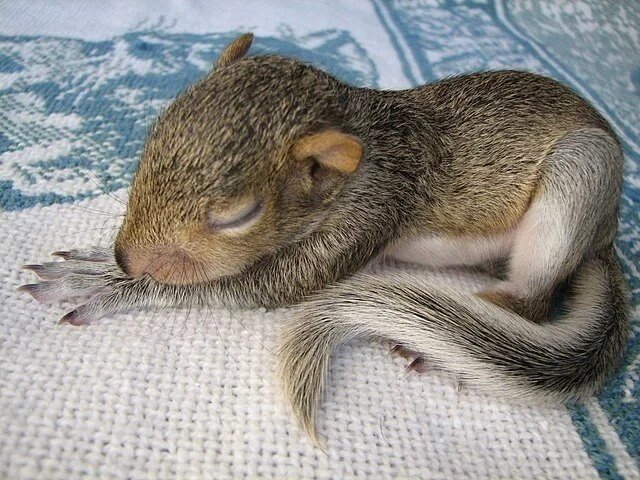
Steps to Take
If the Baby Appears Healthy
If the baby is warm, alert, active, and uninjured, do not immediately assume it has been orphaned. Keep people and pets away and give the mother an opportunity to return.
If the baby is too young to be independent, a reunion with its mother is usually the best outcome whenever it can be done safely.
If the Baby Fell From a Nest
If a healthy baby has fallen from a tree or nest, keep it close to the location where it was found. The mother may be nearby and may retrieve the baby when the area becomes quiet.
Do not attempt to climb the tree or return the baby to a high nest yourself. If the original nest is inaccessible or has been destroyed, contact a licensed wildlife rehabilitator for guidance about setting up a safe reunion attempt.
If the Baby Is an Older Juvenile
A fully furred young squirrel that is alert, coordinated, able to climb, and moving confidently may be old enough to spend time outside the nest while becoming independent.
If the squirrel appears healthy, give it space and keep pets away. Do not capture a healthy juvenile simply because you do not see its mother nearby.
If the Baby Is Cold, Weak, or Injured
If the baby is cold, weak, lethargic, injured, bleeding, unable to move normally, or covered with flies, fly eggs, or maggots, contact Roanoke Wildlife Rescue or another licensed wildlife rehabilitator as soon as possible.
Do not attempt a prolonged reunion with a baby whose condition is declining. Do not offer food or water, and follow the rehabilitator's instructions about warmth, containment, and transport.
If a Cat or Dog Had the Baby
Contact a licensed wildlife rehabilitator even if you cannot see an injury. Small puncture wounds and other injuries can be difficult to detect and may require prompt treatment.
Separate the pet from the squirrel and follow the rehabilitator's instructions for what to do next.
If the Mother Is Confirmed Dead
If you know the mother has died and the baby is still dependent on her, contact a licensed wildlife rehabilitator promptly. Do not attempt to raise or feed the baby yourself.
If there may be additional babies in the nest or nearby, tell the rehabilitator where the mother and baby were found so they can advise you about checking for siblings.
Can a Baby Squirrel Be Reunited With Its Mother?
Yes. In many cases, a healthy baby squirrel that has fallen from a nest or become separated from its mother can be successfully reunited with her. Mother squirrels care for their young and may retrieve a displaced baby and carry it back to the nest or move it to another nest.
Before attempting a reunion, make sure the baby is warm, alert, uninjured, and otherwise stable. A baby that is cold, weak, injured, covered with flies or fly eggs, or has had contact with a cat or dog should be evaluated by a licensed wildlife rehabilitator instead.
Give the Mother an Opportunity to Retrieve the Baby
If the baby appears healthy, keep it as close as safely possible to the location where it was found. Keep children and pets indoors and move far enough away that the mother feels safe approaching.
If the baby cannot safely remain on the ground, or if the original nest has been damaged or is inaccessible, contact Roanoke Wildlife Rescue for guidance on creating a safe temporary reunion setup near the original location. The appropriate setup depends on the baby's age, weather, location, and surrounding hazards.
Then observe from a distance. Avoid standing near the baby or repeatedly checking on it, as your presence may prevent the mother from approaching.
If the Mother Does Not Return
There is no single waiting period that is appropriate for every baby squirrel. Weather, temperature, the baby's age and condition, time of day, predators, and other hazards all affect how long a reunion attempt can safely continue.
If the mother has not retrieved the baby, the baby begins to become cold or weak, conditions become unsafe, or you are unsure how long to continue, contact a licensed wildlife rehabilitator for guidance.
If You Already Brought the Baby Inside
A reunion may still be possible. Bringing a baby squirrel indoors does not automatically mean its mother will reject it.
Contact Roanoke Wildlife Rescue or another licensed wildlife rehabilitator before placing the baby back outside. They can help determine whether the baby is healthy enough for a reunion attempt and how to do it safely.
Do not feed the baby or give it water while waiting for instructions.
What to Do While You Wait for Help
If a wildlife rehabilitator advises you to contain the baby squirrel while you arrange for care, keep handling and interaction to a minimum.
Place the baby in a secure, ventilated box or small carrier lined with a soft, clean cloth.
Keep the container in a warm, dark, quiet location away from household activity.
Keep children and pets completely away from the baby.
Handle the squirrel only when necessary for safe containment or transport.
If the baby is cold, ask the wildlife rehabilitator how to provide supplemental warmth safely. Do not place the baby directly on a heating pad or other hot surface.
Do not feed the baby or give it water, milk, formula, nuts, fruit, or other food.
Do not attempt to bottle-feed or syringe-feed the baby.
Follow the rehabilitator's instructions for transport and any additional care.
Quiet temporary containment is not the same as raising the baby. The goal is simply to keep the squirrel safe and stable until it can be reunited with its mother or transferred to a licensed wildlife rehabilitator.
Do Not Keep or Attempt to Raise a Baby Squirrel
If a baby squirrel needs help, contact a licensed wildlife rehabilitator as soon as possible. Do not keep the squirrel as a pet or attempt to raise it yourself.
Baby squirrels have specialized nutritional and developmental needs that change as they grow. Improper formula, feeding techniques, or diet can cause serious illness, developmental problems, or death. Feeding a cold or dehydrated baby, using an inappropriate formula, or feeding too quickly can also cause potentially life-threatening complications.
Successfully rehabilitating a baby squirrel involves much more than keeping it warm and providing food. Young squirrels must develop the strength, coordination, climbing ability, food-finding behaviors, caution around people, and other survival skills they will need before they can safely return to the wild.
Too much handling and interaction with people can also cause a young squirrel to become accustomed to humans. Licensed wildlife rehabilitators are trained to provide necessary care while limiting unnecessary human interaction and preparing the squirrel for release.
If you have already been caring for a baby squirrel, contact Roanoke Wildlife Rescue as soon as possible. Tell us how long you have had the baby and everything it has been fed or given to drink. Do not continue feeding it until you have received instructions from a wildlife rehabilitator.
About Baby Squirrels
Baby squirrels are born small, hairless, and completely dependent on their mother. As they grow, they develop fur, open their eyes, become increasingly active, and eventually begin exploring outside the nest before becoming independent.
Understanding how young squirrels normally develop can help you recognize when a baby is simply going through a natural stage of growing up—and when something may be wrong.
How Mother Squirrels Care for Their Young
Mother squirrels provide warmth, protection, and nourishment while their babies develop in the nest. They may maintain more than one nest and can move their young to another location if a nest is damaged, disturbed, or no longer safe.
If a healthy baby becomes separated from the nest, its mother may retrieve it and carry it to a safe nest. This is why reuniting a healthy baby with its mother is preferable to removing it from the wild whenever a safe reunion is possible.
When Do Baby Squirrels Leave the Nest?
Young squirrels gradually become more active as they develop. Eventually, they begin venturing outside the nest, practicing climbing, and exploring their surroundings while they are still learning the skills they need to survive.
Because development is gradual, seeing a young squirrel outside a nest does not automatically mean it has been abandoned. Its physical condition, coordination, behavior, and circumstances are more useful than its size alone when deciding whether it needs help.
When Do Young Squirrels Become Independent?
As young squirrels mature, they become increasingly capable of climbing, finding food, navigating their surroundings, and avoiding danger. During this transition, a juvenile may spend time away from its mother while still appearing noticeably smaller than an adult.
A young squirrel that is fully furred, alert, coordinated, climbing well, and behaving normally may simply be reaching independence and should generally be left alone unless there are signs of injury or distress.
Why Squirrels Are Important
Squirrels play an important role in Virginia's ecosystems. By burying nuts and seeds and leaving some behind, squirrels help spread seeds and grow new trees. Squirrels also serve as part of the food web and help support the natural balance of the habitats where they live.
Frequently Asked Questions About Baby Squirrels
-
Finding a baby squirrel alone does not necessarily mean it is orphaned. A baby may have fallen from its nest, become separated from its mother, or be temporarily outside while its mother is nearby.
A baby is more concerning if the mother is confirmed dead, it is very young and remains alone, a safe reunion attempt is unsuccessful, or the baby is cold, weak, injured, or showing other signs of distress. Contact a licensed wildlife rehabilitator if you are unsure.
-
She may. Mother squirrels will often retrieve a healthy baby that has fallen or become separated from the nest. They may also move their babies between nests.
Keep people and pets away and observe from a distance so the mother feels safe approaching. If the baby is injured, cold, weak, or conditions are unsafe, contact a licensed wildlife rehabilitator rather than continuing to wait.
-
If the baby is warm, alert, and uninjured, keep it near the location where it was found and give its mother an opportunity to retrieve it.
If the original nest is inaccessible or damaged, contact Roanoke Wildlife Rescue for guidance about a safe reunion attempt. Do not climb a tree or put yourself at risk trying to return the baby to the nest.
-
No. Do not offer food, water, milk, or formula unless specifically instructed by a licensed wildlife rehabilitator. Baby squirrels have specialized nutritional needs, and improper food or feeding techniques can cause serious complications.
If you have already fed the baby, tell the rehabilitator what you gave it, how much, and when.
-
Contact a licensed wildlife rehabilitator promptly, even if the squirrel appears uninjured. Small puncture wounds and other injuries can be difficult to see and may require treatment.
Keep the squirrel separated from the pet and do not offer food or water while you wait for instructions.
-
Contact Roanoke Wildlife Rescue or another licensed wildlife rehabilitator for guidance. If the baby is healthy, a reunion with its mother may still be possible.
Keep the baby warm, dark, and quiet with minimal handling while you wait for instructions. Do not feed it or give it water, and tell the rehabilitator how long you have had the squirrel and anything it has already been given.
Get Help for a Baby Squirrel
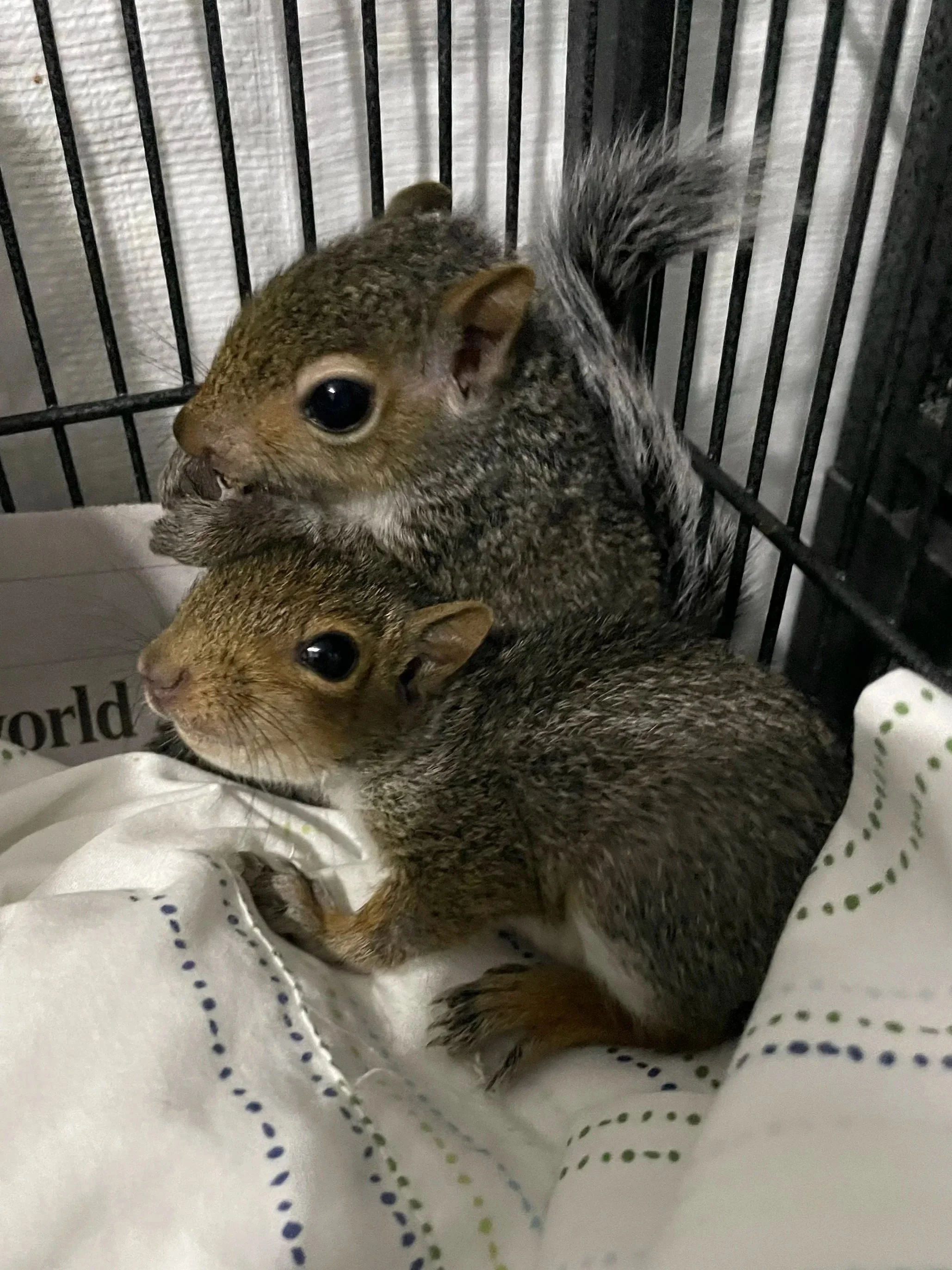
If you find a baby squirrel that is injured, cold, weak, truly orphaned, caught by a cat or dog, or otherwise appears to need help, contact Roanoke Wildlife Rescue for guidance. We can help you determine whether a reunion with the mother is possible or whether the baby needs professional care.
Do not feed the baby, give it water, keep it as a pet, or attempt to raise it yourself. If you have already brought the baby inside or have been caring for it, contact us and tell us how long you have had it and anything it has been fed or given to drink.