
What to Do if You Find an Adult Deer
Seeing an adult deer with an injured leg, visible wound, or unusual behavior can be concerning. However, an injured deer does not always need human intervention, and attempting to capture, restrain, or move an adult deer can cause additional injury and severe stress.
In Virginia, licensed wildlife rehabilitators are not permitted to rehabilitate adult white-tailed deer. If the deer can still walk and eat and otherwise appears healthy, leaving it alone is often the safest response.
Does This Adult Deer Need Help?
The Deer May Not Need Intervention If...
Adult deer can sometimes continue functioning despite injuries that appear serious, particularly injuries involving a leg or hoof.
The deer may be best left alone if:
It can stand and walk on its own.
It is alert and responsive.
It continues to eat or browse.
It maintains a healthy weight and overall condition.
It can move away when necessary.
It has a limp or a suspected injury or broken bone without an open wound, but can still walk, eat, and maintain a healthy weight and overall condition.
If the deer can still walk and eat and otherwise appears healthy, give it space and observe from a distance.
Do not chase the deer to see how well it can run, and do not attempt to capture, restrain, transport, splint, bandage, medicate, or otherwise treat it yourself.
The Deer May Need Intervention If...
Intervention may be appropriate if:
It cannot stand or walk.
It remains down and cannot get up.
It has a compound (open) fracture, with bone exposed through the skin or an open wound associated with the fracture.
It has a catastrophic injury.
It has become extremely thin or weak.
Its condition is clearly getting worse.
It appears seriously ill or has problems with balance, movement, or awareness.
It is clearly suffering.
Because adult white-tailed deer cannot enter wildlife rehabilitation in Virginia, contact your local animal control agency for assistance with a severely injured or debilitated adult deer. Virginia law authorizes animal control officers, while performing their official duties, to handle wildlife and humanely end an animal’s life when necessary.
Why You Should Not Attempt to Rescue an Adult Deer
Adult deer are large, powerful wild animals. Attempting to chase, capture, restrain, or transport one can cause additional injury to the deer and can seriously injure the person attempting to help.
Chasing or holding a deer can also put severe stress on its body. For this reason, even a well-intentioned attempt to rescue a mobile deer can make its condition worse.
Do not chase, restrain, move, transport, feed, medicate, or attempt to treat an adult deer yourself.
Keep people and pets away and give the deer as much space as possible.
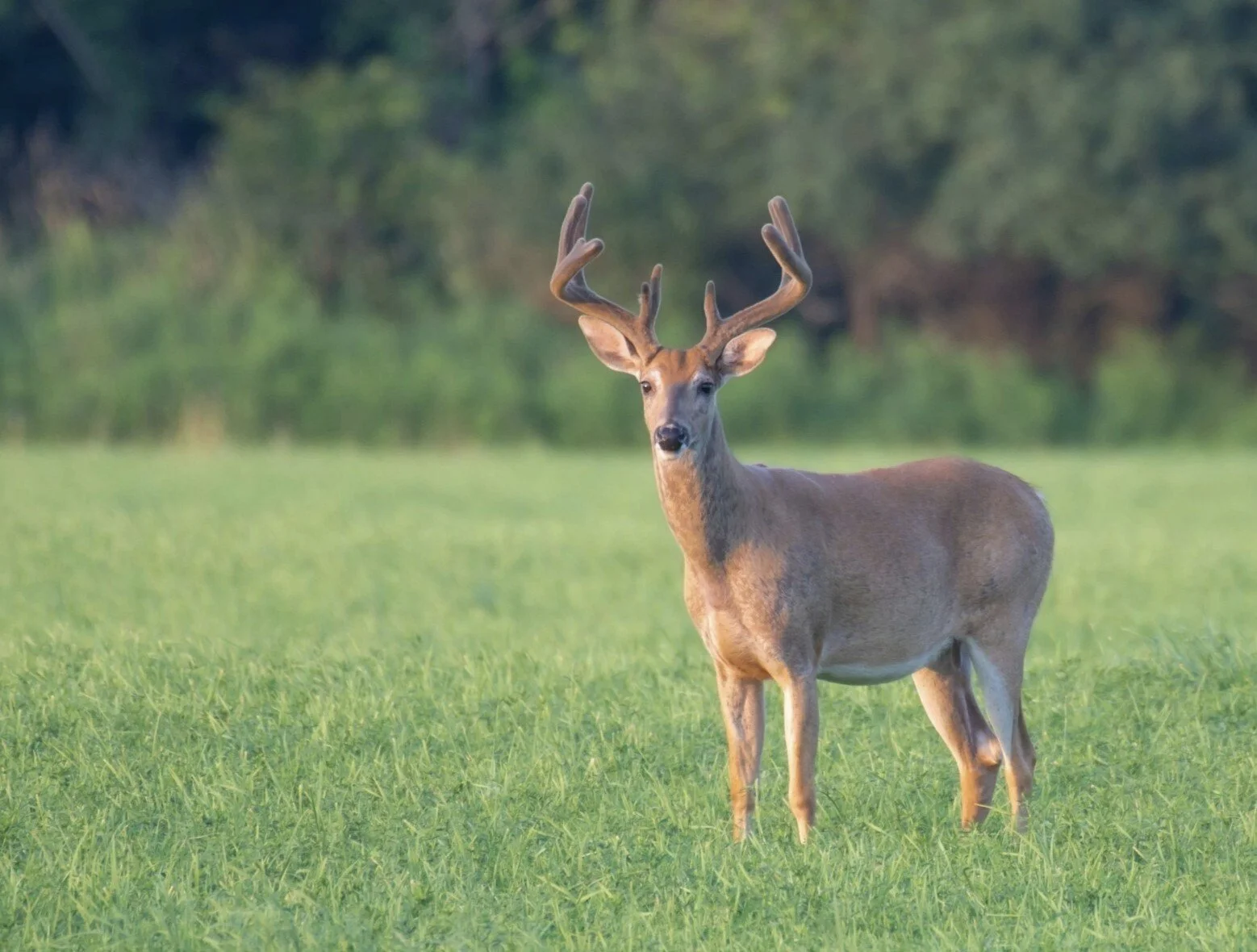
What to Do if an Adult Deer Has an Injured Leg
A deer that is limping, holding up one leg, or moving differently can look seriously injured. However, a leg injury, closed fracture, or healed break does not necessarily mean that an adult deer needs intervention.
Deer can sometimes adapt remarkably well to leg and hoof injuries. If the skin remains intact and the deer is able to walk, eat, move through its environment, and maintain a healthy body condition, the best approach is usually to leave the deer alone and observe from a distance.
Leave the Deer Alone If...
It can stand and move on its own.
It continues to eat or browse.
It is alert and responsive.
It maintains a healthy weight and overall condition.
It can move away from danger.
It has a limp, closed injury, or old/healing break but is otherwise functioning normally.
Give the deer space and observe from a distance. Do not chase it to assess its ability to run, and do not attempt to capture or treat the injured leg.
When a Leg Injury Is More Serious
A compound fracture, also called an open fracture, occurs when a broken bone breaks through the skin or an open wound extends down to the broken bone.
Unlike a closed fracture, a compound fracture creates a significant risk of contamination and serious infection. Because adult white-tailed deer cannot be rehabilitated in Virginia, there is generally no practical way to provide rehabilitation for an adult deer with this type of severe injury
Contact Animal Control If...
Bone is protruding through the skin or visible within an open wound.
There is an open wound associated with an obvious fracture.
The deer cannot stand or walk.
The injury is catastrophic.
The deer becomes extremely thin, weak, or debilitated.
Its condition is clearly deteriorating.
It is clearly suffering.
For an adult deer with a compound fracture or another severe, nonrecoverable injury, humane euthanasia may be the most appropriate option to prevent prolonged pain, infection, and suffering.
Do not attempt to capture or transport the deer yourself. Keep people and pets away and contact your local animal control agency for assistance.
Adult Deer Cannot Be Rehabilitated in Virginia
Virginia does not permit licensed wildlife rehabilitators to rehabilitate or release adult white-tailed deer.
For wildlife rehabilitation purposes, a fawn is considered an adult on December 31 of the year it was born. After that date, Virginia’s restrictions on adult deer rehabilitation apply.
For guidance on when to leave a deer alone or contact animal control, see “Does This Adult Deer Need Help?” above.
About Adult Deer
White-tailed deer are common throughout Virginia and can thrive in forests, fields, suburban neighborhoods, and other areas where food, water, and cover are available. They are highly adaptable wild animals and are often seen near homes, roads, parks, and other developed areas.
What Do Adult Deer Eat?
White-tailed deer mainly eat leaves, tender stems, and twigs rather than grass. Their natural diet also includes flowering plants, fruits, nuts, and other available plants. Their diet changes throughout the year as different natural foods become available.
Do not feed an injured or healthy adult deer. Providing extra food can cause nutritional problems, draw deer together in one area, increase problems with people, and help diseases spread.
When Are Deer Most Active?
White-tailed deer are often most active around dawn and dusk, although they may be seen at any time of day. Seeing a deer during daylight hours does not, by itself, indicate that the animal is sick or injured.
Why Giving Adult Deer Space Matters
Deer are prey animals with strong instincts to escape perceived threats. Approaching, chasing, cornering, or attempting to restrain an adult deer can cause the animal to panic and may result in injury to both the deer and the person attempting to help.
If an adult deer is alert, mobile, eating, and maintaining a healthy body condition, observe from a distance and allow it to remain wild.
Frequently Asked Questions About Adult Deer
-
First, observe the deer from a distance. A limp, closed injury, or suspected closed fracture does not necessarily mean the deer needs intervention. Deer can sometimes adapt to leg and hoof injuries.
If the deer can stand, walk, eat, and maintain a healthy body condition, leave it alone and allow it to continue functioning in the wild.
If the deer becomes unable to stand or walk, becomes extremely thin or debilitated, or is clearly suffering, contact your local animal control agency.
-
A compound fracture, also called an open fracture, occurs when a broken bone breaks through the skin or an open wound extends down to the broken bone. The bone may be visible in the wound or sticking through the skin.
Unlike a closed fracture, an open fracture carries a serious risk of contamination and infection. Because adult white-tailed deer cannot be rehabilitated in Virginia, contact animal control if you observe an adult deer with a compound fracture. Humane euthanasia may be the most appropriate option to prevent prolonged pain, infection, and suffering.
-
Sometimes. A deer with a closed fracture, old break, or other leg injury may be able to adapt, particularly if it remains mobile, continues eating, and maintains a healthy body condition.
Do not chase the deer to test how well it can run or attempt to splint, bandage, or treat the leg yourself. Observe from a distance and watch the deer's overall condition rather than the appearance of the leg alone.
-
No. Virginia does not permit licensed wildlife rehabilitators to rehabilitate adult white-tailed deer.
If the deer is mobile, eating, and otherwise functioning normally, leave it alone. If it is unable to stand or walk, has a catastrophic injury, or is clearly suffering, contact your local animal control agency.
-
No. Do not feed an injured deer or leave food out to encourage it to remain in the area.
White-tailed deer have specialized digestive systems and obtain the nutrition they need from the plants they naturally eat. Supplemental feeding can cause nutritional problems and can also concentrate deer, increasing disease transmission and human-wildlife conflicts.
-
A deer lying down is not necessarily injured or sick. Healthy deer regularly bed down to rest.
Observe from a distance. If the deer later stands, walks normally enough to move around, eats, and remains alert, intervention is generally unnecessary.
If it remains down and cannot stand when it attempts to do so, appears severely debilitated, or is clearly suffering, contact animal control.
-
If the deer is alive, do not approach, restrain, or attempt to move it yourself. An injured adult deer can panic and cause serious injury. If it is unable to leave the roadway or is severely injured, contact local law enforcement or animal control.
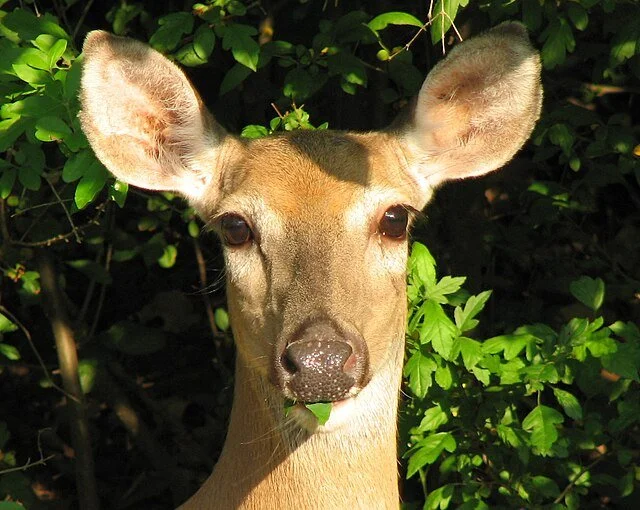
Get Help for an Adult Deer
If you find an injured adult deer, keep people and pets away and observe from a safe distance. Do not attempt to capture, restrain, move, or transport it yourself.
Use the assessment above to determine whether the deer should be left alone or whether you should contact your local animal control agency. For leg injuries, see “What to Do if an Adult Deer Has an Injured Leg.”
Adult white-tailed deer cannot be rehabilitated by licensed wildlife rehabilitators in Virginia.