What to Do if You Find an Injured or Sick Adult Raccoon
Adult raccoons that appear injured, sick, or behaving unusually always need professional help.
Signs an Adult Raccoon Needs Help
An adult raccoon likely requires immediate assistance if you observe any of the following:
Visible injuries (bleeding, limping, broken limbs)
Lying on the ground and not moving away when approached
Disorientation, circling, head tilt, or loss of balance
Daytime activity combined with lethargy or abnormal behavior
Difficulty breathing or obvious distress
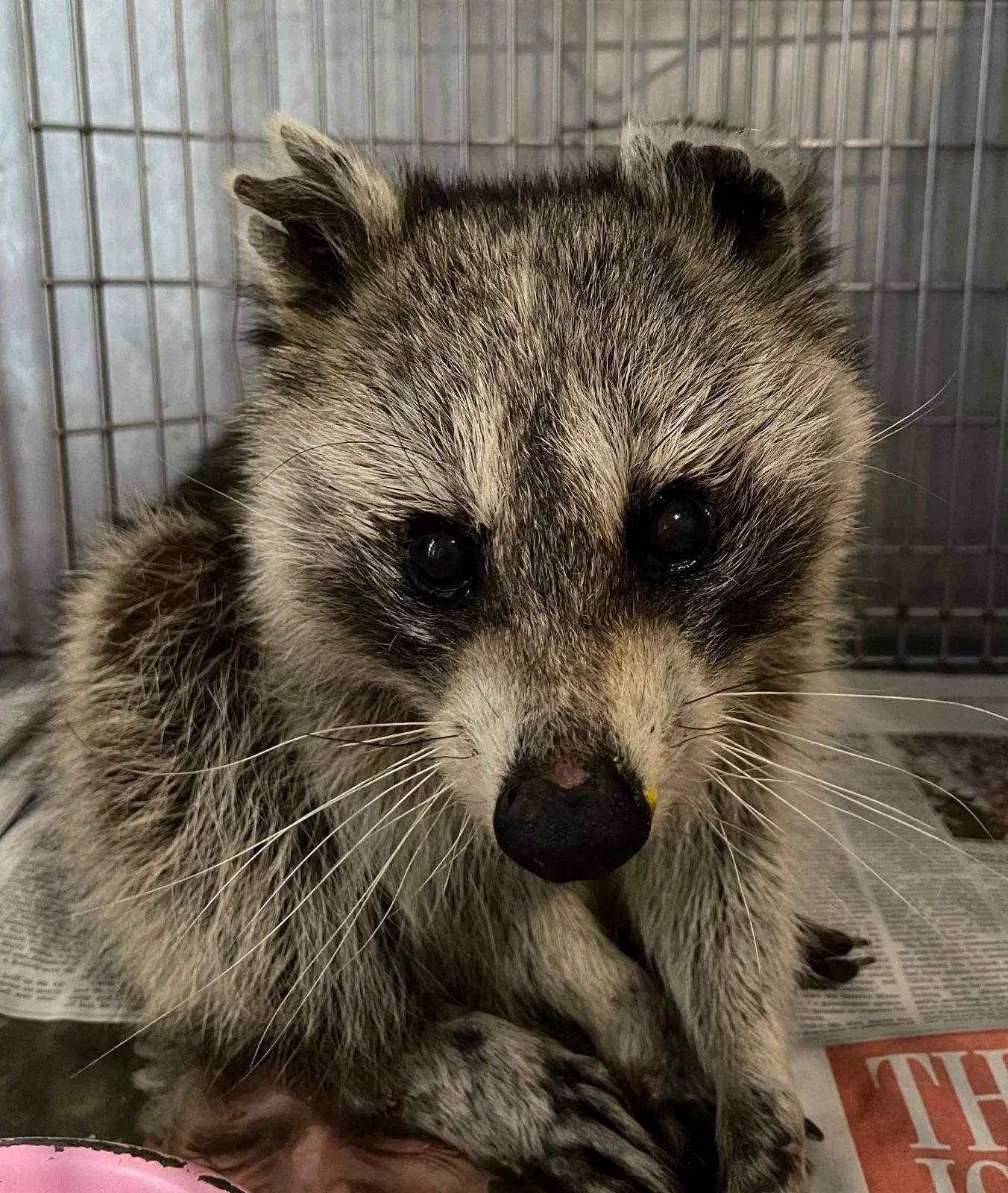
Crusting around eyes or nose, hair loss, or severe mange
Attacked by a dog or other animal
These signs can indicate serious injury, illness, or neurological disease.
What to Do
If you encounter an injured or sick adult raccoon:
Do not approach or attempt to handle the animal
Keep a safe distance and keep people and pets away
If possible, observe from afar and note the raccoon’s condition and location
Contact a licensed wildlife rehabilitator immediately
Adult raccoons can be strong, defensive, and unpredictable when injured or scared.
What NOT to Do
Do not try to feed or give water
Do not attempt to trap, move, or confine the raccoon
Do not transport the animal yourself unless instructed by professionals
Do not assume daytime activity alone means rabies
Improper handling can result in serious injury to you, unnecessary stress to the animal, and legal consequences.
Important Health and Safety Warning
Raccoons are a rabies vector species and can carry diseases that pose serious risks to humans and pets, including:
Rabies
Distemper
Parvovirus
Leptospirosis
Raccoon roundworm
Any potential exposure (bite, scratch, saliva contact) can result in mandatory rabies testing, which requires euthanasia of the animal.
When Euthanasia Is the Most Humane Option
In some cases, an adult raccoon’s injuries or illness may be too severe for recovery. Licensed professionals are trained to assess quality of life and determine the most humane outcome. Attempting to “save” an adult raccoon without training often prolongs suffering rather than prevents it.
The Best Way to Help
The most responsible and compassionate response is to contact professionals immediately and allow trained wildlife responders to intervene. This protects you, your community, and the animal.