What to Do if You Find An Adult Skunk
Encountering an adult skunk can be unsettling, especially if the animal appears injured, sick, or is behaving unusually. While skunks are generally non-aggressive and prefer to avoid people, knowing when to observe and when to act is important for both your safety and the skunk’s well-being.
When an Adult Skunk Needs Help
An adult skunk likely needs professional wildlife assistance if you observe any of the following:
Visible injuries, bleeding, or limping
Lying on its side or unable to stand
Walking in circles, stumbling, or showing tremors
Discharge from the eyes, nose, or mouth
Unusual aggression or extreme lethargy
Active during daylight hours while appearing disoriented or il
Covered in flies or fly eggs
These signs may indicate serious injury, disease, or poisoning and require immediate professional help.
What NOT to Do if You Find An Adult Skunk
For your safety and the animal’s protection:
Do not attempt to touch, capture, or restrain the skunk
Do not chase, corner, or provoke it
Do not offer food or water
Do not allow pets to approach the skunk
Do not attempt to treat injuries yourself
Skunks are rabies-vector species. Any direct contact increases risk to people and pets and can result in mandatory rabies testing.
What You Should Do Instead
If the skunk is injured or appears sick:
Keep your distance and remain calm
Secure pets and children indoors
Observe from afar and note the skunk’s behavior and location
Contact a licensed wildlife rehabilitator for guidance
If the skunk is alert and moving normally, it may not need intervention. Give it space and time to leave the area on its own.
Important Safety Notes
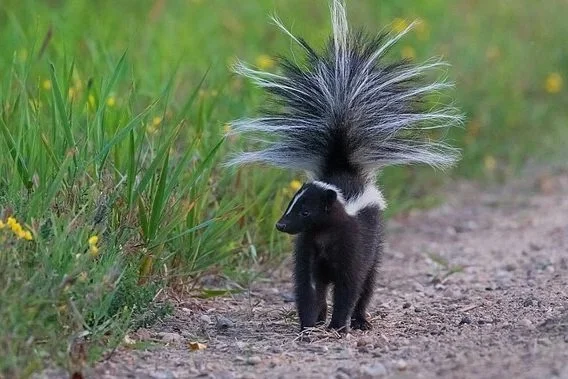
Skunks rely on warning behaviors — such as stomping, tail lifting, and hissing — before spraying. If you see these signs:
Stop moving
Back away slowly
Avoid sudden movements or loud noises
Spraying is a last defense, but it can happen if the animal feels threatened or cornered.
Why Professional Help Matters
Adult skunks require specialized handling and care. Attempting to help without training can:
Endanger human health
Increase stress and suffering for the skunk
Result in legal consequences
Reduce the animal’s chance of survival.
Give Skunks the Best Chance to Recover
The most compassionate and responsible action when encountering an injured or sick adult skunk is to limit contact and involve trained wildlife professionals. Giving the skunk space — and calling for expert help when needed — protects both the animal and your community.