What to Do if You Find an Adult Groundhog
Seeing an adult groundhog — also called a woodchuck — that appears injured, sick, or unable to escape can be alarming. Knowing when to step back and when to call for help is essential for the animal’s welfare and your safety.
When Adult Groundhogs Need Help
An adult groundhog likely needs immediate professional assistance if:
The groundhog has visible injuries (bleeding, limping, broken limbs).
The groundhog is lying out in the open and does not retreat when approached.
The groundhog is dragging a leg, unable to stand, or moving abnormally.
The groundhog appears disoriented, weak, or lethargic.
The groundhog has been hit by a vehicle or attacked by a dog or other animal.
The groundhog shows signs of severe mange, wounds, or infection.
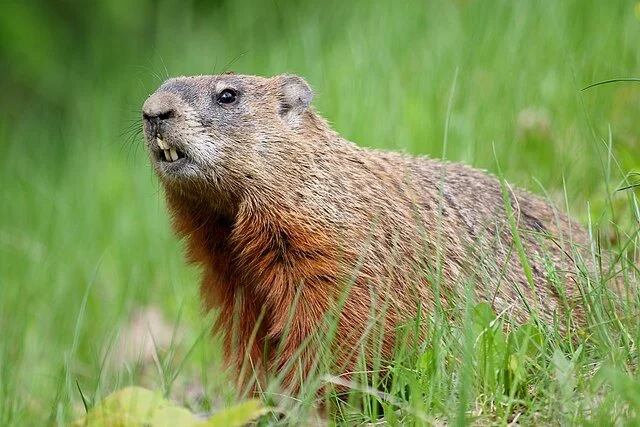
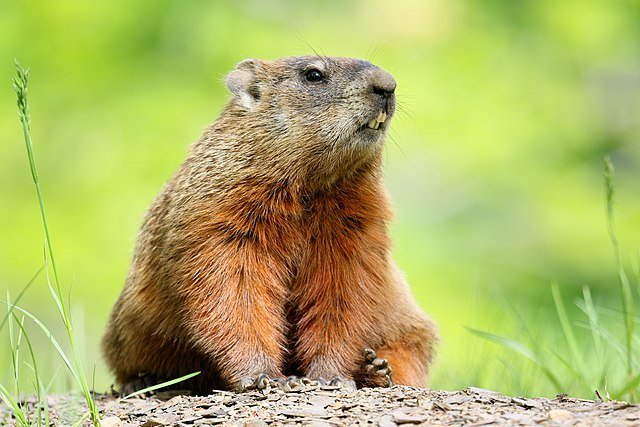
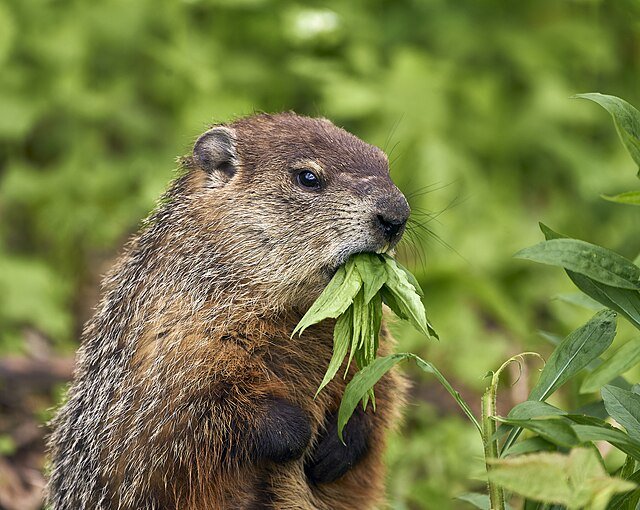
Healthy adult groundhogs are alert and retreat quickly to their burrows. A groundhog that does not attempt to flee is almost always in distress.
What NOT to Do if You Find an Adult Groundhog
Do not attempt to touch, capture, or restrain the groundhog unless you are specifically instructed to do so by a licensed wildlife rehabilitator.
Do not try to feed or give water.
Do not attempt to return the animal to a burrow.
Do not relocate the groundhog to another area.
Adult groundhogs can bite and scratch when frightened or in pain, and improper handling can result in serious injury.
What You Should Do Instead
Keep a safe distance and observe from afar.
Keep pets and children away from the area.
Note the animal’s location and visible condition.
Contact a licensed wildlife rehabilitator or local animal control immediately.
If the groundhog is in immediate danger (roadway, construction zone), contact local authorities for assistance rather than attempting to intervene yourself.
Health and Safety Considerations
Groundhogs can carry diseases and parasites that pose risks to humans and pets, including:
Rabies (groundhogs are considered a higher-risk species in some regions)
Tularemia
Fleas, ticks, and mites
Secondary infections from bites or scratches
Any bite or scratch should be evaluated by a medical professional. Avoiding contact protects both you and the animal.
Why Professional Help Matters
Adult groundhogs require specialized handling and medical care. Even well-intentioned attempts to help can increase stress, worsen injuries, or delay necessary treatment. Licensed wildlife professionals are trained to determine the most humane and appropriate outcome.
Give Adult Groundhogs the Best Chance to Survive
The most humane and responsible way to help an injured or sick adult groundhog is to contact trained wildlife professionals immediately. Prompt, expert care offers the best chance for recovery — or, when recovery isn’t possible, relief from suffering.