
What to Do if You Find an Adult Raccoon
Adult raccoons are common in Virginia and may be active during the day or night. Seeing a raccoon during daylight does not, by itself, mean that it is sick or injured. However, a raccoon that is injured, severely weak, behaving abnormally, or has had direct contact with a person or pet may need professional assistance.
Does This Adult Raccoon Need Help?
The Raccoon May Need Help If...
It has visible wounds, uncontrolled bleeding, or an obvious serious injury.
It cannot stand, walk, or climb normally.
It is severely weak, unresponsive, or unable to move away.
It is circling, falling over, having seizures, or showing other serious problems with movement, balance, or awareness.
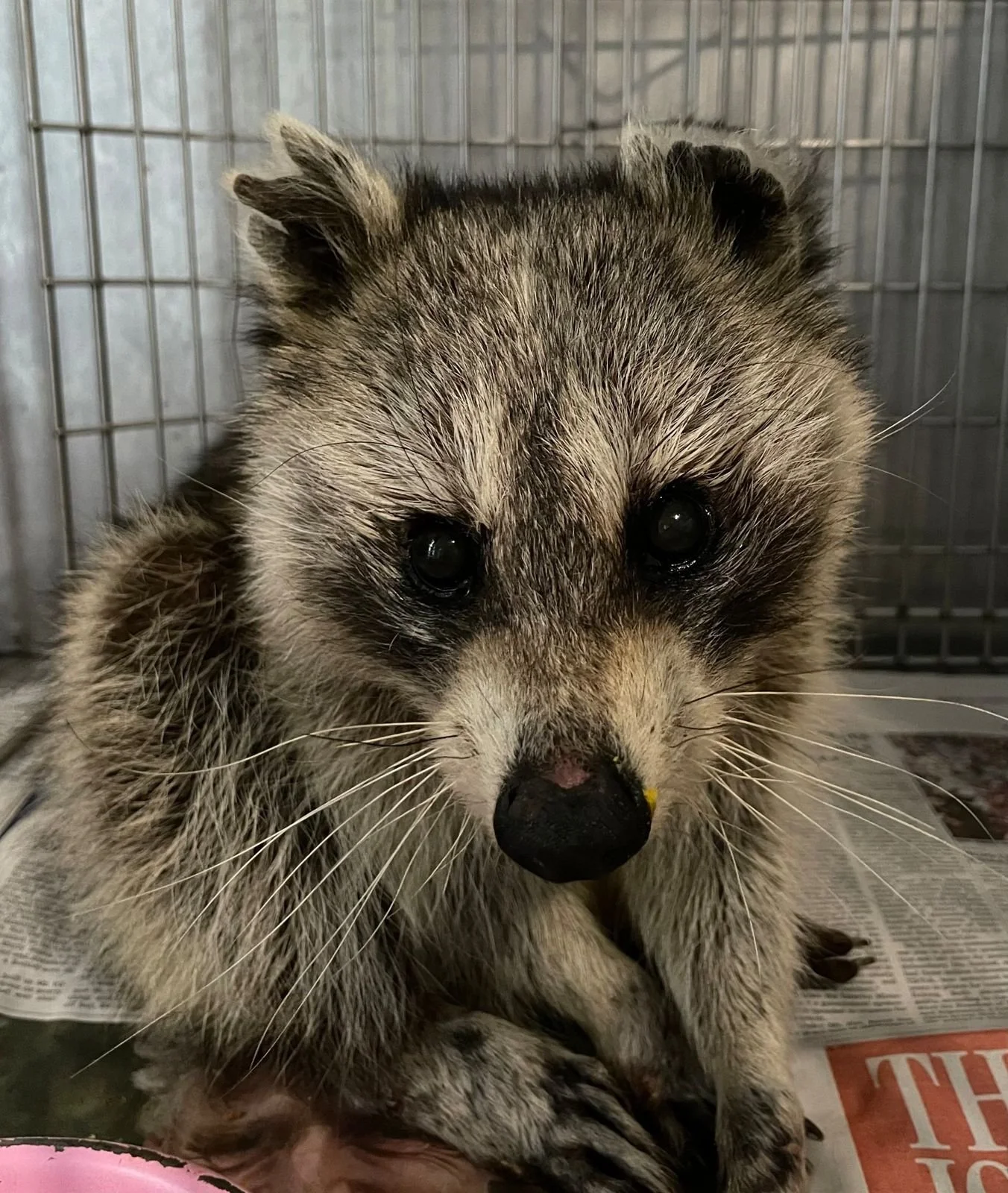
It has severe hair loss, crusting, or other signs of significant illness.
It was struck by a vehicle or seriously injured by another animal.
The Raccoon May Not Need Rescue If...
It is alert and moving normally.
It is foraging or traveling through a yard.
It runs or climbs away when given space.
It is active during the daytime but otherwise appears healthy.
It is resting in a tree or another sheltered location.
What NOT to Do if You Find an Adult Raccoon
Do not approach or attempt to handle the raccoon.
Do not chase, trap, or confine it unless instructed by a licensed wildlife rehabilitator or appropriate authority.
Do not feed or give water.
Do not attempt to treat an injury yourself.
Do not allow children or pets to approach.
Do not assume that daytime activity means the raccoon has rabies.
Do not attempt to keep or rehabilitate the raccoon yourself.
Steps to Take
Because raccoons are a high-risk rabies vector species in Virginia, avoid direct contact and keep people and pets away. What you should do next depends on the raccoon’s condition and whether contact with a person or pet may have occurred.
If the Raccoon Appears Injured or Sick
Observe the raccoon from a safe distance.
Keep children and pets away from the area.
Take a photo or video from a distance if you can do so safely. This may help a licensed wildlife rehabilitator assess the animal’s condition.
Contact a licensed wildlife rehabilitator for guidance before attempting to capture or move the raccoon.
Do not feed or give water.
Do not attempt to handle or contain the raccoon unless specifically instructed to do so.
If the Raccoon Is Behaving Abnormally
Unusual behavior can have many causes and does not necessarily mean a raccoon has rabies. However, a raccoon that is staggering, circling, having seizures, unusually aggressive, severely disoriented, or unable to move normally should not be approached.
Keep people and pets away.
Do not attempt to capture, handle, or corner the raccoon.
Contact a licensed wildlife rehabilitator, animal control, or other appropriate local authority for guidance.
If the raccoon poses an immediate threat to people or pets, contact local animal control.
If a Person or Pet Had Contact With the Raccoon
If a person was bitten or scratched, or raccoon saliva may have contacted an open wound, the eyes, nose, or mouth, do not release or handle the raccoon further.
For a person, wash bites or scratches thoroughly with soap and water and contact a healthcare provider and your local health department promptly for guidance.
If a pet had direct contact with the raccoon, separate the animals and contact your veterinarian promptly. Also contact your local health department or animal control for guidance about the wildlife exposure.
Do not make decisions about releasing, relocating, or disposing of the raccoon until you have received appropriate guidance.
What to Do While You Wait for Help
If a licensed wildlife rehabilitator or other appropriate authority has advised you to leave the raccoon where it is while help is arranged:
Keep people and pets away from the area.
Observe the raccoon from a safe distance.
Keep the area as quiet and undisturbed as possible.
Do not offer food or water.
Do not attempt to touch, restrain, or move the raccoon.
Do not corner the raccoon or block its escape route.
Follow any additional instructions provided by the licensed wildlife rehabilitator, animal control, or public-health officials.
If the raccoon moves away on its own, do not follow or attempt to recapture it.
If a possible human or pet rabies exposure has occurred, do not release, move, or handle the raccoon unless instructed by the appropriate authorities.
Do Not Keep or Attempt to Rehabilitate an Adult Raccoon
Raccoons require specialized care and should only be handled and rehabilitated by appropriately licensed wildlife rehabilitators.
Attempting to care for an adult raccoon yourself can:
Put you, your family, and your pets at risk of bites, scratches, and disease exposure.
Cause significant stress or additional injury to the raccoon.
Delay appropriate medical evaluation and treatment.
Interfere with decisions that may be necessary if a person or pet has had potential rabies exposure.
Reduce the animal’s chances of successful rehabilitation and release.
Do not take an adult raccoon home or attempt to care for it yourself.
Contact a licensed wildlife rehabilitator for guidance. If a person or pet may have been exposed to the raccoon, also follow the guidance of your local health department, veterinarian, or animal control.
About Adult Raccoons
Raccoons are intelligent, curious, and highly adaptable native mammals. Their remarkable ability to climb, explore, problem-solve, and use their sensitive front paws helps them thrive in habitats ranging from forests and wetlands to neighborhoods and cities.
Although raccoons are often misunderstood, most want nothing to do with people. When given space and access to natural habitat, they are simply going about their lives—searching for food, caring for their young, finding shelter, and exploring their surroundings.
Seeing a Raccoon Does Not Mean Something Is Wrong
Raccoons are primarily nocturnal, but it is completely possible to see a healthy raccoon during the day. Nursing mothers may forage during daylight because of the additional demands of raising their young, and young raccoons may also be active while learning to navigate their surroundings. Daytime activity by itself is not evidence of rabies or illness.
A Sick Raccoon Does Not Necessarily Have Rabies
When a raccoon is stumbling, lethargic, disoriented, or behaving unusually, rabies is only one possible explanation. Canine distemper can cause similar problems with movement, balance, or awareness, as can injuries to the head. You cannot determine the cause simply by looking at the animal.
This is why the best response is compassion combined with caution: give the raccoon space, keep people and pets away, and contact someone qualified to evaluate the situation rather than assuming the animal is dangerous.
Why Raccoons Matter
Raccoons are part of Virginia's native wildlife community. Raccoons eat a wide variety of plant and animal foods and interact with many parts of the natural environments where they live. Their ability to adapt to changing environments is one of the characteristics that makes them such remarkable animals.
Living alongside raccoons successfully usually means giving them space, securing human food sources, keeping pets separated from wildlife, and allowing healthy animals to continue on their way.
Respect Them From a Distance
Appreciating raccoons does not require approaching or handling them. In fact, one of the best ways to respect a wild raccoon is to let it remain wild.
Watch from a distance, enjoy the opportunity to see one of Virginia's most adaptable native mammals, and step in only when there is a genuine reason to believe the animal needs help.
Frequently Asked Questions About Adult Raccoons
-
Yes. Raccoons are primarily nocturnal, but healthy raccoons may sometimes be active during the day. Daytime activity alone does not mean a raccoon is sick or has rabies.
-
A raccoon may need help if it is severely weak, unable to move normally, staggering, circling, having seizures, unusually disoriented, or showing other significant abnormalities. These signs can have many causes and do not confirm rabies.
Keep people and pets away and contact a licensed wildlife rehabilitator for guidance.
-
No. Rabies cannot be diagnosed based on behavior alone. Injury, illness, neurological disease, poisoning, or other conditions can also cause abnormal behavior.
Do not approach a raccoon that is behaving abnormally. Keep people and pets away and seek professional guidance.
-
Separate your pet from the raccoon and avoid handling the raccoon yourself. Contact your veterinarian promptly for guidance. Also contact your local health department or animal control regarding the wildlife exposure.
-
Wash the wound thoroughly with soap and water and contact a healthcare provider and your local health department promptly for guidance about possible rabies exposure.
Do not release or dispose of the raccoon until you have received guidance from the appropriate authorities.
-
No. Do not give an injured or sick raccoon food or water unless specifically instructed by a licensed wildlife rehabilitator. Feeding or providing water can complicate treatment and requires getting dangerously close to the animal.
Get Help for an Adult Raccoon
If you find an adult raccoon that is injured, severely weak, or behaving abnormally, keep a safe distance and contact Roanoke Wildlife Rescue for guidance. Raccoons are classified as a high-risk rabies vector species in Virginia, so avoid unnecessary handling.
Do not attempt to capture or handle an adult raccoon unless you have been specifically instructed to do so.